Manchester City guilty verdict taints decade of titles as Premier League faces profound fallout
Manchester City guilty verdict taints decade of titles as Premier League faces profound fallout
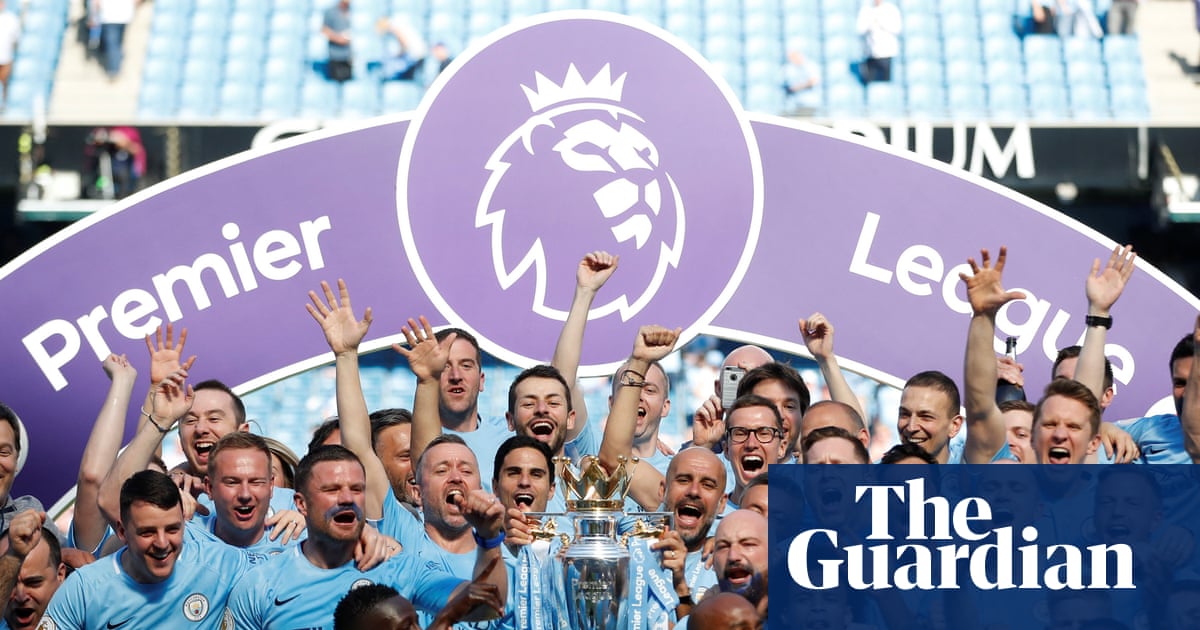
The most decorated era in Manchester City's history has been thrown into doubt after an independent panel found the club guilty of financial breaches, with consequences that columnist Jonathan Wilson warns could be “profound” and reshape English football.
“So it turns out none of that was real,” Wilson writes. “Nothing that happened in English football between 2009‑10 and 2017-18 that involved Manchester City actually happened. City beating Manchester United 6-1 at Old Trafford? Fake. Sergio Agüero’s 94th‑minute winner to clinch the title in 2012? A figment of the imagination.”
A tainted decade of success
The verdict, Wilson argues, does not erase the record but hopelessly stains it. City’s 100-point season, their 2018-19 title charge built on 14 straight wins, the 2023 Treble and a record four consecutive league titles all rest on foundations now exposed as fraudulent. “While it may turn out that those successes did indeed happen, they are tainted by what went before,” he notes.
Of the charges, 35 relate to a failure to cooperate with Premier League investigations between 2018 and 2023, compounding offences the writer describes as “almost incalculably worse” than Everton’s single breach.
Titles, appeals and the limits of justice
City will appeal, and Wilson cautions that “this is not yet the final truth, which could still be a long way off.” Even if verdicts are upheld, authorities appear reluctant to reallocate any stripped titles — meaning managers such as Jürgen Klopp, Brendan Rodgers and Ole Gunnar Solskjær are unlikely to be retrospectively crowned, a position Wilson calls understandable but unsatisfying. “Ersatz glory satisfies nobody,” he writes.
The comparison with Everton is stark: a £19.5m overspend in 2022 earned the Toffees a six-point deduction and a £26m damages bill plus £9m interest to relegated Burnley. City’s systematic cheating over nine years, combined with non-cooperation, invites far harsher sanction — potentially even forced relegation.
Political and financial aftershocks
The ramifications extend beyond sport. Bloomberg reported last month that the government was warned of potential damage to UK-United Arab Emirates relations should the verdict go against City. Andy Burnham, mayor during a period of heavy UAE investment in Manchester, spoke to UAE president Sheikh Mohammed within a week of becoming prime minister in July.
Financially, the exposure is enormous. Clubs denied European places, prize money or even survival by City’s “artificially juiced” finishes may pursue claims. Leicester, who narrowly missed Champions League qualification in 2020 and 2021, are cited as a club whose fate might have been different. “The financial cost to City, irrespective of the official sanction, could be crippling,” Wilson warns, recalling how City took 30 years to recover from a 1906 illegal-payments conviction and Sunderland never regained their status after 1957.
The cost that cannot be measured
The hardest loss, Wilson suggests, is emotional. Agüero’s title-winning goal “was arguably the most famous moment in Premier League history. What does it mean to say it didn’t happen?” He compares the situation to Marseille’s 1993 Champions League win, which remains on record but is undermined by a stripped Ligue 1 title for match-fixing.
For supporters, the response has ranged from despair to denial. “Little wonder several City fans online have been desperately trying to find a way to cope, pretending this is conspiracy or irrelevance, rather than the consequence of the actions of their club’s owners,” Wilson observes.
Ultimately, he argues, the Premier League had no choice but to act. “If a sport cannot govern itself, if its regulations can simply be ignored if you’re wealthy enough, it is no longer a sport.” The route is painful and may bring lean years, but it is, he concludes, the right one.