Chelsea’s American ownership era ends with a profit — and a record of sporting chaos
A profitable exit after four turbulent years
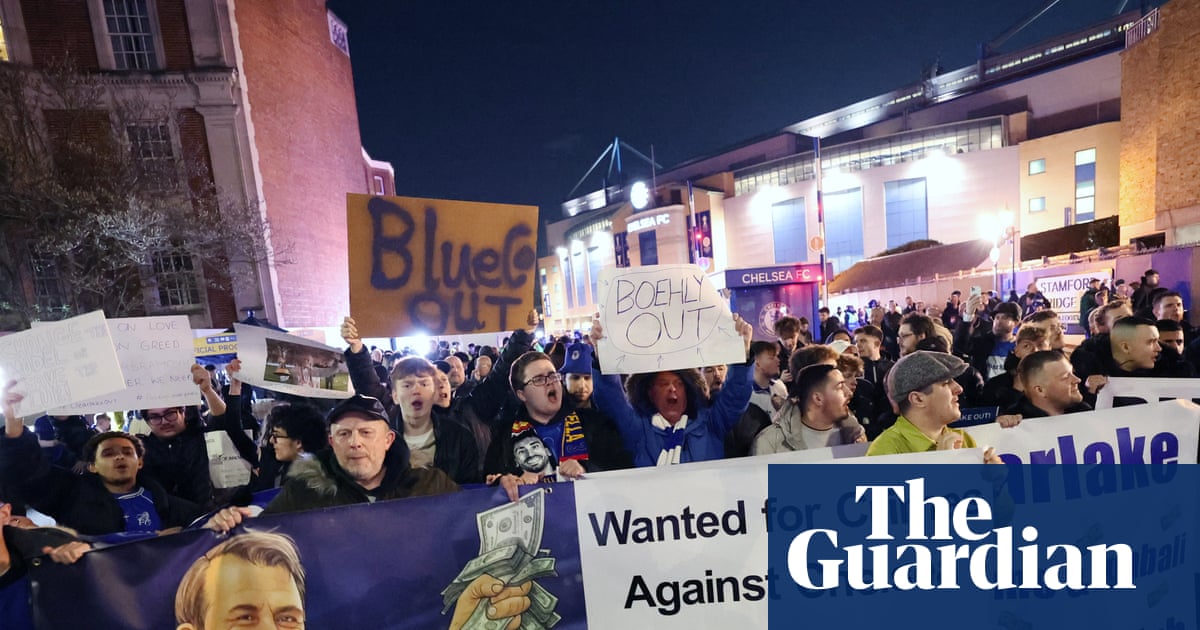
Todd Boehly and Mark Walter have sold their 12.8% stakes in Chelsea to Clearlake Capital, ending Boehly’s four-year spell as the club’s chair while highlighting the financial rewards available to investors in England’s biggest football institutions.
The consortium bought Chelsea in 2022 at a valuation of about $3.3bn (£2.5bn), following the forced sale of the club by Roman Abramovich. The latest transaction values Chelsea at roughly $6.7bn (£5bn), allowing the exiting investors to leave with what has been described as a “modest profit” after accounting for their wider investment commitments.
Massive spending, little consistency
The financial return has arrived despite a record of uneven results on the pitch. Chelsea finished 12th, sixth, fourth and 10th in the Premier League across the four seasons following the takeover. The club has also cycled through five permanent managers and four interim appointments, while employing five sporting directors.
More than $2.37bn (£1.78bn) was spent on 60 players, according to Transfermarkt, yet the current first-team squad is valued by the same source at approximately $1.23bn (£920m). The strategy of buying young players for future profit has therefore produced a portfolio whose estimated value is well below the amount invested.
Among the signings criticised in the assessment are Mykhailo Mudryk, described as one of the Premier League’s major transfer failures, and Raheem Sterling, whose contract has been portrayed as one of the division’s worst. Chelsea also set a new Premier League record for the biggest pre-tax loss and controversially sold its women’s team to a related entity in an accounting manoeuvre intended to comply with financial regulations.
The targets that remained out of reach
For all the spending, Chelsea did not mount a credible title challenge, qualified for European competition in only two of the four seasons and did not deliver the mooted new, larger stadium. The gap between the club’s investment and its sporting output has become central to the criticism of the ownership group.
The article argues that these shortcomings matter less to investors than the rising value of the underlying asset. In this model, clubs are treated as scarce and historically valuable properties that can be held, reorganised and sold at a premium, even when their footballing performance is inconsistent or their accounts show losses.
A wider transformation of English football
Chelsea’s transaction is presented as part of a broader shift in English football towards the American sports ownership model. The Glazer family’s leveraged purchase of Manchester United and the later sale of a minority stake to Sir Jim Ratcliffe are cited as an example of investors extracting value while retaining control of a globally recognised brand.
Liverpool offers another illustration: a consortium including Amazon founder Jeff Bezos reportedly bought 30% of the club for $2.2bn (£1.65bn) from Fenway Sports Group, which had acquired Liverpool outright for $464m (£300m) in 2010. The rise in valuation demonstrates why ownership can remain lucrative even when the season-to-season balance sheet or competitive record is underwhelming.
The result, the article argues, is a system in which clubs are increasingly managed as financial assets rather than community institutions. The owners may rearrange personnel and operations in the name of efficiency, but their central incentive is to hold a scarce sporting property until another buyer is willing to pay more. For supporters, that can leave sporting ambition and the relationship between club and fan secondary to the next transaction.