Kieran McKenna reveals why he left Ipswich on a high: 'I wanted to depart in the best way possible'
It was on the Portman Road pitch, bathed in bright early-May light and immersed in the relief and joy of a third promotion in five years, that Kieran McKenna realised the moment was right. The thought had flickered earlier in the season that this might be his final campaign at Ipswich, only to be pushed into the subconscious by the Championship's remorseless grind. But once QPR had been swept aside and a return to the Premier League assured, the 40-year-old knew.
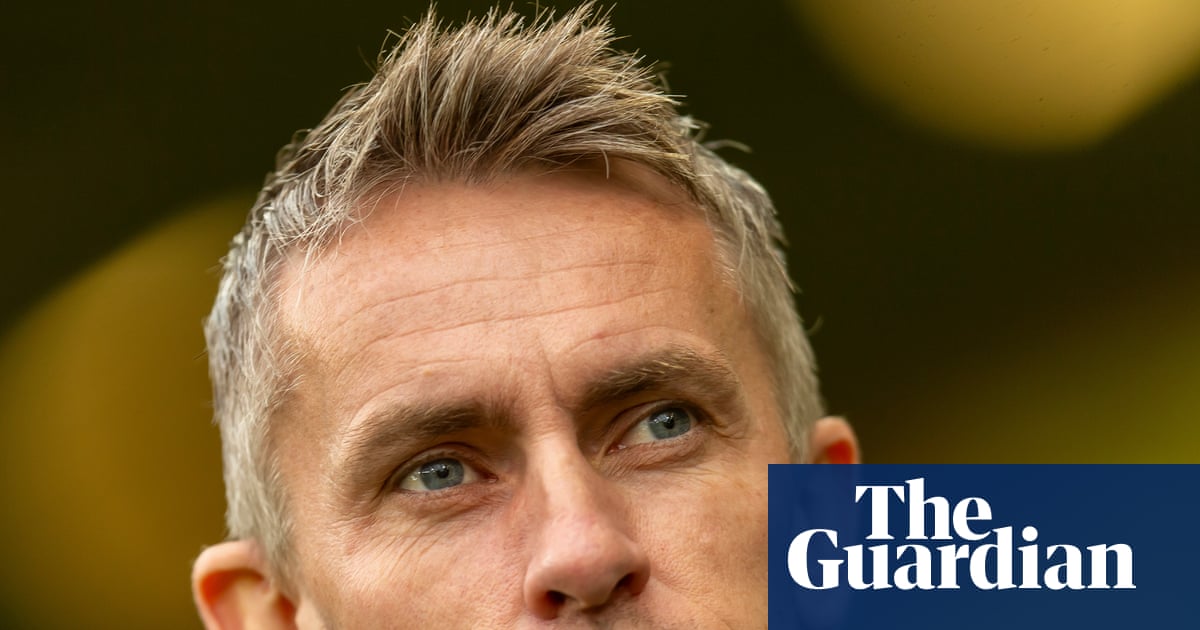
"But standing out there, I felt this was probably time. Another big victory, a full stadium, in front of my family and the fans. It was an amazing way to go out on a high."
Five months later, McKenna has no regrets about electing to cut things short while the going was so good. The golf bag lying outside his garage speaks of a man enjoying the break — his son has recently become interested in the sport — and of something bigger. Sharing those moments with loved ones, whether out on the greens or spending part of the summer travelling along the East Anglian coastline in a camper van, were among the biggest reasons to pause a soaring career. At 40, McKenna had spent two decades immersed in coaching; it was time to appreciate life's essentials while continuing his professional development at his own speed.
A break outsiders struggled to fathom
As usual, McKenna had been linked with moves away, but the idea of a voluntary career break was hard for many to fathom when the decision was finalised in June. He is unbothered by the bewilderment.
"For people on the outside it's maybe a bit more difficult. But those who know my path and my values, the ones closest to me who know me really well, I think they understood why I wanted to step out and what the benefits were of having a period like this."
Not everyone in football saw it that way. The phone has rung with proposals for his next move, but McKenna says those overtures arrived "too soon, especially given the way I left Ipswich". Leaving through the front door — a luxury rarely afforded to managers — made him proud, and there is no desperation to leap back into the fray.
"I'm certainly in no rush. I'm enjoying the time I'm having and hopefully an opportunity will come along that's right. I have an idea what that would feel like but football doesn't always follow your plan."
Edging back in, on his own terms
Since early September he has dipped his toe back in. That has involved tuning back into the process of watching and assessing games, while travelling to spend time with Bayern Munich, the Wigan Warriors rugby league team and Colorado Rapids, who are managed by his friend Matt Wells. He has been working on foreign languages, topping up an already competent level of Spanish. This week he is visiting clubs in Spain and, next Wednesday, he will begin work as a technical observer for Uefa when Shakhtar Donetsk play AEK Athens at Stamford Bridge.
"I wanted to give myself the best possibility to learn before taking on the next challenge."
The hardest season of all
More than once, McKenna repeats an assertion he made after promotion in May: that 2025-26 was the hardest of his four-and-a-half seasons at Ipswich, during which he masterminded a dizzying rise from League One to the top flight that marked him out as one of football's hottest managerial properties. The pressure was heightened last season: Ipswich had gone down and were expected to bounce back, even though the remarkably close-knit core who had propelled them through the divisions were drifting away. In effect, he took two different teams to the top.
"You can see how it could really have gone in two distinct directions. We had the feeling internally that if we didn't work really hard to pull everyone together then it could have gone in a negative way."
He makes an explicit comparison with the fall Luton experienced after their brief reacquaintance with the elite. McKenna pulled his squad over the line — and reached the end of his own journey. Along the way he had come close to departing more than once, but jumping ship earlier would have jarred.
"I had a lot of different opportunities to leave, could have left in many different circumstances really. But I was always aware I wanted to depart in the best way possible, with the club on a high, back in the Premier League and with a great chance to build for what will hopefully be a really successful period."
An emotional farewell and a new chapter under Gary O'Neil
The hardest aspect of his final day, McKenna explains, was looking down a camera and addressing the supporters with a five-minute speech in which he did not attempt to suppress his emotion. He reels off a list of coaching staff and other colleagues with whom the goodbyes were touching, meaningful and joyful. Many of the friendships, particularly with members of the "really, really special team" that he led through those successive promotions, will be lifelong — the night before this interview he spent most of a journey back from London speaking to one of them.
He laughs off the idea he would have relished getting his hands on the £200m summer transfer spend — not to mention a new training ground whose design he influenced — that appears to have given his successor, Gary O'Neil, a better shot at survival. If anything, he suggests, it shows the club have begun their own new chapter. He also emphasises that the thought of potential reputational damage from a second relegation did not factor into his decision to quit.
"It wasn't about the thought of a worst-case scenario or what could go wrong."
Still very much an Ipswich local
It was about prioritising life where he and his wife chose to stay: in the family's home a brisk half-hour walk from Portman Road, where their two children attend school. It so happens Sir Alf Ramsey and Sir Bobby Robson kept homes nearby after moving upwards — and McKenna has hero status here too, in these unassuming yet football-crazed surroundings. Although he keeps a low profile and chooses locations for socialising judiciously, the overwhelming affection of a town and county often rear up.
"Everyone is respectful; all we get is people coming up telling the story of how much the last few years have meant for them, their family and their friends, and wishing me the best. Moving down here together, going all in, making ourselves part of this community, it's been another of the really positive things. It's a little bit different living in the area where you were managing but it's the right thing for us at this time."
Has muscle memory ever taken him on an early-morning drive to the training ground? "You'd think it might, but it's just a different life. You're not setting the alarm for 5.30am and driving there in the dark. You're getting up with the kids and having breakfast with them, and you're around when they go to bed. Although the geography is the same, the life is different."
Grounded, and wiser for it
McKenna does not think such a heady half-decade — in which a coaching talent honed at Tottenham and Manchester United blossomed gloriously — has changed a grounded personality shaped in rural County Fermanagh.
"I probably feel about 20 years older. But my friends at home were telling me in the summer that I haven't changed since I was 10. I couldn't have arrived at Ipswich with a better background as a coach but, on the other hand, if you'd given me a list of the things I'd have to deal with in the next five years I really wouldn't have believed it. After going through so many things you're wiser for the experience."
Nonetheless the fact remains: taking a breather when the world is your oyster feels vanishingly rare in football management. Maybe everyone should do it. "But what's right for me, after two decades coaching, might be different for a manager who only stopped playing three years ago," he says. "It's been a massive body of work. You leave United, pick your bags up, get in the car and five-and-a-half hours later you're in Ipswich. At 35 you're leaving your family behind, checking into a hotel 10 days before Christmas; you absolutely throw yourself into the job for the next four and a half years."