'This is ma boy': Billy Kenny recalls the Manchester United trial that introduced him to young Giggs and Beckham
An extract from Billy Kenny's new autobiography has laid bare the remarkable charm offensive Manchester United mounted to sign a Liverpool schoolboy in 1988 — a trial that put the teenage Kenny in the same squad as a young Ryan Wilson, the future Ryan Giggs, and gave him his first glimpse of a baby-faced David Beckham.
Writing in the Guardian, Kenny recalls being driven to The Cliff, United's old training ground, by the youth coach Eric Harrison and being presented to the first team almost straight away. Brian Kidd silenced the room to single him out: "Lads, this is Billy from up the road," he said.
The greeting that followed came from Brian McClair — then, as Kenny notes, the first player to score more than 20 league goals for the club since George Best in the 1960s. "So this is the scouser ya been goin' on aboot then …" After Kenny smiled and nodded his way through a question about whether he supported Everton or Liverpool, McClair delivered his verdict: "Good answer … Ye'll dee well 'ere laddie."
Starstruck, Kenny ticked off the famous faces around him — Paul McGrath, Mark Hughes, Bryan Robson, Kevin Moran and Norman Whiteside — before being taken down a short, narrow corridor to meet another Scot. "This is ma boy, this is ma boy …" Alex Ferguson leapt up from his chair to hug him.
Ferguson made Kenny feel special, he writes, asking about his trip to Wembley for the cup final with Liverpool schoolboys and revealing that he had already watched 20 minutes of Kenny playing for Liverpool schoolboys against Salford, after Eric Harrison had watched him several times. He then ordered the boy to go out and enjoy himself — which is exactly what happened.
A trial packed with talent
The few dozen trialists were split up and mixed in with boys already on schoolboy forms, kitted out in gleaming United training gear — which Kidd told Kenny he could keep. There were children from Brazil, Argentina and Ghana, but the boy who made the deepest impression was a Scot, Tommy Harrison, captain of Scotland schoolboys, with whom Kenny struck up an instant friendship, trading nicknames and shouting "rock on, Tommy" at every opportunity.
"I looked Tommy up a few years back online and found he didn't go on to make a long career at the peak of the game," Kenny writes. Harrison turned down United and signed for Hearts instead, later playing lower-league football in Scotland. "Back in 1988 I would have put serious money on him getting into the United first team. But there are a million and one ways to fall away."
On the pitch, Kenny was deployed in central midfield rather than the right-sided role he occupied for Liverpool schoolboys — and loved it for the extra headers, tackles and touches of the ball. "Bang at the centre of things," he writes.
Wilson the rival, Beckham the baby-faced phenomenon
The biggest reason Kenny relished the position was the chance to play in the same team as Ryan Wilson for the first time. The name might not mean much to many readers, he concedes — "but once I explain that he later changed his surname to Giggs, it all makes sense". The pair had been direct rivals in fierce clashes between Liverpool and Salford schoolboys: "The outcome of our ding-dong battle on the wing always decided the result."
Then, in the second week, Kenny and Tommy Harrison noticed a crowd building near a pitch where younger children were playing. One small, skinny kid with spiky blond hair and what sounded like a cockney accent kept drawing gasps of astonishment from the adults on the sideline. "But every time he got the ball he'd do something mad. His touch, technique, balance and range of passing were unreal," Kenny writes. "It turns out me and Tommy were getting our first glimpse of David Beckham. He must have been about 12 or 13 but played like a seasoned professional."
Kenny is careful to distinguish the two future stars: "Ryan was lightning quick and almost impossible to stop. Baby-faced Beckham was about stupidly good technique and total control of the football." He adds: "I'm so pleased no one can ever try to claim that either of them failed to fulfil their huge potential."
Steak and chips, and 'the security' of a three-year deal
The trial was not without strain. By week three Kenny was "massively homesick", starved of a scouse accent. "I know it was only Manchester but it might as well have been Madagascar for all I cared. It just wasn't home." Kidd noticed and took him home for tea one night — steak and chips, talk of his father, and an explanation of just how perfect Manchester United would be for him to develop into a footballer.
In the final week, Eric Harrison pulled Kenny aside to say "the boss" and all the staff were made up with him — so much so that they had invited his father over for the last day to talk about his future. In Ferguson's office, Kenny was told the club already had loads of great kids signed up, but that he was exactly what they needed in central midfield. If he chose United, he would be guaranteed "the security" of a three-year professional contract.
"With those words, all the crippling insecurities seemed to disappear," Kenny writes. "I knew instantly that I had the ability to make it as a footballer."
The career that followed
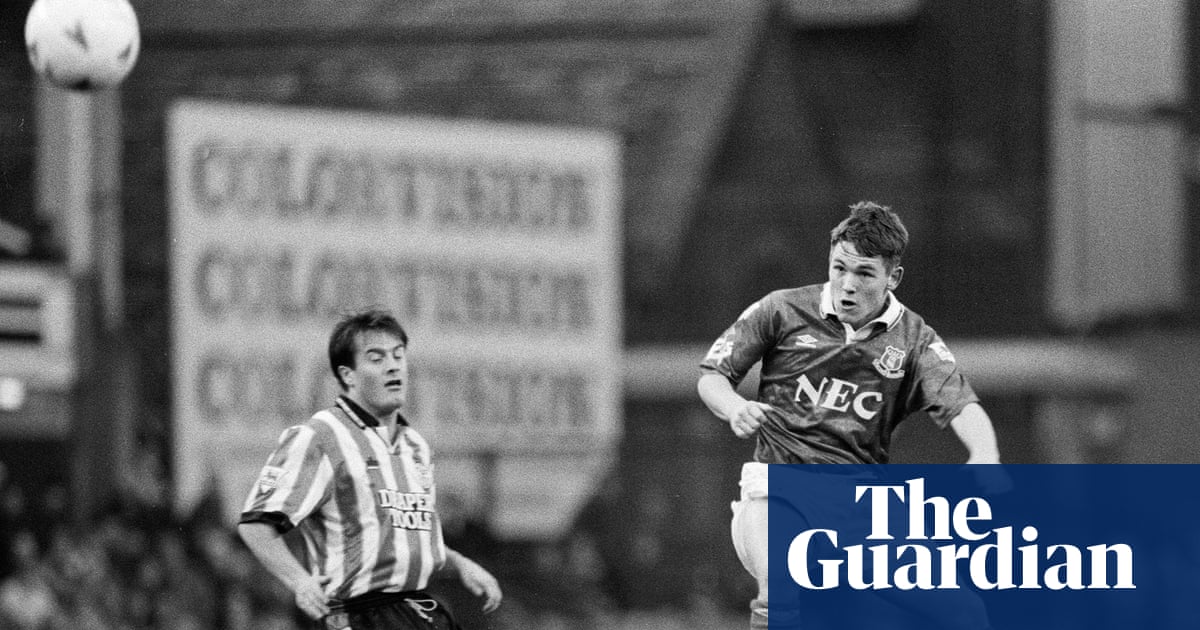
The extract is the latest instalment in Kenny's story to reach the Guardian. In an interview with the paper's Donald McRae published on 29 September to mark the book's release, the 53-year-old — once dubbed "the Goodison Gazza" by Peter Beardsley — said pressure to drink with Howard Kendall's Everton squad led to cocaine addiction, a short career and prison, and that only his mother's death finally helped him get sober. "I was just a kid and no one was there for me," he said at the time, adding that he remains "angry with Everton for not looking after me" after the club left him to self-destruct in the early 1990s.
The schoolboy wined and dined at The Cliff ultimately signed for his boyhood club Everton instead — where, by his own account, his talent was squandered.