Pirelli drop C6 compound and slim tyres down for F1's 2026 revolution
Formula 1's biggest regulatory overhaul in a generation arrives in 2026, and the sport's rubber is changing with it. As part of a rules refresh that makes the cars smaller, nimbler and more environmentally friendly, the tyres will shrink in width while keeping the 18-inch wheels introduced in 2022.
Narrower rubber for a new era
The front-tyre width will decrease by 25mm and the rear tyres by 30mm for the 2026 season, which the sport is billing as its most significant change in years – if not ever. Italian manufacturer Pirelli, the sole tyre provider for F1 since 2011, will continue to supply the grid until at least the end of the 2028 season.
How many tyres per weekend?
On a standard race weekend, drivers are handed 13 sets of slick tyres, four sets of intermediates and three sets of full wet tyres. Those who reach the third round of qualifying receive an extra set of softs, and every driver must run at least two different slick compounds during a dry race.
Where a sprint race is scheduled – the short, high-intensity format held on select Grand Prix weekends – allocations change: 12 sets of slicks, five sets of intermediates and two sets of full wets.
Slicks, wets and the colour code
Slick tyres, named for their smooth, treadless surface, are the workhorses of a dry weekend. Pirelli produces five slick compounds ranging from hardest to softest – C1, C2, C3, C4 and C5 – and selects three for each event based on track characteristics and likely strategies. That means the C3, for example, could be the softest tyre at one race and the hardest at another.
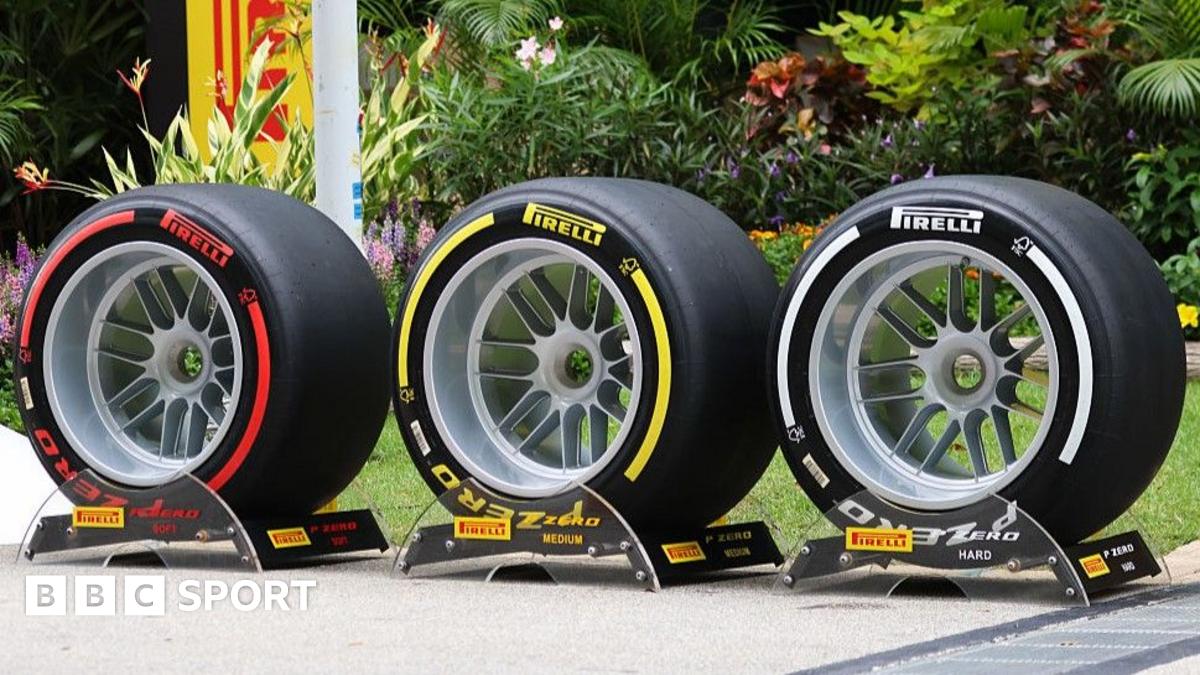
Each nominated compound carries a colour: red for the softest, yellow for the medium and white for the hard. "The red softs provide the most grip, but do not last long before degrading," while the white hard tyres "last the longest but offer less grip and speed." Softs are the qualifier's friend and best for short stints; mediums and hards are the long-run weapons.
In the wet, drivers face a familiar dilemma between intermediates and full wets. Intermediates, colour-coded green, suit damp but not soaked conditions, while the blue full wets are built for heavy rain. Both are grooved to help maintain traction.
The C6 is gone
The C6 – the brand-new 'ultra-soft' compound introduced for the 2025 season – will not survive into 2026. Purpose-built for street circuits, it appeared at Imola, Monaco, Canada and Azerbaijan. Pirelli said the time gap between the C6 and C5 was too small to justify its inclusion in the new season.
This article is the latest from BBC Sport's Ask Me Anything team.