Scotland's Pocognoli Era Hits Crisis Point as Andy Robertson Questions Teammates' Attitude After Slovenia Humbling
Scotland are staring at a third-place finish in Group B1 of the Nations League, a placing that will have serious repercussions for their seeding in Euro 2028 qualifying. But more alarming than the table is the general standard of performance across Sébastien Pocognoli's first four games as manager.
The decline has been stark. Scotland were dismal for a half in Slovenia before a decent but scoreless recovery. They then capitulated after an early sending-off against Switzerland, failing to register a single shot on target in a meek 3-0 loss. North Macedonia were as poor an international team as Scotland have faced in recent times, rendering the 2-0 win in Skopje worthy of little more than a shoulder shrug. Pocognoli's men rounded off the extended window by being played off the Hampden Park pitch by Slovenia.
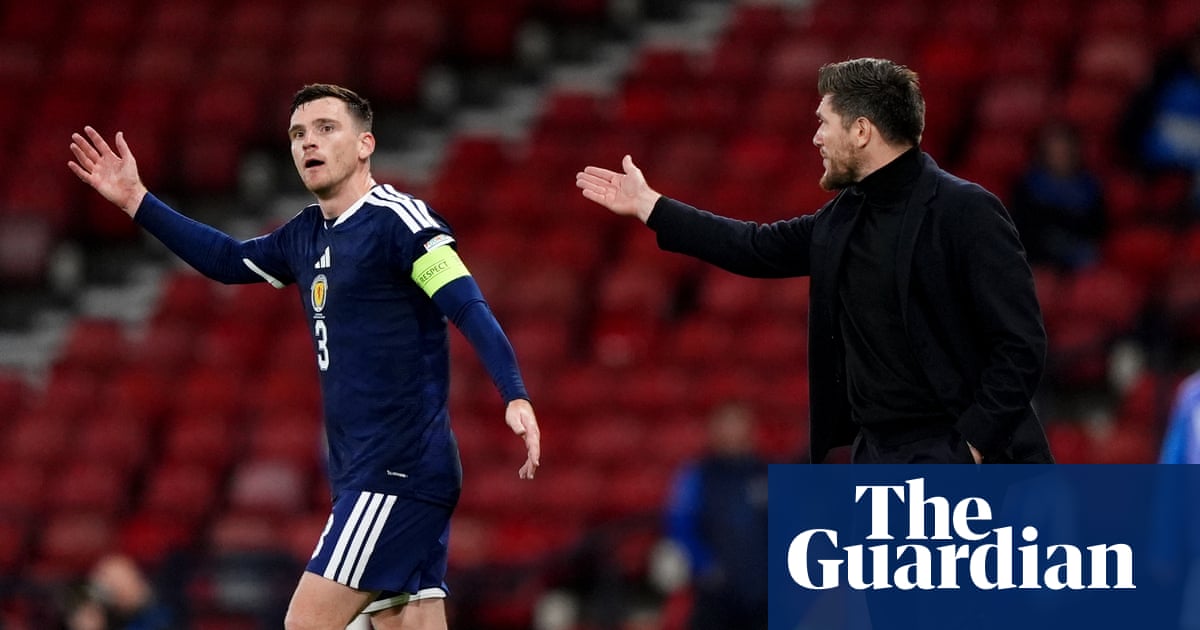
There has been no new manager bounce. Andy Robertson, the captain, strikingly questioned the attitude of his teammates in the wake of the performances. Pocognoli was given only a two-year contract, an odd arrangement given the pedestal he was placed on by the Scottish Football Association when hired in August.
Are Scotland suited to Pocognoli's system?
It does not look that way. The manager deploys a three-man backline as routine, with an emphasis on pressing high and wingbacks being crucial to attacking phases. Scotland do not have an obvious two-man central defensive pairing, meaning they most definitely struggle when the number is increased by one. Time and again, they leave far too much space in behind and look woefully exposed. Counterattacks bypass Scotland's midfield all too easily. Pocognoli's Scotland are a dream to play against.
Success for the Scots under Steve Clarke came from being well-drilled, compact and difficult to beat. Unsexy perhaps, but effective. Playing with gay abandon is all well and good when a side has a level of security Scotland simply do not possess currently. Scotland allowed Slovenia to be just as menacing as Morocco and Brazil, top-quality opposition they faced at the World Cup.
When Scotland switched to a defensive four in the closing stages of the Slovenia clash, players appeared generally confused. This was a bad look for Pocognoli, who has insisted he is "flexible" in a tactical sense and disputed the idea he had a touchline row with Robertson.
Scott McTominay's return for the next set of fixtures would provide an iota of hope, were it obvious where the Napoli man fits in. The setup as is will not maximise the abilities of McTominay, John McGinn, Ryan Christie and Billy Gilmour.
The Gannon-Doak dilemma
How Pocognoli handles Ben Gannon-Doak is another pressing question. Some in Scotland would have us believe Gannon-Doak is the tartan equivalent of a young Ryan Giggs. The truth is that at 20, Gannon-Doak is a player who is lightly raced at club level and, at this point, looks unlikely to make a first-team impact at Bournemouth. He has searing pace and a directness that scares defenders, offset by woeful decision making.
What is clear is that Gannon-Doak cannot operate as a right wingback for Scotland against credible opposition. Deploying him there also denies a start to Aaron Hickey, who is undeniably one of Scotland's best players. Gannon-Doak is a winger, as are Josh McPake and Findlay Curtis. Pocognoli's first-choice method does not involve wingers. Something has to give.
Did fans want a revolution?
The reality is Scotland have qualified for three of the last four major tournaments. Noise directed towards Clarke underappreciated the scale of his work. That said, after seven years, Clarke's tenure had run its course. The obvious move at that point was to turn towards a coach who had succeeded in tournament football with a similarly sized nation. With the level of available talent dropping or ageing, there was also a requirement for pragmatism and realism.
Instead, Scottish FA officials spoke of a data-led search for Clarke's successor, which led them to a coach who had never managed in international football before. Nobody of sane mind should insist upon Scotland morphing into the Ajax team of the 1970s. The baseline, created by Clarke, is now tournament participation. This summer's World Cup was the latest example of how finals involvement positively alters attitudes within and outside Scottish football to an unparalleled level.
There were 34,000 at Hampden for Slovenia's visit — hardly disastrous in broader Nations League context but almost 20,000 short of capacity. The public are yet to buy into Pocognoli and the blue-sky vision sold by his employers.
Middle management and a wider concern
The Scottish FA suddenly has a chief football officer in Craig Mulholland, and a head of strategy, operations and performance in Graeme Mathie. The latter was plucked from the Scottish second tier and the former was present in the dressing room during Scotland's Nations League fixtures. The move to insert this level of middle management carrying wishy-washy job descriptions is strange, not least when neither individual can provide working examples of markedly improving the big picture with an equivalent nation. Meanwhile, the new Scotland Under-21s manager, Tony Docherty, who is fielding teams in the same formation as Pocognoli, last took charge of a plummeting Ross County.
Scotland have to work far harder at finding resource for the men's A team. Six starters against Slovenia were 30 or older. Clarke could be obstinate, but there was no raft of exciting footballers he chose to ignore. There is no question of the Scottish FA becoming anxious towards Pocognoli. Indeed, as was the case with Clarke, they seem beholden to him. If this goes wrong, however, there will be significant questions to be answered about a chosen direction of travel.