'Think about your wife and kids': Tyson Fury's one-pound birth and 190mph brush with death
Born fighting: a one-pound miracle in Manchester
Tyson Luke Fury was born on August 12, 1988, in Wythenshawe, Manchester, roughly three months early and weighing just one pound. Doctors feared he would not survive. His father, John Fury, had already lost two daughters born prematurely, making Tyson's survival all the more uncertain.
John later explained why he named his son after Mike Tyson, the heavyweight champion of the time. "John believed the tiny baby would have to fight from the moment he was born," a belief that became part of the family's story. Raised in an Irish Traveller family, Fury turned to boxing and built himself into one of the sport's most recognisable heavyweights.
At the summit — then the fall
In November 2015, Fury travelled to Germany and beat Wladimir Klitschko on points, taking the WBA, IBF and WBO heavyweight titles and becoming a unified champion. The success, however, did not bring peace. He spiralled into severe depression, gained a large amount of weight and turned to alcohol and cocaine. In 2016, the World Boxing Association recorded that a psychologist had confirmed his clinical depression, and Fury gave up his titles while dealing with his problems.
In an interview with The Joe Rogan Experience, Fury described the darkest moment of his struggle: driving a new Ferrari toward a bridge in 2016 while contemplating ending his life.
"I got the car up to 190 miles an hour and I was heading towards that bridge."
Fury said he then heard a voice telling him to think of his children and family. He pulled the car over and later resolved never to try to take his own life again. In 2018, he told BBC Sport he had reached a point where he did not want to wake up, but had come back from that period — and wanted his comeback to give hope to others battling mental health problems.
Paris Fury: the constant through the storm
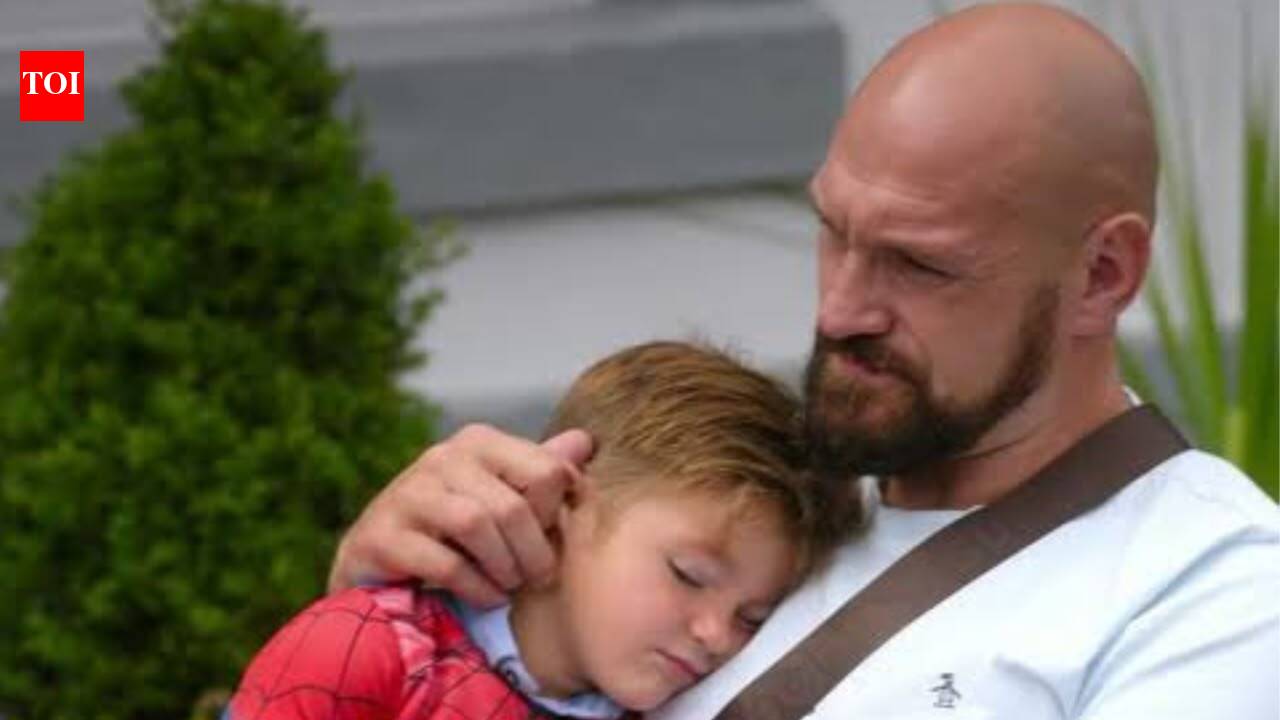
Paris Fury was part of Tyson's life long before the belts and the fame. The pair met as teenagers at a wedding — she was 15, he was 17 — and married in 2008. She lived through the hardest years of his depression, alcohol problems and addiction, not as a bystander to a celebrity's struggles but as a wife holding a household together. Fury has repeatedly said his family was central to his survival, and his own account of the Ferrari incident shows how strongly thoughts of his wife and children were tied to his decision to stop. The couple now have seven children.
From the canvas to the cause
Fury returned to boxing after more than two years away, shedding weight and rebuilding step by step. In December 2018 he faced Deontay Wilder for the WBC title; knocked down in the 12th round, he rose before the final bell and the fight ended a draw — an image that came to define his comeback. He beat Wilder in their 2020 rematch and stopped him again in their 2021 trilogy fight, then retained the WBC title against Dillian Whyte at Wembley in April 2022 in front of 94,000 fans.
Outside the ropes, Fury worked with Campaign Against Living Miserably (CALM) to encourage people to talk about mental health, later partnering with Talk Club and releasing a version of "Sweet Caroline" to raise money for men's mental health. His story does not suggest family support alone fixes depression or addiction — but it shows that asking for help, accepting support and continuing the work can matter. For Fury, the fight outside the ring became the one that changed how he viewed his life.