Skyroot Aerospace Makes History: First Private Orbital Rocket Vikram-1 Successfully Deploys Payloads
A New Era for India's Private Space Sector
India reached a significant turning point in its aerospace journey on Friday as Hyderabad-based Skyroot Aerospace successfully executed Mission Aagaman. In a historic first, the company deployed six payloads, including two satellites, into a low-Earth orbit (LEO) using the Vikram-1, the nation's first privately developed orbital launch vehicle.
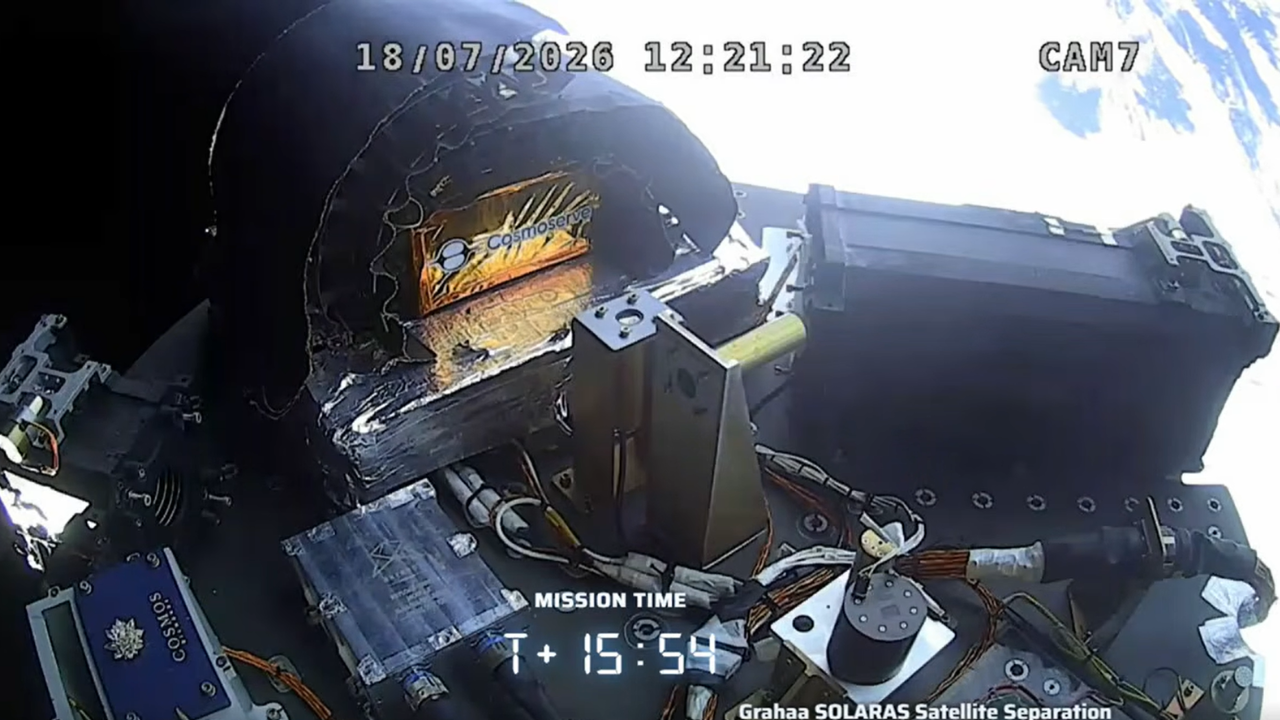
The launch took place at 11:30 am from the First Launch Pad at the Satish Dhawan Space Centre in Sriharikota. The vehicle successfully placed its cargo into a 450-km low-Earth orbit at an inclination of approximately 60 degrees, fulfilling the primary mission objective: validating the capabilities of India's first private orbital launcher.
Technical Specifications and Capabilities
The Vikram-1 is a sophisticated three-stage solid-fuel launch vehicle standing 23 metres tall with a diameter of 1.7 metres. It is constructed using advanced carbon-composite structures and features a restartable liquid-fuelled Orbit Adjustment Module (OAM), which ensures precise orbital insertion and the efficient deployment of multiple satellites.
Designed for the competitive global small-satellite market, the Vikram-1 has the capacity to carry:
- Up to 350 kg to low-Earth orbit (LEO).
- Approximately 260 kg to Sun-synchronous orbit (SSO).
The technologies integrated into this flight—including propulsion, avionics, and thermal protection systems—were previously tested and demonstrated during Skyroot's Vikram-S suborbital mission in 2022.
Symbolic Payloads and National Significance
Beyond the technical satellites, Mission Aagaman carried several symbolic items, including a handwritten postcard from Prime Minister Narendra Modi and "Cosmic Bloom," a micro-art piece crafted from lab-grown diamonds by Cosmos Diamonds.
This achievement marks a critical shift in India's space policy. Until now, all satellite launches from Indian soil were the exclusive domain of the Indian Space Research Organisation (ISRO). This successful mission underscores the impact of recent space sector reforms that allow private entities to develop and operate orbital launch vehicles.
This flight represents the first of three planned developmental missions. Once these milestones are completed, the Vikram-1 is expected to enter full commercial service, offering dedicated and rideshare launch options for Earth observation, communication, and scientific technology demonstrations.