Australia's makeshift batting leaves selection puzzles as they seek to bury 2018 ghosts in Durban
A familiar formula, a familiar fragility
Lost among the looking back to Australia's Test tour of South Africa in 2018 lies a striking similarity to the side about to take on that challenge in 2026. The previous team relied on a premier bowling quartet of Nathan Lyon, Josh Hazlewood, Pat Cummins and Mitchell Starc, alongside David Warner's power as opener and the middle-order ballast of Steve Smith. The rest of the batting was makeshift.
This time around, the same four bowlers have burnished their careers by a further 998 Test wickets, the proven batting still consists of one aggressive left-handed opener plus Smith, and Australia otherwise remain makeshift.
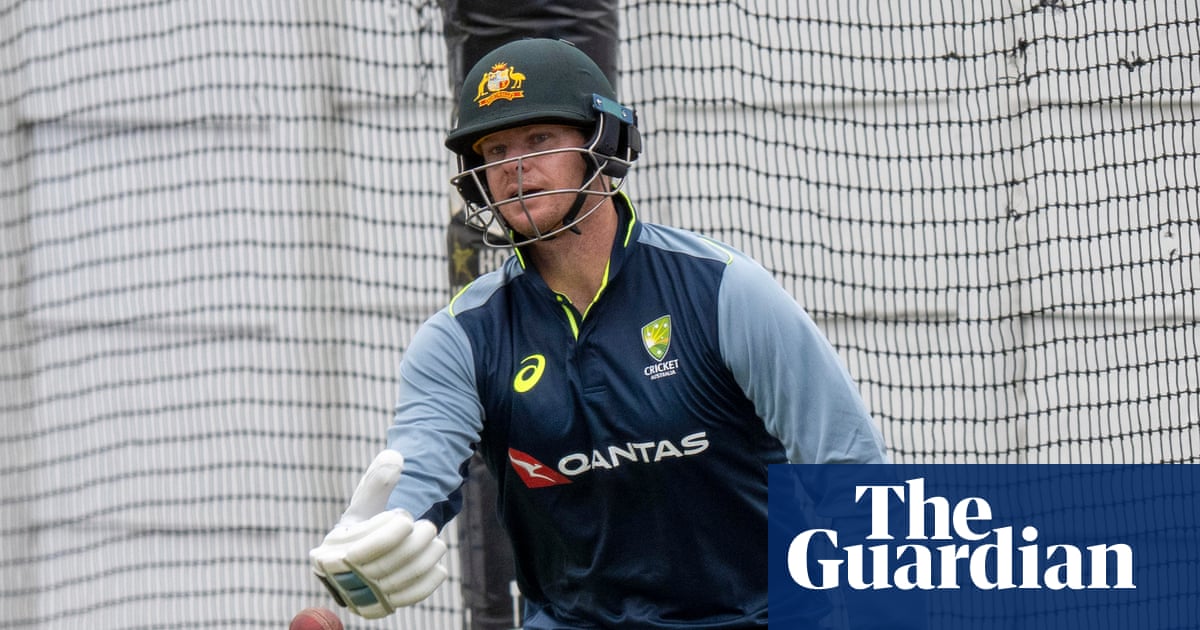
Matt Renshaw has done good things against the white ball, but his preparation to be the country's new opener in Durban has consisted of one innings against Bangladesh in Mackay. Marnus Labuschagne reassured with a warm-up century, but that game was so relaxed he might have played in flip-flops. Cameron Green was an issue until two Test innings ago, then, having finally produced a performance of note, got injured.
The Connolly vs Maddinson conundrum
With Green sidelined, Beau Webster will provide bowling cover, with one of Cooper Connolly or Nic Maddinson to take Green's batting role. A choice between those two options is, in the words of one observer, "truly bizarre."
Connolly is a talent with a knack for nailing an entrance: his fourth Big Bash game, his fourth List A match, and his first-class debut all came in tournament finals, each time contributing to another trophy heading west. Still, Connolly has played little first-class cricket since, never exceeding his 90 on debut, while his long-format bowling has been a non-event. He had no claim to making a Test squad in Sri Lanka in 2025, a pick that led to "one of the cheapest baggy greens ever handed out," for a match in which he was so peripheral he might as well have been the boundary sponge. In 2026 to date he has played one first-class match, made 10 and 10, and yet another squad spot given on potential rather than performance has seen another Test chance open up for him. The 23-year-old could well be the future, but has never yet demonstrated that he is the present.
Maddinson, meanwhile, is the past. It is bewildering how many cricket people in recent days have cited him being highly regarded in his youth, as though that affects a 34-year-old today. He deserves all the goodwill in the world for overcoming cancer and getting back to the game, but goodwill doesn't come bundled with a Test cap. If Connolly is light on for first-class cricket, Maddinson hasn't played since March 2025, when he made 4 and 0 at the end of a season averaging 17. According to selectors, it was the season before that, the one that started three years ago, that had the good juice.
"From 2018 to 2024, he was one of the leading players in Shield cricket," was national coach Andrew McDonald's defence of their call. Of which, with the full measure of respect it deserves, so what? Players have to play the game to prove that they can play the game, especially with the intense demands of delivering high-level skill over the course of five days. Nobody knows if Maddinson can even field for that long, let alone be effective with the bat.
None of this is Maddinson's fault, nor Connolly's. Their inclusions reflect a chicken-and-egg batting scenario of difficult conditions and mediocre returns, whereby Australian state cricket has no clear next contenders demanding a spot. In that economy, vibes outweigh output, so players can get picked on being a highly rated young talent — never mind whether that rating was first noted in 2023 or 2013.
South Africa in the same boat
The good news for Australia is that South Africa have a similar side: unconvincing batting, relying on the bowling attack to shore it up. Their squad was due to have been trimmed by now, but they are giving pace leader Kagiso Rabada every minute to overcome his hamstring injury. If he doesn't, there are options: Corbin Bosch to join Marco Jansen and Anrich Nortje in a pace trio; Simon Harmer instead of Bosch in a spin duo with Keshav Maharaj; or all of the above if Jansen's batting form sees South Africa put him at No 7. Wiaan Mulder offers all-round seam, and might be a better batting option than the out-of-sorts Tristan Stubbs in any case.
This shapes as a series of unforced errors and modest scores, with the spoils going to whoever can cobble together enough of a redoubt while building on sand. It will be an exercise in nerve-holding and a bit of hand-holding. The outcome matters, beyond even pride, in moving either side far closer to another spot in a World Test Championship final, the decider where they faced off last year. South Africa always feel the pressure to prove themselves, Australia would like to move the past further hence, and Smith could slay a demon or two. However it goes, it will at least let the 2026 teams tell us a story more recent than the heavy-trodden mud of eight years since.