Lionel Messi bows out in tears as Argentina farewell ends in 3-0 win over Benin
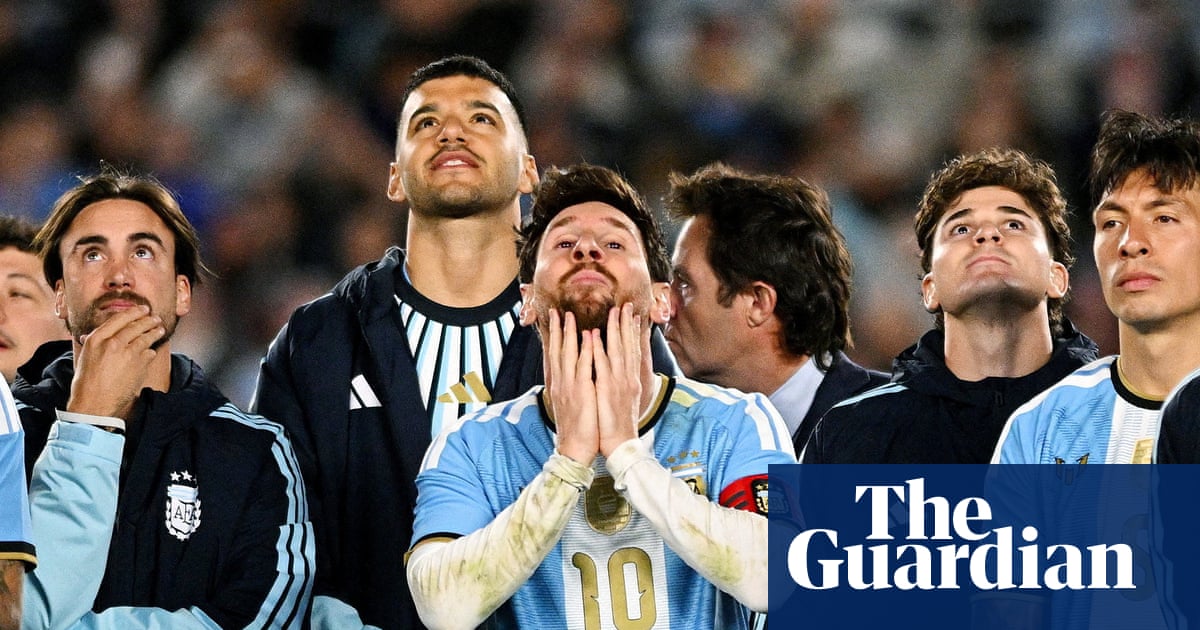
Lionel Messi brought one of the greatest international careers in football history to a close on Tuesday night, scoring in a 3-0 friendly victory over Benin at the Monumental Stadium in Buenos Aires before addressing a packed crowd through tears in a farewell that swept across Argentina.
Messi finished his Argentina career with 208 caps and 126 goals, making him his country's most-capped player and all-time leading scorer, with a World Cup winners' medal and two Copa América titles to his name.

'Perhaps the saddest day of my career'
Speaking to the crowd after the match, Messi admitted the goodbye was among the hardest moments of his life in football.
“Today is perhaps the saddest day of my career. I’ll be there for them, supporting these guys and those who come after. Always united. It’s been more than proven that when we’re united, we can overcome anything. Tough times are coming, and we have to be there for them more than ever,” he said.
“I’m going to miss playing here so much. I always received tremendous affection, from beginning to end. I’m so grateful for everything I experienced. I’m thankful for all this time: wherever I was, the stadium was packed, whatever the match. They were everywhere, making a huge effort, traveling to the World Cups.”
He added: “We always feel like the home team everywhere we go. In this place, I experienced one of the happiest moments of my life: playing here after winning the World Cup. To this day, I watch the videos and I get emotional. It was spectacular. Thank you so much.”
Messi also issued a message of defiance to those he believes want to see the national team struggle. “To achieve great things, you have to build strong teams. There are people who want to see the national team fail, and we can’t give them the satisfaction,” he said. “It’s in difficult times that you see the true strength of the team. We were an extraordinary group. I’ve spoken more than ever, but I don’t want to leave here. Thank you so much. I love you all.”
Addressing swirling conspiracy theories around the 2026 World Cup final defeat to Spain, he insisted: “Nothing odd happened. The match against England wore us out at an emotional level.” He closed by saying, “We had the dream of fulfilling our dream,” before adding, “I don’t know, I’m talking more than ever. I don’t want to leave here. I love you.”
From darling to villain — and back to the sacred
The farewell followed a tournament in which Argentina's status shifted dramatically. Having been treated as darlings when they won the 2022 World Cup in Qatar, the team ended the 2026 final — a defeat to Spain — as villains in the eyes of many around the world, irritating rival fans and drawing a flood of criticism.
The Guardian's reflection on his career recalled the words of Brazilian writer Milly Lacombe, who explored the contradiction of supporting a player she described as “a player who is a God and a man who shakes Trump’s hand,” and questioned his silence over racist incidents involving the Argentina team.
“That’s why it hurts so much to see someone with Messi’s power choosing to make himself small,” Lacombe wrote. But after Argentina's semi-final win over England this summer, she said the experience of watching them left her overwhelmed. “I started supporting England but by the end of the match I was weeping, surrendered to the commitment, the passion, the love that I saw the Argentina team pour on to the pitch. It’s only in that moment of intense passion that we reach the sacred.”
That tension — between Messi's reticence and his capacity to inspire — defined his Argentina story. Journalist John Carlin once said that having interviewed Messi twice, he would decline a third opportunity because of the difficulty of drawing anything of consequence from him. In 2010, Juan Sebastián Verón said he had never seen Messi as nervous as when he addressed his teammates for the first time as Argentina captain.
Argentinian journalist Alejandro Wall summed up the early hardship: “What characterized Messi in the national team is that he lost. He lost a lot. He’s constituted in defeat.” Messi missed penalties, wept, and stood up to take them again — and in 2016, when he quit the national team, a spontaneous show of public love persuaded him to reverse his decision.
A rushed, improvised night at the Monumental
Tuesday's farewell, like his first youth game for Argentina against Paraguay, carried an improvised air. The Argentinian FA struggled to secure opponents, reluctant to share the box office with another footballing power, and Benin were mocked by some as unworthy opposition. Burkina Faso ended up sending an Under-23 side who arrived only a few hours before their match, and the stadium was not filled to capacity, with ticket prices described as extortionate.
There was a drawn-out homage by Soledad Pastorutti, who sang the same song she had once performed with Diego Maradona, and a veteran of the Falklands/Malvinas War sang the national anthem. The terraces chanted against AFA president Chiqui Tapia, though Benin put up a genuine fight — their captain gifting Messi a statue of a Dahomey Agojie, the group of women who fought against French occupation.
On the pitch, Messi was decisive, scoring from the penalty spot and driving his side to a 3-0 win, with the cameras zooming in on weeping faces while the concrete terraces rang out with relentless, celebratory noise. When he took the microphone, his words landed with a confidence that startled even long-time observers of a player famed for his reluctance to speak.
Earlier in the day, Messi had picked up an honorary doctorate from the University of Buenos Aires in a small ceremony in a back office of the Argentinian FA. Social media filled with tributes, one of which read: “Like Scheherazade, he mocked destiny match by match, to gift the Argentina people another day of his magic. The thousand and one nights of Lionel Messi with the light blue and white come to their end.”
The GOAT bows out after 208 games and 126 goals for Argentina — a World Cup winner, a two-time Copa América champion, his country's most-capped player and leading scorer, and a figure who will simply never be forgotten.