How Monteverde Cloud Forest Became One of Worlds Most Successful Conservation Stories Wellness vs. 1972,” times of india, 10,500 hectares, golden toad, IUCN Green List, Biological Corridors — decade map_Languages
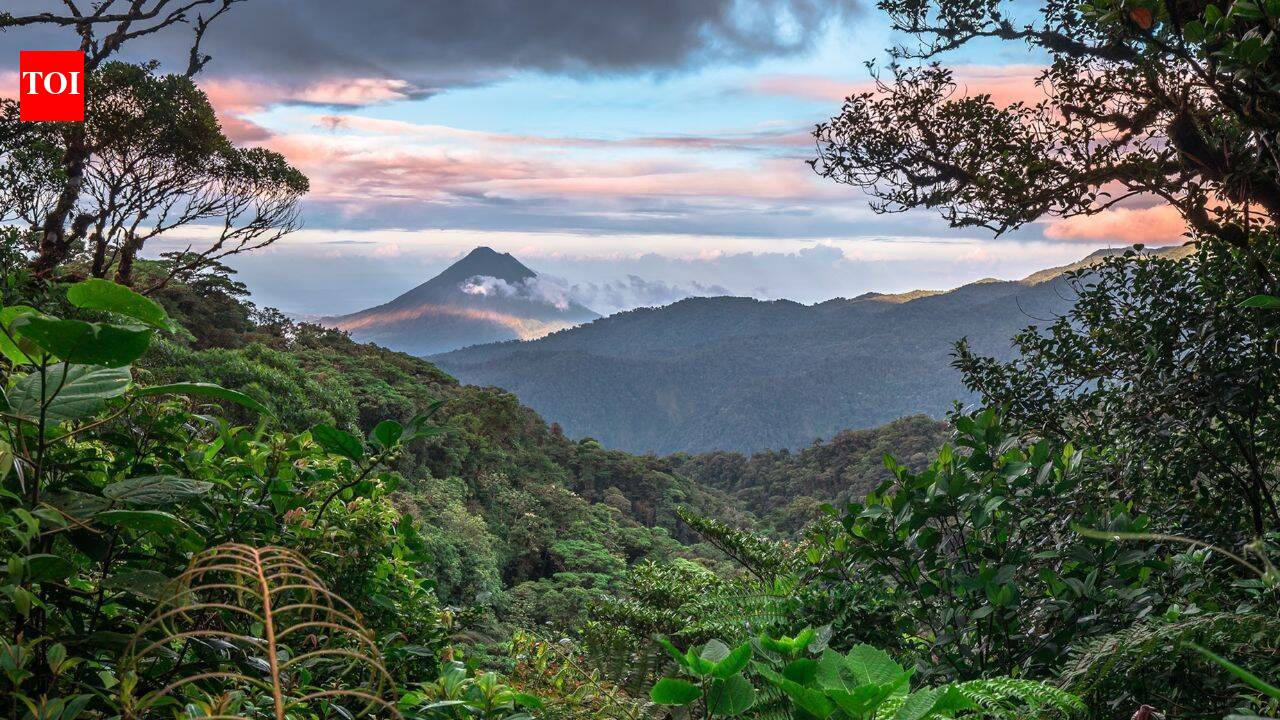
High in Costa Rica's Tilarán mountains, the forest often appears to be suspended between land and sky. Mist moves through the trees, settles on leaves and mosses, and becomes part of the water moving down the slopes. At Monteverde, that moisture is not simply a feature of the scenery — the forest sits along the Continental Divide, where water can eventually flow towards both the Caribbean and Pacific sides of the country.
More than five decades ago, conservationists began protecting this unusual landscape. What started in 1972 has since expanded into a 10,500-hectare preserve, where scientific research, environmental education, controlled tourism and community involvement have become part of the work of keeping the forest intact. The history of Monteverde is therefore less about drawing a boundary around a forest and walking away — it is about what happens after the boundary is created.
How Monteverde's cloud forest became a protected landscape
The conservation story took shape as scientists began spending more time in Monteverde and recognising how unusual the area was. Reportedly, George Powell, a young biologist carrying out doctoral research in the region in the early 1970s, became concerned about pressure on the forest from hunting, land clearing and settlement. He worked with the Tropical Science Center — a Costa Rican scientific organisation founded in 1962 — to secure land for protection. In 1972, the first area that became the Monteverde Cloud Forest Preserve was established.
The original protected area was much smaller than the forest that exists under protection today. Over time, fund-rises, land agreements and conservation partnerships allowed the protected landscape to expand, with the reserve now covering roughly 10,500 hectares, as reported by WorldAtlas. The decision to protect the forest was tied to more than its wildlife: earlier assessments had highlighted the importance of the forest for water sources and for shielding the surrounding landscape from strong mountain winds. The forest was already functioning as infrastructure long before anyone used that term.
How clouds, mountains and plants keep Monteverde wet
Cloud forests are unusual because rainfall is only part of the water story. At Monteverde, moist air from the Caribbean encounters the mountains and cooler conditions, and clouds and mist move through the vegetation while plants and surfaces capture moisture directly from the air. The forest's position along the Continental Divide means its watersheds send water in different directions, ultimately connecting the mountain landscape with drainage systems on both sides of Costa Rica.
The trees, mosses, bromeliads, orchids and other plants form a dense living surface that interacts constantly with the atmosphere. Changes in temperature, humidity and elevation can create very different conditions within relatively short distances. The preserve describes these variations as a vertical patchwork of microclimates, helping support an unusually large range of species — one reason Monteverde has become such an important place for long-term ecological research.
How decades of research revealed Monteverde's hidden biodiversity
The forest has been studied for decades, producing a body of research that extends far beyond lists of species. According to the official Monteverde Cloud Forest Preserve, it reports 22 active research projects in 2024 and more than 1,200 scientific publications associated with its work since establishment. Researchers have used Monteverde to examine everything from biodiversity and species behaviour to changes in the forest environment.
That long record matters because a cloud forest is not static. Species distributions change with elevation, weather patterns shift and vegetation responds to changes in temperature and moisture. Some populations expand while others decline. Decades of observations give scientists the ability to see change unfolding rather than a static snapshot.
The forest has also become associated with some of Costa Rica's best-known wildlife. The resplendent quetzal is among the species that draw visitors and researchers, while the region's extraordinary plant diversity includes thousands of species and a particularly rich collection of orchids. According to WorldAtlas, records of more than 2,500 plant species, 400 bird species and about 100 mammals are documented.
Protection happens beyond the trails
Keeping a forest intact requires work that visitors rarely see. Monteverde's protection programme includes patrols, boundary management, monitoring and efforts to identify ecological problems before they worsen. The preserve protects more than 10,000 acres of forest with trained personnel responsible for environmental protection and visitor safety.
There is also a less visible part of conservation: deciding how many people can enter and how they should move through the forest. In 1994, scientific studies were used to determine the preserve's carrying capacity. The exercise helped establish limits for visitation and became part of Monteverde's approach to equitable management of sustainable development and visitation. Today, the preserve receives dozens of thousands of visitors each year, according to its own figures, and operates guided education experiences designed to reduce pressure on the forest.
Why wildlife needs more than a protected forest
Perhaps the most interesting development has been the decision to think beyond the preserve itself. In 2017, Monteverde established its Biological Corridors Programme to expand conservation into the surrounding landscape. Restoration work includes replanting native vegetation, reconnecting fragmented habitats and working with neighbouring reserves and communities to maintain safe passage for wildlife.
A protected forest can provide a refuge, but animals do not recognise property lines. Species moving between elevations or searching for food and breeding sites need connected habitats. Monteverde's golden toad, once closely associated with the forest, has disappeared and is now considered extinct — a pointed reminder that protected reserves alone cannot save every species without broader environmental change. Protecting remaining habitat is only part of the task; its corridors give species more room to move and adapt.
Education became part of the conservation model
Monteverde's approach has also relied on people outside the scientific community. The preserve formally established its environmental education programme in 1993. Since then, it has worked with schools, students, teachers, visitors and community groups, translating research discoveries into educational programmes and guided experiences.
The Tropical Science Center, which manages the preserve, was founded as Costa Rica's first environmental NGO in 1962 and continues to link scientific research with education and conservation. The current environmental education programme reaches more than 400 students each year across 12 local school districts, according to the preserve. That places conservation in a much broader setting than the forest itself.
Balancing tourism and sustainable growth
Monteverde is now a major destination for those who want the experience of a cloud forest, but tourism brings its own pressures. The preserve has developed systems for managing visitor numbers and movement while visitor revenue supports its forest management, research and educational programs. The area has received a national sustainable tourism certification.
In recognition of its conservation successes, Monteverde was also added to the IUCN Green List in 2025 — a global benchmark for protected areas that manage their territories effectively. Decades of scientific and educational effort have turned 10,500 hectares of misty mountain into a living proof of what protection with purpose can achieve.