Oli McBurnie's Backside Wish: The Footballers Who Really Did Score With Their Rear
Oli McBurnie is back in the Scotland squad, and his drought is following him. The Hull City striker has now gone 20 international appearances without a goal, and in a recent interview he offered a candid remedy: a tap-in on Saturday, or one that goes in off his backside.
That throwaway line prompted John Cant to write in to The Knowledge with a question that has clearly been nagging at football fans for years: the backside comes up often when players talk of breaking a goal drought – but has it ever actually happened?
The dream answer would be a prolific striker enduring a barren run that ends when an errant clearance ricochets off his derriere and dribbles over the line at 0.00001mph. No such perfect specimen was forthcoming – but, as the column put it, all backside goals have a certain earthy charm.
Dean Coney, Norwich City v Aston Villa, 1989
The first three examples involve players who were not previously prolific but did break their ducks – in the most undignified way imaginable. Gary Southwell supplies the opener.
"Dean Coney for Norwich in a 2-2 draw with Aston Villa in 1989," he writes. "He charged down a clearance from Nigel Spink that rebounded off his backside and into the net. It was his only goal for the club."
Robbie Slater, Australia v Solomon Islands
Coney's unusual achievement was repeated at international level a few years later. Rohan Back writes: "Australia's Robbie Slater, who won the Premier League while at Blackburn, springs to mind. Slater managed to score his first goal for the Socceroos with his backside, against the Solomon Islands, in his 21st full international."
Slater's was the opening goal in a 6-2 win during qualification for France 98. Their coach, Terry Venables, reacted with the uncomfortable smile of a man who wondered how, in the space of 12 months, he had gone from Paul Gascoigne's wonder goal against Scotland to a backside ricochet against the Solomon Islands.
Souleymane Oularé, Cardiff City v Stoke City, 2002
Then on to Ninian Park in May 2002, where a playoff semi-final was settled by the posterior of a Guinean forward. "Souleymane Oularé played just two games for Stoke City, scoring a single goal in a playoff semi-final against Cardiff," writes Mike Richardson. "It was the winning goal in extra time, putting Stoke into the final. He became a bit of a club legend."
Stoke, who had lost the first leg 2-1 at home, forced extra time at Ninian Park when James O'Connor scored in the 90th minute. Then, with five minutes of extra time to play, O'Connor's free-kick hit Oularé and bounced into the net.
Oularé, brought on as a substitute when Stoke were chasing the game in normal time, had been out of the team for almost four months. "He was signed in December 2001, but was ruled out for most of the season following a life-threatening blood clot after his debut against Northampton," adds Simeon Goldstraw. "After four years in the third tier, the lowest the club has ever been, Stoke went on to beat Brentford in the playoff final."
Oularé stayed on the bench in the playoff final, which Stoke controlled after scoring an early goal, and never played for the club again. His career with the Potters amounted to 80 minutes.
The modern era: Saliba, Barry and Nüsken
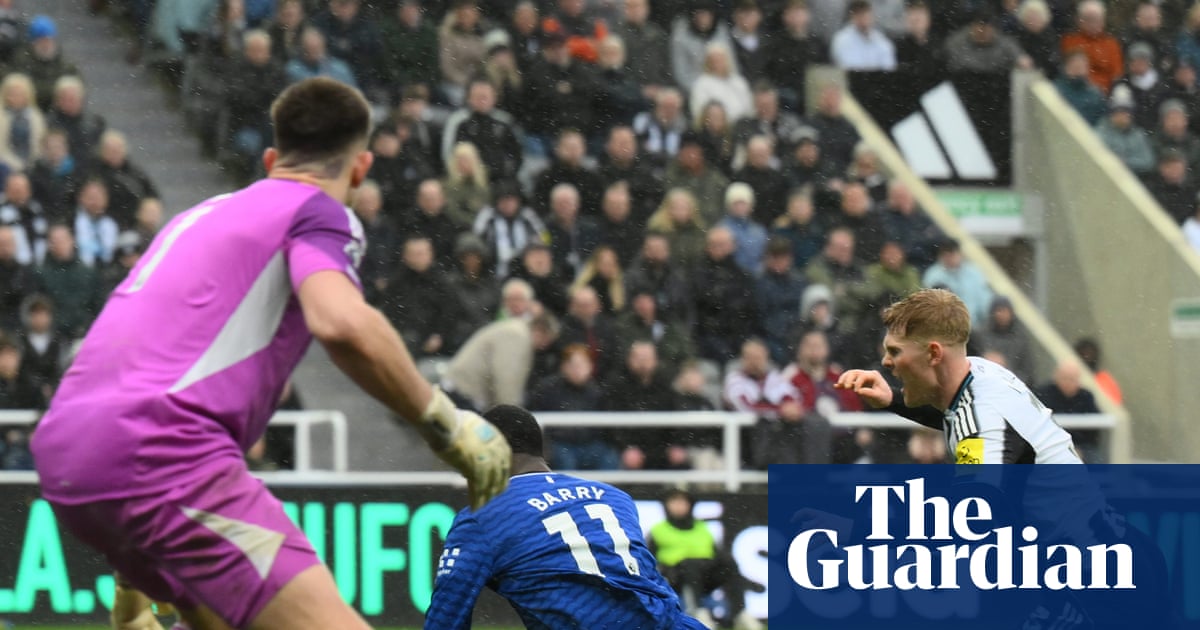
William Saliba's Arsenal career has been a bit more substantial. The defender scored with his rump against Manchester United in 2024-25, and Thierno Barry slid the ball into the net with his behind to give Everton victory at St James' Park last season.
In the Women's Super League, a big deflection off Sjoeke Nüsken put Chelsea 3-0 up in their vital clash against Arsenal in March 2024 – although the column admitted it was not entirely sure whether it came off her backside or her leg.
A Tannadice classic
Let's finish with a famous goal at Tannadice in 2010, when Rangers' hopes of a domestic treble ended with a Scottish Cup quarter-final defeat by Dundee United. The only goal was scored in bizarre circumstances by David Robertson. Again, it is not 100% certain to be a bona fide backside goal – but either way, it is well worth a look.
So there is no single perfect answer to Cant's question. But for McBurnie and every other striker waiting for a drought to end, history at least offers hope that the least dignified route works.