Bird flu confirmed at Anantapur poultry farm as H5N1 genetic trail points across South Asia
The confirmation of a bird flu (H5N1) outbreak at a poultry farm in Anantapur this week has revived an uncomfortable question for Andhra Pradesh: why does the virus keep coming back? Behind this week's outbreak lies a tangled genetic history — one that scientists have spent years piecing together and that stretches across South and East Asia.
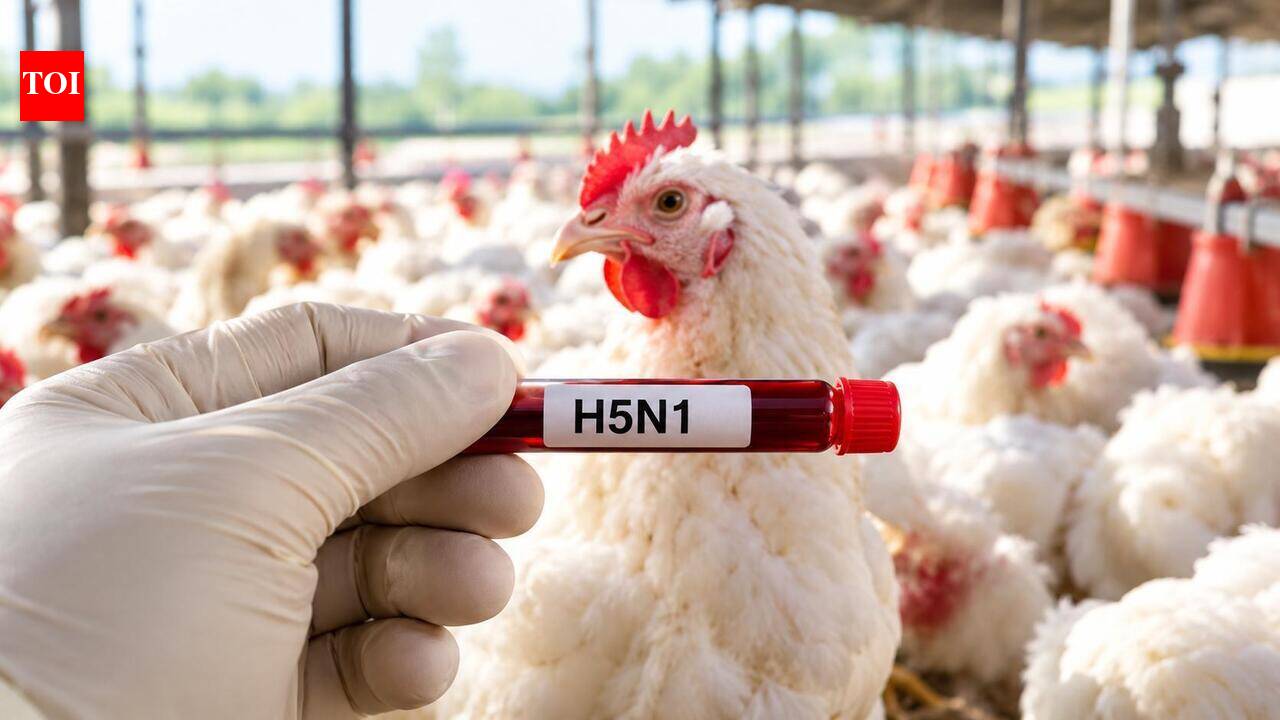
Outbreak confirmed, operations suspended
Farmers reported unusual bird deaths at poultry units operating under the National Livestock Mission in Anantapur, according to animal husbandry department joint director Dr Prem Chand. Samples were sent to Vijayawada, where they initially tested positive for bird flu, before the infection was confirmed by the laboratory in Bhopal.
"Poultry operations will remain suspended within a 1-km radius of the infected premises for three months. The area within a 10-km radius has been designated as a surveillance zone," said Dr Prem Chand.
The containment measures follow the standard protocol deployed in previous outbreaks in the state, as officials work to establish how the virus entered the farm.
A state that has been here before
Anantapur's outbreak is not an isolated event. Andhra Pradesh recorded two bird flu outbreak epicentres in February 2024, leading to the culling of about 300 birds. The scale increased sharply in 2025, when eight epicentres were reported across the state — and more than 5.4 lakh birds died or were culled during those outbreaks.
One clade, many borders
A possible genetic clue to the recurrence is clade 2.3.2.1a, which was identified in poultry samples collected in Andhra Pradesh in 2024. The National Institute of High Security Animal Diseases (NIHSAD) presented findings at a World Organisation for Animal Health workshop in South Korea in August 2024, linking the samples to a lineage that has circulated in South Asia for several years.
The same clade was identified in the virus that killed a two-year-old girl from Palnadu district in March 2025. An H5N1 infection in an 11-year-old boy in Haryana in 2021 was also linked to this lineage, and research has additionally documented a human infection involving the broader clade 2.3.2.1 group in Nepal in 2019. Genetic comparisons have shown similarities between viruses detected in India and Bangladesh, where clade 2.3.2.1a has circulated or re-emerged in poultry and other birds.
The Kolkata–Australia connection
The ICMR-National Institute of Virology in Pune analysed the Palnadu child's specimen and submitted the genetic data to the Global Initiative on Sharing All Influenza Data (GISAID). The sequence belonged to clade 2.3.2.1a and clustered with a virus associated with a child who fell ill while visiting Kolkata in 2024 and was diagnosed after returning to Australia.
A study published in Emerging Infectious Diseases found that the Australian virus was a reassortant — its genome contained segments derived from different influenza virus lineages. Four gene segments, including the haemagglutinin segment, were most closely related to clade 2.3.2.1a viruses circulating in Bangladesh. Other segments showed relationships to viruses detected in Japan, South Korea and China, as well as to a low-pathogenicity avian influenza virus found in a duck in Taiwan.
Segment-by-segment comparisons identified similarities with viruses from a duck in Wakayama, Japan; a white-fronted goose in South Korea; a duck in China; and a duck in Taiwan. Another comparison involved an environmental sample from Kagoshima, Japan.
These findings relate to individual gene segments, however. They do not show that the complete virus passed sequentially through Bangladesh, Japan, South Korea, Taiwan and China, nor do they establish how the infection reached Andhra Pradesh.
How does the virus keep arriving?
Migratory wild birds can introduce avian influenza viruses into domestic poultry, but investigators list several other possible routes: the movement of infected poultry, contaminated vehicles and equipment, contact between backyard and commercial birds, environmental contamination, and gaps in biosecurity.
The Telangana question
The latest Anantapur outbreak warrants further investigation because the farm procured birds from Telangana, even though no fresh outbreaks had been reported there. Investigators will need to determine whether the birds were infected before arrival, whether the virus was introduced through subsequent contact, or whether it entered the farm through another route.
Until those answers emerge, the three-month shutdown and wide surveillance ring around the infected premises remain the state's first line of defence against another season of H5N1.