From snub to silver: Roshibina Devi makes history as first Indian woman with three successive Asian Games medals
Naorem Roshibina Devi's Asian Games journey began with uncertainty but ended in the history books. The 25-year-old Manipuri wushu player claimed silver in the women's 60kg Sanda category after losing 0-2 to China's Zhang Xiaoyu in the final at the Aichi Prefectural Martial Arts Hall, becoming the first Indian woman to win medals at three successive Asian Games in wushu — following bronze at Jakarta 2018 and silver at Hangzhou 2023.
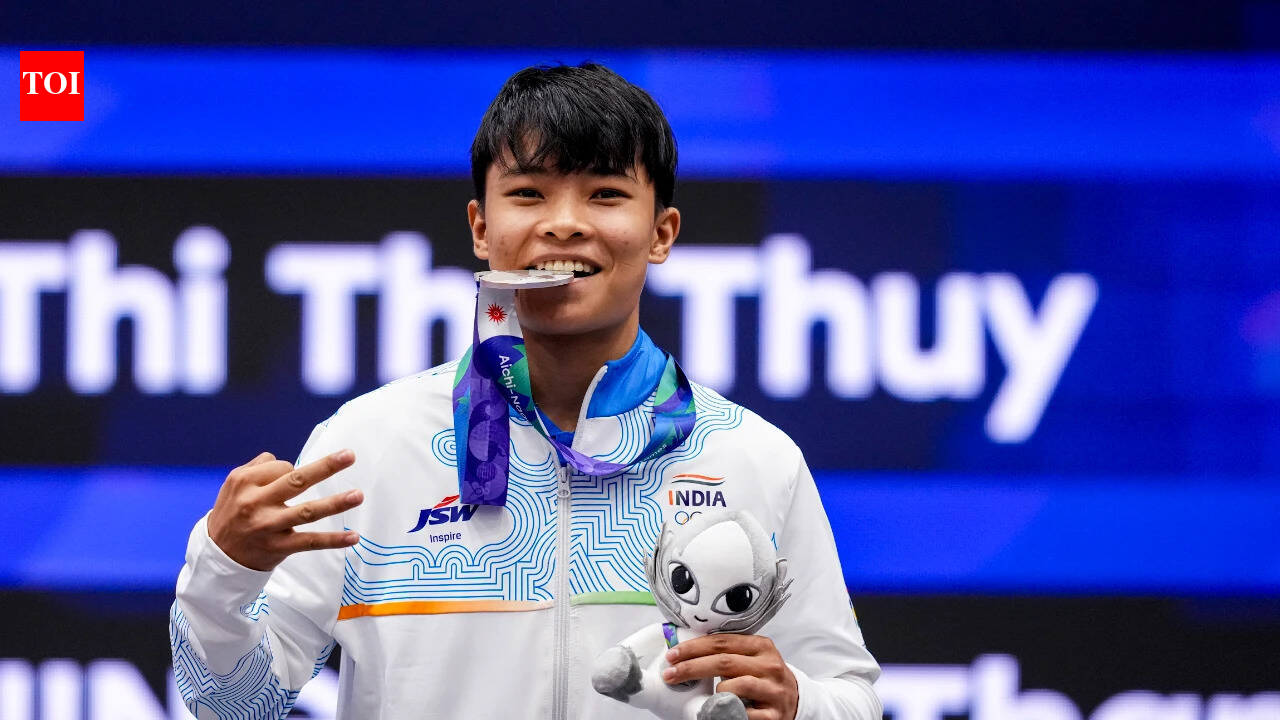
From controversy to the podium
Roshibina was not part of India's original squad. She lost the selection trial in June to Divyanshi Choudhary, who was initially selected but later withdrawn after the Wushu Association of India said an MRI revealed a partial high-grade ACL tear. Divyanshi alleged she was being mentally and physically harassed and claimed Roshibina was involved. The WAI rejected the allegations, saying the squad change was made on medical grounds, and the Sports Ministry subsequently approved Roshibina as the replacement.
Roshibina, who learnt of her inclusion only around September 10, was eager to move on from the row. "What happened was not because of me. It was the federation's decision. Whatever decision the federation (Wushu Association of India) took, I think it was a good decision," she said. "I will ignore it (the accusation). I just want to focus on my goal."
Little time to prepare
Roshibina had been out of the national camp for roughly one-and-a-half months after losing the trials and travelled directly from Manipur after being recalled. "There was a lot of disturbance when I came here for the Asian Games. I did not get much time to prepare. If I had more time, I would have done better," she said.
Her coach, Amit Pal, echoed the point, noting she had only limited training after being named in the team on September 10. Despite the disrupted build-up, she defeated Bangladesh's Shika Khatun in the pre-quarterfinals and Macao, China's Chu Man Sin 5-0 in the quarterfinals to secure her place on the podium.
Zhang too strong in the final
In the gold-medal bout, Roshibina could not match Zhang's aggression and technical superiority. The Chinese fighter won both rounds unanimously, with all five judges awarding her 5-0 decisions, dominating the scoring with her side-kicks.
"She (Chinese player) is a new player, I have not fought against her. She was good in her side kicks. I also tried to defend. I tried to throw her, but she did better," Roshibina said.
Despite the historic achievement, the silver left her disappointed at missing gold. "I have won silver earlier and this time also, I could win only silver. I could not give the gold medal to the Indian people. I could not give what everyone wanted," she said.
A journey built on sacrifice
Born in Kwasiphai Mayai Leikai in Manipur's Bishnupur district, Roshibina's rise has involved considerable family sacrifice — her farmer father, Naorem Damu Singh, sold a piece of land to fund her training and travel in the early years.
Now with three successive Asian Games medals to her name, Roshibina is already looking ahead. "I want to inspire all the players. I want to be like them. I will do my best in the upcoming Games."