India's 600-Test Journey: From Lord's 1932 to Galle 2025 — A Look Back at Every Landmark Match
Ninety-four years after Colonel Cottari Kanakaiya Nayudu led a resurgent nation in their first-ever Test match at Lord's Cricket Ground on June 25, 1932, India will play their 600th game in cricket's oldest and toughest format at the Galle International Stadium in Sri Lanka on Saturday. The Men in Blue, led by Shubman Gill, are set to become only the third team after England and Australia to reach the milestone — and fittingly, on the day the nation celebrates its 80th Independence Day.
A total of 319 players have donned the India cap in Tests so far, with Manav Suthar being the latest among them. Sachin Tendulkar holds the record for the most Test caps — 200. From Colonel CK Nayudu to Rishabh Pant, the Indian men's cricket team has been led by 38 captains across these ninety-four years, enduring the lowest of lows and the highest of highs while constantly aspiring to be better.
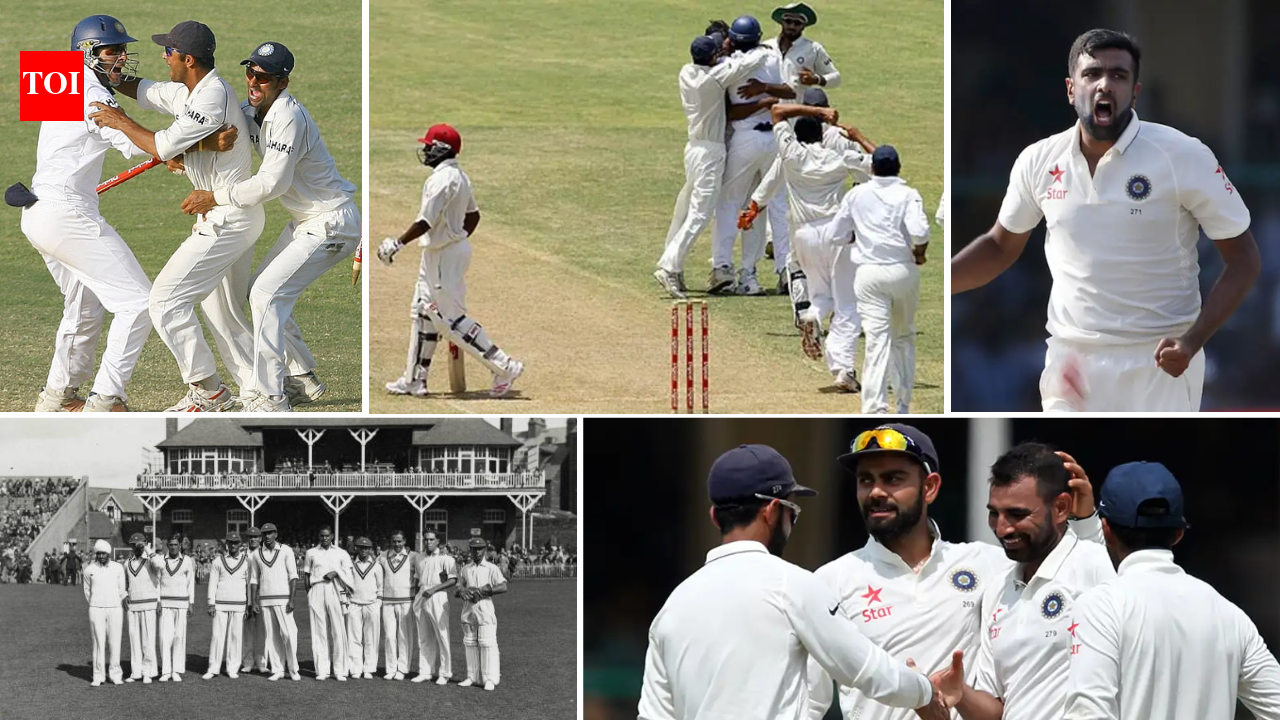
Virat Kohli holds the record for captaining India in the most Test matches, having led the team in 68 Tests from 2014 to 2022. Under his leadership, India secured 40 wins, making him also India's most successful Test captain.
As India are set to create history at Galle, here's a look back at India's 1st, 100th, 200th, 300th, 400th, and 500th Test matches:
India's 1st Test: England vs India, Lord's, June 25–28, 1932
The Maharajah of Porbandar was named captain of the touring Indian side, but good sense prevailed and CK Nayudu was nominated to lead the team in India's first-ever Test — though not before some off-field drama. England captain Douglas Jardine rescued his side after Mohammad Nissar rocked England, clean bowling Percy Holmes and Herbert Sutcliffe on 6 and 3 respectively. Jardine's 79 and Les Ames' 65 took England to 259 in the first innings.
Nissar (93/5) took India's first five-wicket haul in Tests. India were bowled out for 189 in their first innings as Bill Bowes (49/4) and Bill Voce (23/3) ran through the Indian batting, giving England a lead of 70 runs. England capitalized on the advantage and declared their second innings at 275/8. India had 346 runs to chase, and England won comfortably by 158 runs despite Amar Singh's gutsy knock of 51.
India's 100th Test: India vs England, Birmingham, July 13–15, 1967
Led by one of India's greatest Test captains, Mansur Ali Khan Pataudi, India toured England for a three-match Test series. Having lost the first two Tests, India entered the third match looking to avoid a series whitewash. England won the toss and scored 298 in the first innings. India's four spinners — Srinivas Venkataraghavan, Bhagwath Chandrasekhar, Bishan Bedi, and Erapalli Prasanna — took all 10 English wickets.
India's batting line-up featured Farokh Engineer, Ajit Wadekar, Chandu Borde, and Pataudi, but the visitors struggled against the England attack. India were bowled out for just 92, with only four batters reaching double figures. Engineer was the top scorer with 23. Chandrasekhar, Bedi, and Prasanna then took nine of England's 10 second-innings wickets. However, England had already built a lead of more than 400 and set India a target of 410. Wadekar scored 70, but India were dismissed for 277. England won by 132 runs and completed a 3-0 series sweep.
India's 200th Test: India vs Pakistan, Lahore, December 10–15, 1982
There was no COVID-19 in 1982, but there were no spectators in Lahore's historic Gaddafi Stadium either — the Pakistan Cricket Board (then Board of Control for Cricket in Pakistan, BCCP) had sold the entire series to a private party for around £800,000. The contractor set high entry prices, keeping many spectators away. The rates were cut by half after the second day, but the crowds did not return.
The match, the first of a six-Test series, featured some terrific performances from batsmen on both sides. Zaheer Abbas played a monstrous knock of 215 runs — his 100th first-class ton — as Pakistan finished their first innings at 485 after being asked to bat by Indian captain Sunil Gavaskar. Returning to the side after nearly two years, Mohinder Amarnath led India's reply with an unbeaten 109. Gavaskar also scored 81 and passed the 7,000 Test run mark, while Sandeep Patil played a quickfire knock of 68 off 56 balls. India scored 379 in their first innings. Pakistan scored 135/1 in their second innings, and the match ended in a draw.
India's 300th Test: India vs South Africa, Ahmedabad, November 20–23, 1996
It was the first Test of a three-match series against South Africa, and VVS Laxman made his Test debut in this match. India captain Sachin Tendulkar put India into an advantageous position by batting first on a brown, dusty pitch. Tendulkar's 42, Manjrekar's 34, and Azharuddin's 35 helped India reach 223 in their first innings even as Allan Donald took 3/37 for 4.
India hit back with spin, as the trio of Anil Kumble, Sunil Joshi, and Narendra Hirwani scalped 8 South African wickets, restricting South Africa to just a 21-run lead. India struggled again with the bat and were reduced to 123/6 in their second innings. Laxman scored 51 and helped India reach 190. South Africa needed 170 to win but lost two wickets without adding a run to the scoreboard. Javagal Srinath then took six wickets as South Africa were bowled out for 105.
India's 400th Test: West Indies vs India, Sabina Park, Jamaica, June 30–July 2, 2006
All three previous Tests in the series had ended in a draw, and both teams arrived at Sabina Park for the final match. Brian Lara's West Indies were bundled out for a mere 103, with Harbhajan Singh (13/5) being the wrecker-in-chief. Rahul Dravid, India's captain, won the toss and chose to bat. India struggled with the bat, but Dravid scored 81 as they made 200.
India had a 97-run lead but could not build a big advantage with the bat. Dravid again led the way, scoring 68 as India were dismissed for 171. West Indies were set 269 to win. Anil Kumble took six wickets as India bowled them out for 219. India won by 49 runs in their 400th Test.
India's 500th Test: India vs New Zealand, Green Park, Kanpur, 2016
India arrived at Kanpur's iconic Green Park stadium to play their 500th Test, led by Virat Kohli. It was the first Test of a three-match series, played at a time when India were at the peak of their home domination with Ravichandran Ashwin and Ravindra Jadeja at their best. Murali Vijay (65) and Cheteshwar Pujara's (62) half-centuries took India to 318 in the first innings on a decent pitch.
While Tom Latham (58), New Zealand captain Kane Williamson (75), and Luke Ronchi (38) played promising knocks as the Black Caps batted for almost 96 overs, Jadeja (73/5) and Ashwin (93/4) ensured India had a lead of 56 runs. Four Indian batters — Vijay, Pujara, Rohit Sharma, and Jadeja — scored fifties in the second innings as India declared at 377/5 on day 4, setting an improbable target of 434 runs for New Zealand. Ashwin finished the job in the fourth innings, taking a six-wicket haul, and India scripted a famous win by 197 runs at Green Park. India went on to win the series 3-0.
From a 158-run defeat at Lord's in 1932 to becoming one of the most formidable forces in world cricket, India's journey across 600 Tests is a testament to the nation's enduring love affair with the longest format of the game.