Ousmane Dembélé crowned world’s best after turning promise into PSG leadership
Ousmane Dembélé’s long, uneven climb to the top has ended with the Paris Saint-Germain forward being voted the best male player in the world for 2025 by the Guardian’s 219-strong panel.
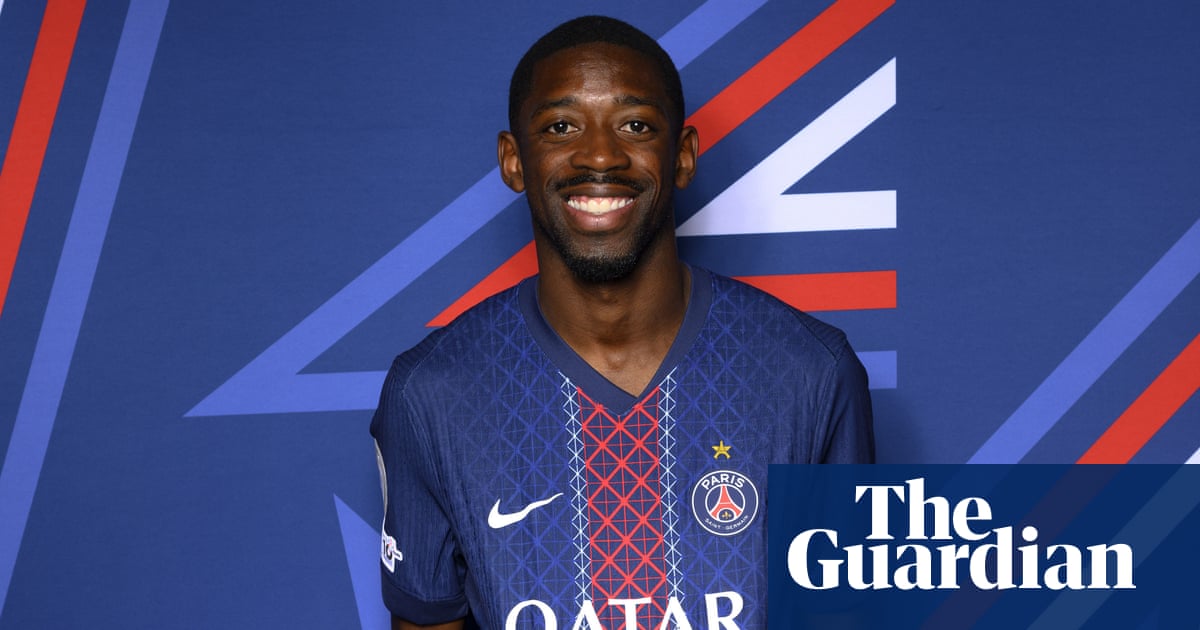
From teenage prospect to main man
Dembélé first appeared in the Guardian’s Next Generation feature in 2014, when he was still a Rennes academy player without a senior appearance. His appeal was not based solely on speed or technique. Resilience, adaptability, decision-making, creativity, work ethic and a willingness to learn marked him out from the other young French talents under consideration.
His early career seemed to confirm that promise. He won France’s young player of the year award during his first professional season before helping Borussia Dortmund win the German Cup. At Dortmund, Thomas Tuchel identified him as a “curious-motivated” player: a footballer whose talent could become exceptional if it was matched by continual development.
A difficult Barcelona chapter
Dembélé’s move to Barcelona in 2017, following Neymar’s €222m departure for Paris Saint-Germain, brought a less straightforward period. Injuries restricted him to starting only about a third of Barcelona’s league matches across six seasons, while he scored 24 league goals. His most painful episode came in the 2019 Champions League semi-final, when he missed a late one-on-one chance against Liverpool with Barcelona leading 3-0 from the first leg. Liverpool went on to overturn the deficit in the return match.
By the time he left Barcelona, Dembélé’s reputation had shifted from future superstar to unfulfilled talent. His move to PSG offered a chance to rebuild both his fitness and his standing.
Freedom after Mbappé’s departure
The decisive change came when Kylian Mbappé left PSG for Real Madrid. Rather than asking one replacement to reproduce Mbappé’s output, Luis Enrique made the team responsible for replacing the goals. That collective approach freed Dembélé from the expectation that he should serve or defer to another star.
The result was a transformation. Dembélé became the starting point of PSG’s press, while his movement, positioning, control and passing began to dictate matches. A finisher once criticised for wastefulness developed a sharper edge, scoring 30 goals during the 2025 calendar year at the time of the assessment.
Decisive on Europe’s biggest nights
His influence was particularly clear in PSG’s Champions League knockout run. Against Liverpool, Dembélé dropped into his own half, released Bradley Barcola on the right and then sprinted into the penalty area to finish the move. PSG won the tie after a penalty shootout at Anfield.
He produced a similar intervention against Arsenal in the semi-final, switching play to Khvicha Kvaratskhelia before receiving the return pass in space and scoring from the edge of the area. In the final, PSG defeated Inter 5-0, with Dembélé’s focused pressing stance becoming one of the defining images of the night.
His achievement is therefore about more than the goals and trophies. Dembélé’s story shows how elite performance can emerge from the combination of a player’s character, the right coach and a system that releases his strengths. The Rennes teenager identified for his invisible qualities has become PSG’s undisputed leading figure—and the world’s leading player.