How the Second Battle of El Alamein turned the tide of World War II
A desert battle that changed the course of the war
"This is not the end. It is not even the beginning of the end. But it is perhaps the end of the beginning." Winston Churchill spoke these words on November 10, 1942, following the Allied victory in the Second Battle of El Alamein.
Eight decades ago, Nazi Germany had overrun France and pushed deep into the Soviet Union, while Japan captured Singapore in February 1942 in one of Britain's worst military defeats. In June, German General Erwin Rommel's forces captured the Libyan port of Tobruk, pushing Allied troops towards Egypt and bringing the Suez Canal within reach. The Axis powers appeared to have the upper hand until a massive artillery barrage broke the quiet of Egypt's western desert, launching a 13-day battle that marked a change in the course of the war.
The second battle began on October 23, 1942, between Allied forces led by the British and the Axis powers of Nazi Germany and Fascist Italy. By November 4, the Allies had secured one of their most important victories.
Why North Africa mattered
North Africa became a key battleground because of Egypt's strategic location and the Suez Canal, a vital shipping route connecting the Mediterranean Sea to the Red Sea and linking Britain to its territories in Asia. Control of Egypt also threatened Britain's access to Middle Eastern oil supplies.
The campaign began in 1940, when Italy, advancing from its North African colony of Libya, invaded Egypt but was pushed back by British and Commonwealth forces later that year. Germany intervened in 1941 to support its Italian ally, sending troops under General Erwin Rommel, nicknamed the "Desert Fox". Rommel's forces moved into Egypt after taking Tobruk in June 1942, but they were stopped in July at the First Battle of El Alamein. That battle ended in stalemate, but the Allies had halted the Axis advance on Alexandria and the Suez Canal.
The terrain helped the British hold their ground. German and Italian tanks found it difficult to get around British defensive positions, with the Mediterranean Sea to the north and the largely impassable Qattara Depression to the south.
The fighting on October 23, 1942
By October, British commander Bernard Montgomery had assembled more than 190,000 Allied troops and over 1,000 tanks. Facing them were approximately 116,000 German and Italian soldiers with around 540 tanks. The British-led Eighth Army was a multinational force, including troops from India, Australia, New Zealand and South Africa.
Rommel faced serious problems. His army was running short of fuel, ammunition and supplies as Allied aircraft, warships and submarines disrupted shipments across the Mediterranean.
The fighting was fierce. Allied tanks struggled to cross minefields and suffered heavy losses from German anti-tank guns, and the initial assault failed to achieve the breakthrough Montgomery had hoped for. Montgomery then changed tactics, ordering Australian troops to intensify their attacks in the north, near the Mediterranean coast. This drew German forces towards that sector, weakening their positions further south. On November 2, New Zealand and British troops launched Operation Supercharge against the weakened defences. Allied forces broke through, and by November 4, Rommel's army was retreating.
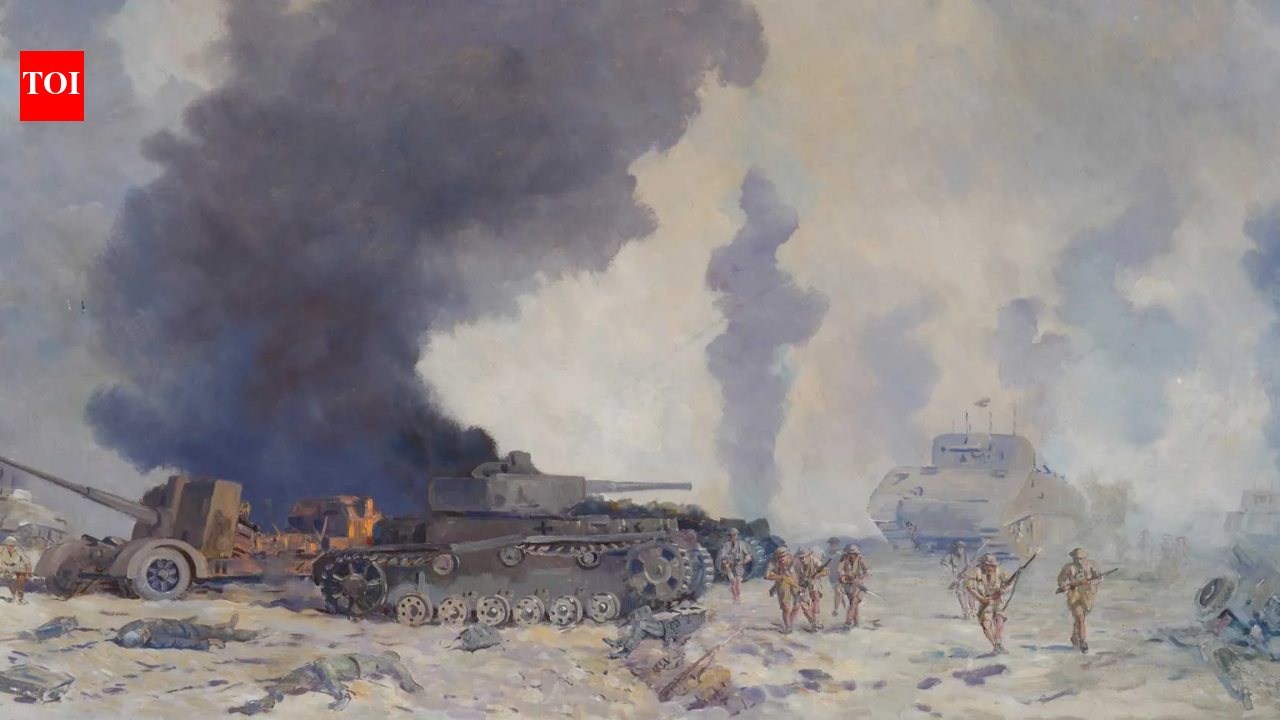
British infantryman capturing a German tank crewman at El Alamein, 1942 (Image credit: UK National Army Museum).
Turning of the tide
The battle ended the Axis threat to Egypt and the Suez Canal and gave Britain a victory after years of military setbacks. Just four days later, on November 8, American and British forces landed in Morocco and Algeria as part of Operation Torch, opening a new front against Axis forces in North Africa. Caught between Allied advances from the east and west, German and Italian forces were ultimately defeated. The surrender of the remaining Axis forces in Tunisia by May 1943 paved the way for the Allied invasion of Sicily in July 1943.
The victory weakened Axis dominance of the Mediterranean, secured a vital strategic area, and made way for later Allied campaigns in Europe. Eighty-four years on, the battle is a reminder that the fight for victory in World War II extended well beyond Europe, into the North African deserts.