Syria reopens Saint Simeon’s 1,600-year-old church complex after restoration
A landmark of early Christianity welcomes visitors again
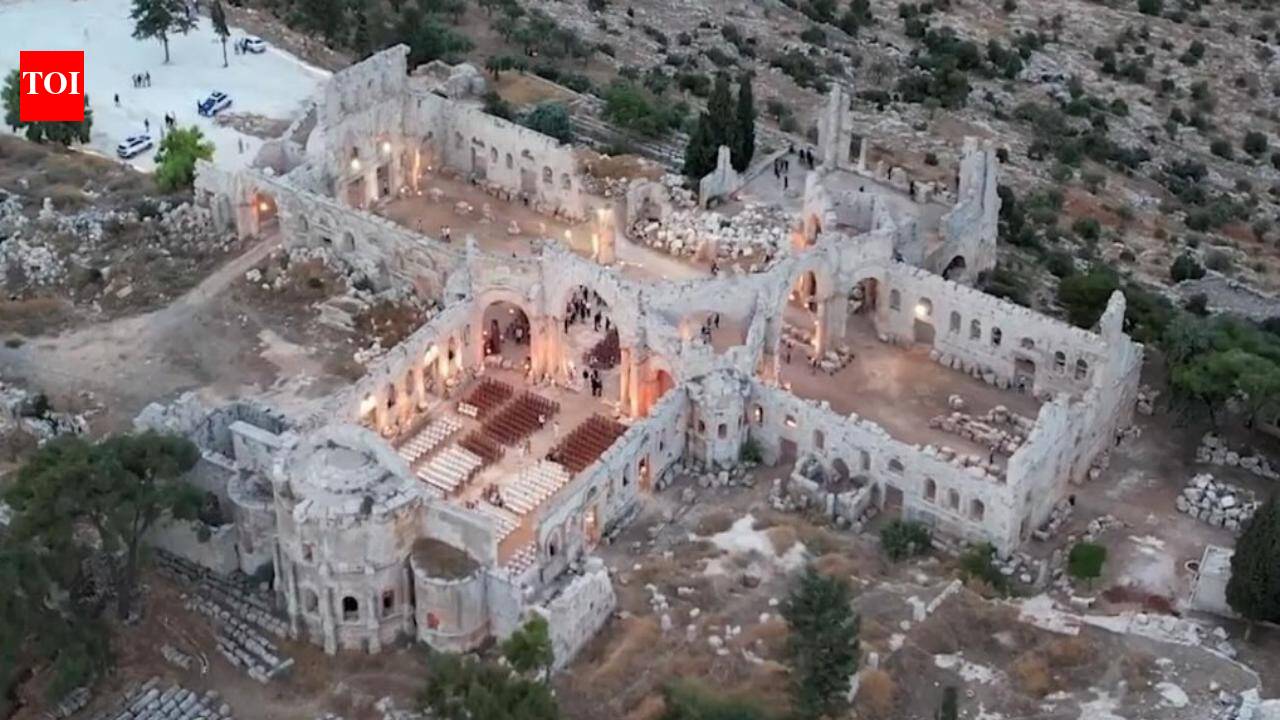
The Deir Samaan complex, also known as Qalaat Semaan or the Citadel of Simeon, reopened to visitors on September 28, 2026, following extensive restoration and war-clearance work, according to the report. Located in the countryside of Aleppo, the fifth-century site was built around the legacy of Saint Simeon the Stylite and is part of the Ancient Villages of Northern Syria, inscribed on UNESCO’s World Heritage List in 2011.
Built around the pillar of Saint Simeon
Simeon, born around 386 AD, became known for spending decades atop a pillar, which historical accounts say he gradually raised to about 18 metres. After his death in 459 AD, the place associated with his ascetic life became a major pilgrimage destination. Between 476 and 490 AD, during the reign of Byzantine Emperor Zeno, builders created a vast church around the pillar, with four basilicas arranged around an octagonal central space. The complex later grew to include a monastery, baptistery and facilities for visitors.
Earthquakes in 526 and 528 AD damaged the structure, including its wooden dome, which was never rebuilt. In the 10th century, Byzantine forces fortified the hill, giving rise to the name Qalaat Semaan. The stronghold later changed hands and eventually fell into disuse.
Repairs address decades of damage
The restoration, reported by Syria’s state news agency SANA, included repairs to visitor routes and facilities, rehabilitation of the main square and reinforcement of structurally vulnerable areas. Officials also reported work to return the Column of Saint Simeon to its location.
The site had sustained damage during Syria’s conflict, including an airstrike that damaged the surviving column in 2016, according to its official historical timeline. The February 2023 earthquake brought down the entrance arch and columns of the western section’s narthex. A 2026 report by Syria’s Directorate-General of Antiquities and Museums to UNESCO also identified serious structural vulnerabilities affecting the church and baptistery.
The reopening restores public access for visitors and researchers and forms part of efforts to revive tourism in Aleppo province. It also marks a significant step in the continuing work to protect and recover one of northern Syria’s most distinctive archaeological landmarks.