Yogesh Deshpande: From Advertising to Oscar-Contending Films
For filmmaker Yogesh Deshpande, the journey from advertising to feature cinema wasn’t a leap—it was a natural evolution built on discipline, emotional resonance, and storytelling precision. With over 100 ad films under his belt, Deshpande transitioned into cinema with a distinctive toolkit honed in the high-stakes world of commercials, where every second counts.
His debut feature, Swaragandharva Sudhir Phadke, a biographical tribute to the legendary Marathi composer-singer, has emerged as a critical success. The film not only recreates iconic music originally performed by Lata Mangeshkar, Asha Bhosale, Sudhir Phadke, and Kishore Kumar but also celebrates a rich cultural and musical legacy. Its impact was felt beyond regional boundaries—released across five countries and submitted for consideration as India’s official entry to the Oscars 2025.
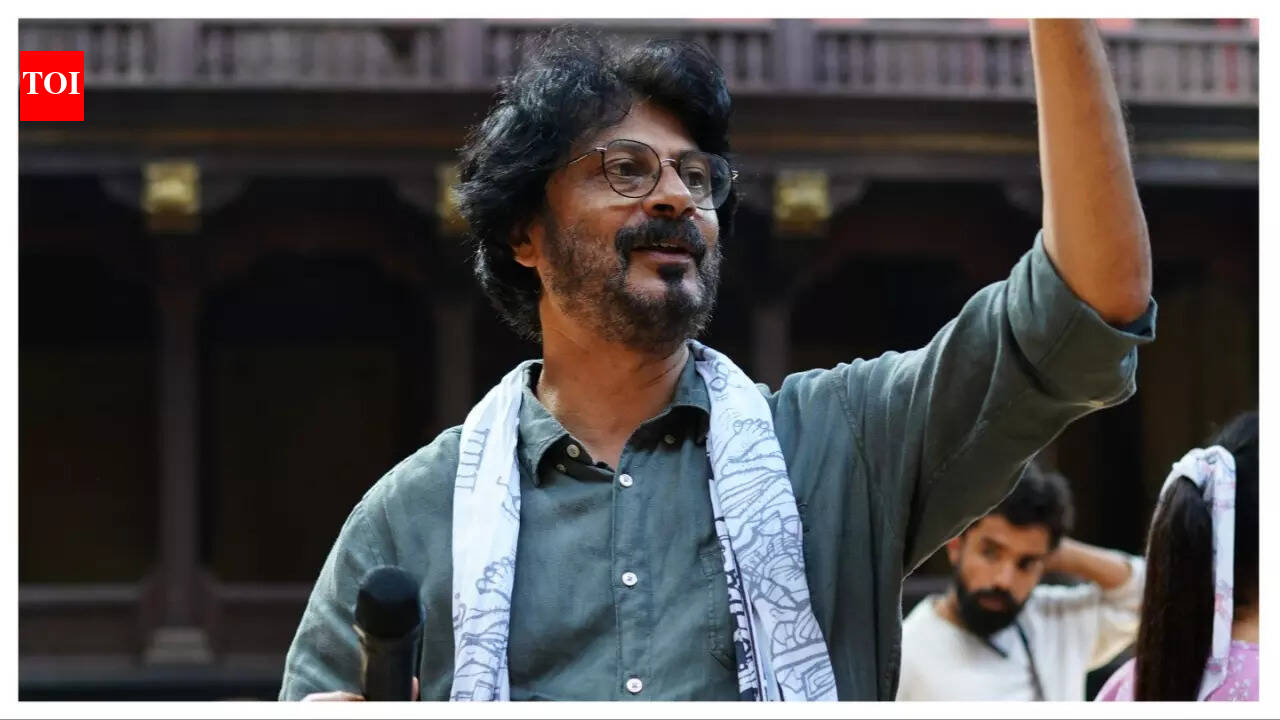
Deshpande attributes his cinematic discipline to his years in advertising. “People think advertising is smaller than cinema. I never did,” he says. “When you have 30 seconds to make someone feel something, you learn a discipline that no film school can teach. Every frame has to earn its place and every second has to breathe.”
Having directed more than a century of ad films, he developed what he calls a “muscle memory for storytelling”—a core philosophy centered on speed, precision, and deep emotional connection with audiences. “Advertising didn’t limit me. It armed me,” he asserts.
The transition to feature films, according to Deshpande, was driven by creative restlessness. “I kept telling 30-second stories and walking away feeling like I had only written the first line of a novel,” he recalls with a laugh. “There was always more to say—more texture, more character, more silence between the words.”
His first independent feature, 66 Sadashiv, became his “leap of faith,” allowing stories to unfold at their own pace. It marked not just a shift in format but a transformation in his identity as a creator. “It was my way of letting the story breathe.”
Deshpande’s entry into Hindi cinema was not the result of a five-year plan. “I never sat down with a five-year plan that said, ‘Step three: Bollywood,’” he admits. “But I always believed the stories I want to tell deserve the widest possible audience.” The global recognition of Swaragandharva Sudhir Phadke wasn’t engineered—it emerged organically from authenticity. “That truth is what is now naturally pulling me towards Hindi cinema. The language changes. The soul doesn’t.”
Looking ahead, Deshpande is in pre-production for his upcoming film Thumbz Up, set in the scenic yet socioeconomically complex Konkan region. The story centers on a woman grappling with the digital divide—a smartphone user who struggles to navigate technology despite its growing role in her livelihood.
“It started with an image I couldn’t shake,” he shares—“a woman in a coastal village holding a smartphone she doesn’t quite know how to use but desperately wants to because her life depends on it.”
Thumbz Up is not a film about technology, he emphasizes. It’s a human story about aspiration, resilience, and the gap between promise and reality. Anchored by a female protagonist who begins not as a hero but as a survivor, the film explores how strength emerges not from transformation, but from self-realization.
“She becomes strong by becoming more herself,” Deshpande says, adding, “I think audiences will laugh with her, ache for her, and, hopefully, stand up for her.”
With each project, Yogesh Deshpande continues to blur the lines between commercial craft and cinematic artistry, proving that storytelling—whether in 30 seconds or 120 minutes—is ultimately about emotional truth.