Gurgaon Durga Puja Pandals Recreate Rural Bengal, Mark 150 Years of Vande Mataram
Gurgaon's Durga Puja celebrations this year are weaving Bengali tradition together with contemporary ideas, with pandals across the city turning to rural roots, freedom-movement history and decades of nostalgia as their themes. The rituals began on October 16, with cultural programmes, community service drives and accessibility measures planned through the festival.
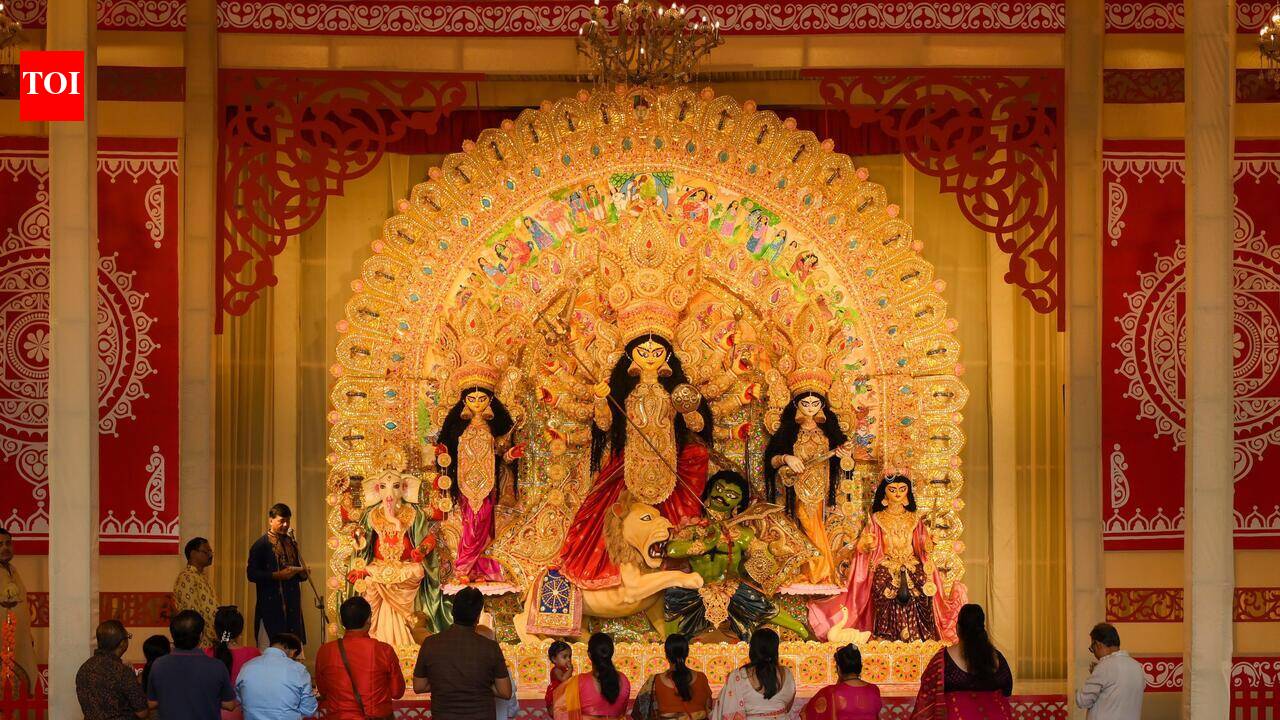
Alpona and community service in Sector 15
At Purbapalli Durgabari Samiti's 38th puja at the Sector 15 community centre, the theme is Alpona, featuring traditional Bengali designs hand-painted on the pandal. The celebrations are taking place at the community centre in Sector 15, Part II, and the pandal's entrance has been decorated too. The theme extends to the committee members as well — they are allowed to dress only in traditional dhuti, panjabi (kurtas) and saris decorated with the same motifs.
However, the biggest draw of this celebration is its community services. An eye check-up camp has been scheduled for October 17, while children from NGO Savera were invited to a sit-and-draw event earlier this month. A stall run by an organisation working with the autistic community will display and sell products made by its members, and a clothes collection drive will invite visitors to donate clean clothes in wearable condition.
“The puja rituals began on Oct 16,” said Anubed Mukherjee of the cultural committee. “We have cultural programmes planned for every evening. There will be Agomoni songs welcoming the goddess home, Garba fusion, orchestra performances, plays and dance. A live musical concert by Pranay Majumdar and Kritika Chakraborty is scheduled for Oct 20.”
There is a birth centenary tribute to Bengali celluloid's most prominent star, Uttam Kumar, too. Members will perform dhunuchi naach every evening after aarti.
Rural Bengal — and a pioneering accessibility push in Sector 56
If Purbapalli is bringing traditional art into the centre of its celebrations, Bangiya Parishad in Sector 56 is taking visitors into the Bengal of village life. “We are recreating grain-storage structures, mud-plastered houses and paddy-straw roofs to familiarise our children with our roots,” said Partha Dey of Bangiya Parishad.
The committee, which marked 20 years in 2025, has planned cultural performances by members who have rehearsed for months, alongside artists and bands from Kolkata. It has also made its pandal more accessible to people with disabilities and senior citizens, with an accessibility map, a separate route from the car drop-off point to the mandap, a pathway for wheelchair users and people who need support while walking, and parking close to the idol. An electric vehicle will be available to transport visitors who need assistance, and a separate resting room for senior citizens and a medical room with a recliner are also planned.
“The initiative includes training volunteers to assist visitors. UNESCO had conducted an accessibility training session for the committee's volunteers on Oct 14,” Dey said. “Assistance will be available throughout the day, though we would prefer visitors to inform us in advance so arrangements can be made.”
The accessibility work forms part of a three-year roadmap, with the first year focusing on people with physical disabilities and senior citizens. “We have been organising Durga Puja for so many years, but we had never really thought about how to make our pandal accessible to people who avoid crowded events because of accessibility barriers. We felt the time had come to address this,” Dey said.
150 years of Vande Mataram in Sushant Lok
At Sushant Lok's Sector 27 Community Centre, the celebrations will look back at a song that became a rallying cry during India's freedom movement. The puja committee has chosen its theme to commemorate 150 years of Vande Mataram. The walls of the pandal will trace the song's journey and its association with the Swadeshi movement, highlighting milestones in its musical and literary history, including an early musical setting and a Hindi translation published in the journal Saraswati in 1906.
The committee, celebrating its 27th Durgotsav, has commissioned Delhi-based artisan Subir Pal to make the idol. It will be dressed in real Banarasi saris, with handpicked ornaments made of reusable brass, copper and tin. The cultural programmes include performances by Urban Monkz, Hamelin Group and Shiboprosad & Co, which will present Bengali-English fusion music, and a concert by Indian Idol alumnus Banoshree on Navami. There are arrangements for bhog every afternoon, and food stalls will offer Bengali favourites such as Kolkata biryani, kathi rolls, fish chops, fish fry and mutton rezala, alongside other cuisines.
“We want to uphold traditions that have been there across generations. We also want it to be accessible to everyone and want to make it a homely affair,” said committee member Avijit Basu. Their motto, Ghorer Pujo, Shobaar Pujo, Shera Pujo, reflects its emphasis on making the celebration feel like home while remaining inclusive.
Tracing 35 years of nostalgia in DLF City
At DLF Phase-1 Community Centre, the DLF City Durga Puja & Bengali Cultural Society is marking its 35th year with the theme ‘35 Years of Nostalgia'. A photo wall tracing the puja's journey will feature former members and families, while the pandal's decor draws inspiration from rural Bengal. The idol will be made entirely of terracotta, with members crafting decorations using shola and wool.
The cultural programme will bring generations together through dhunuchi naach performances by senior citizens, youngsters and children. The youngsters' performance will incorporate elements of Chhau dance and draw on the stories of Mahishasura Mardini and Nabapatrika.
“We celebrate the contribution of our members and how they shape the future of the puja. Most of our cultural programmes are presented by members,” said Sunetra Ghose, an executive committee member.
New Gurgaon and Sector 10A celebrations
At the New Gurgaon Garden City Bengali Cultural Association in Sector 85, the 11th puja, themed ‘Maa Aaschen Abar', will feature music, a fashion show, painting and photography contests, and a concert by Sayantan Adhikary of Zee Bangla's Sa Re Ga Ma Pa. Traditional Bengali prasad, including khichuri, and community feasts will add to the celebrations.
“Our aim is to keep the celebrations as close to tradition as possible so that people living away from home can feel at home,” said Sraboni Chakraborty, a member.
Meanwhile, Sharodiya Puja Samity in Sector 10A will mark its 25th year with a lotus-themed pandal and alpona designs. Alongside musical performances and an Agomoni presentation, the committee has planned a Dandiya night, a blood donation camp, health check-ups and community meals.
Across Gurgaon, the celebrations blend art, music, food and shared rituals, turning the pandals into spaces where cultural memories are preserved and new traditions take shape.