UPSC Marks Centenary: How India’s Premier Recruitment Body Evolved Across 100 Years
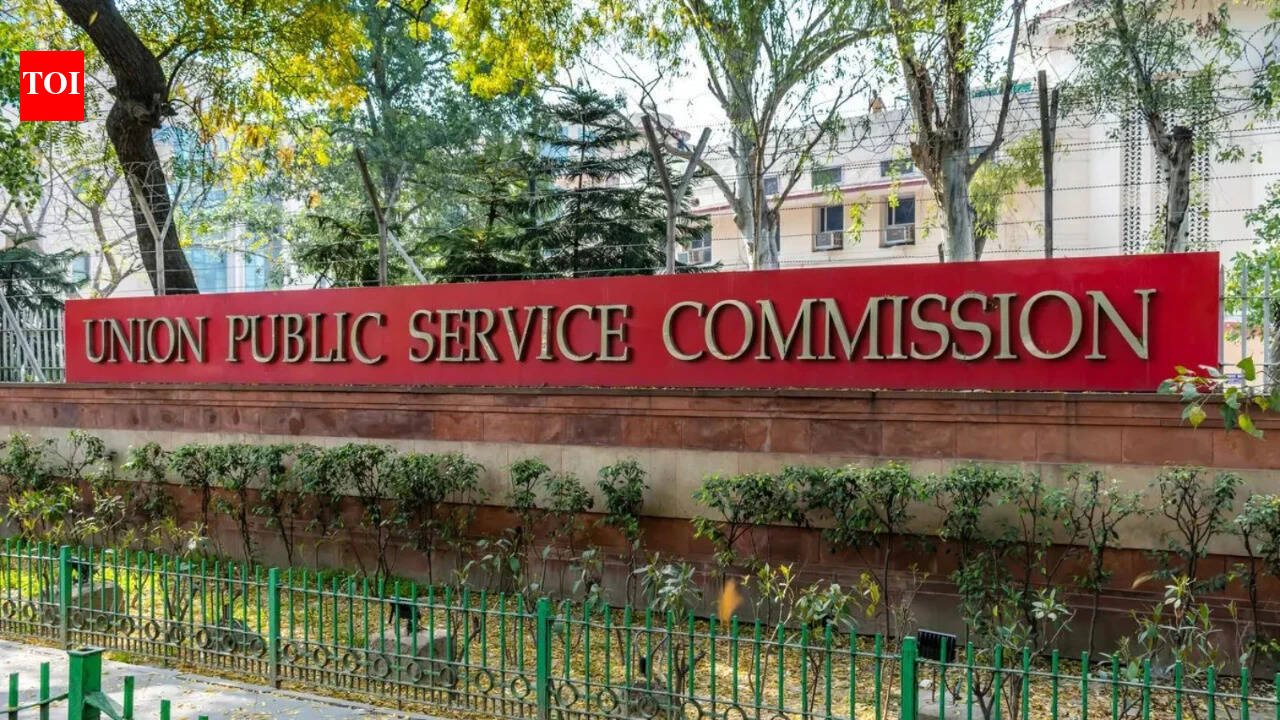
Described by Sardar Vallabhbhai Patel on April 21, 1947, as the "steel frame of India," the country's civil services have long stood at the heart of Indian governance. Fittingly, Metcalfe House in Delhi, where Patel addressed the first batch of probationers, had already housed the recruiting body for over two decades. On October 1, 2026, the Union Public Service Commission (UPSC) marks its centenary, capping 100 years of transforming from a colonial recruitment tool into an independent constitutional authority.
From Colonial Control to Indian Representation
The system of merit-based entry began in 1855 with the Indian Civil Service (ICS) examination, held exclusively in London. Conducted in English and testing candidates on Greek and Latin, the examination heavily favoured those educated in the British system. In 1863, Satyendranath Tagore, elder brother of Rabindranath Tagore, made history by sailing to England and becoming the first Indian to clear the examination.
Subsequent administrative changes lowered the upper age limit to as low as 19, severely restricting Indian participation. By 1919, only 78 of 1,255 ICS officers were Indian. The Commission itself was established in 1926 under the Government of India Act, 1919, chaired by Sir Ross Barker of the UK Home Civil Service. Although initially burdened by recommendations such as the Lee Commission's rule reserving 40% of intake for British candidates by birth, the establishment of a permanent recruiting body on Indian soil laid the groundwork for today's UPSC.
Transition to a Constitutional Pillar
Following India's independence, Shri H.K. Kripalani became the first Indian Chairman in 1947. With the adoption of the Constitution on January 26, 1950, the Federal Public Service Commission transitioned into the Union Public Service Commission under Part XIV (Articles 315 to 323).
The Constitution established strong safeguards to protect the Commission's autonomy. Under Article 317, members can only be removed by the President following an inquiry by the Supreme Court, while Article 322 charges expenses directly to the Consolidated Fund of India. Furthermore, under Article 323, any instance where the government rejects the Commission's advice must be placed before Parliament with formal reasons. In 1949, Dr Rajendra Prasad highlighted in the Constituent Assembly that the independence of such commissions was vital to guard against "jobbery, nepotism and favouritism."
Exponential Growth and Expanding Diversity
The scale of UPSC's operations has expanded dramatically over the decades:
- Total Applications: Grew from 42,727 in 1950–51 to a peak of over 45.1 lakh in 2022–23.
- Examination Centres: Increased from 8 centres in 1950 to 86 in 2026.
- Women Candidates: In 1952, only 3 of 83 recommended candidates were women. By 2025, women made up 31.2% (299 of 958 recommended candidates) and secured 11 of the top 25 ranks.
- Social Representation: Scheduled Caste recommendations grew from 9 in 1955 to 158 in 2025, while Scheduled Tribe recommendations rose from 2 in 1956–57 to 73 in 2025. Recommendations for Persons with Benchmark Disabilities reached 42 in 2025, up from 3 in 2002.
The Commission has also incorporated newer affirmative action policies into its platform, including the Economically Weaker Sections (EWS) quota introduced in 2019 and a distinct transgender category added to applications in 2020.
Modernisation and Integrity Reforms
To preserve integrity and efficiency, recent years have seen major technological and procedural overhauls. During the Civil Services (Preliminary) Examination on May 24, 2026, mobile face authentication was deployed across approximately 5.5 lakh candidates, taking just six to eight seconds per applicant. A retrospective scan of 15 years of applicant data also led to the disqualification of 569 candidates who provided false information to claim extra exam attempts.
Other reforms include randomized interview boards driven by automated software, the prompt publication of provisional preliminary answer keys with online objection mechanisms, and the expansion of the 'Pratibha Setu' initiative to connect non-selected final-stage candidates with alternative public and private employers.
Reflecting on the milestone, UPSC Chairman Dr Ajay Kumar remarked: "An institution that has endured for a hundred years does so not because it resists change, but because it knows what must never change."