1,300 Years of Islamic History Unearthed at Saudi Arabia's Othman bin Affan Mosque in Jeddah
1,300 Years of Islamic History Unearthed at Saudi Arabia's Othman bin Affan Mosque in Jeddah
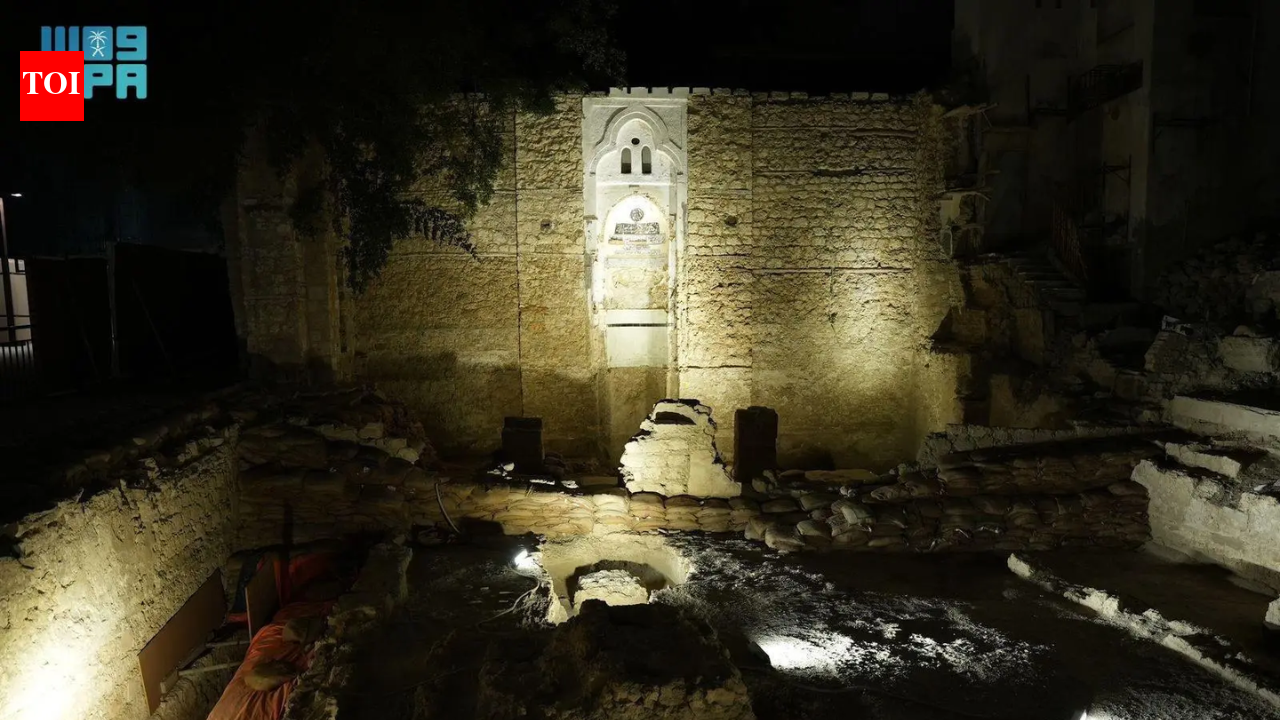
Tucked away in the narrow medieval lanes of historic Jeddah, the Othman bin Affan Mosque stands as a testament to over 1,300 years of continuous Islamic heritage. Fresh excavations, as reported by the Saudi Press Agency, have uncovered layers of history that connect early Islamic foundations to expansive global trade networks and evolving architectural traditions.
Foundations Tied to Early Islam and Jeddah's Rise
The mosque's origins trace back to 33 AH (654 CE), making it one of Jeddah's oldest archaeological and religious landmarks. Its significance is rooted in Caliph Othman bin Affan, who designated Jeddah as the primary Islamic port. This pivotal decision elevated the city into a vital gateway for pilgrims en route to Makkah and a bustling center for maritime trade.
Positioned amid ancient pathways and surrounded by traditional buildings, the mosque has been in uninterrupted use for more than 1,300 years. This enduring presence underscores its religious importance while mirroring Jeddah's transformation from an early Islamic settlement to a thriving port city that bridged diverse regions worldwide.
Layers of History Spanning Major Islamic Empires
Excavations have exposed multiple historical strata, each aligned with key Islamic eras: the Umayyad Caliphate (661–750 CE / 41 AH onward), the Abbasid Caliphate (750–1258 CE), and the Mamluk Sultanate (1250–1517 CE / up to 923 AH). These layers illustrate nearly a millennium of sustained activity and development from 41 AH (661 CE) to 923 AH (1517 CE).
During the Umayyad period, coral-stone foundations and port enhancements accommodated surging pilgrims and traders. As Islamic rule expanded from Spain to India, Jeddah solidified its status as a maritime hub.
The Abbasid era, known as the Islamic Golden Age, brought advancements in science and infrastructure. Findings such as glass lamps and aqueduct channels indicate upgrades to the mihrab and water systems, positioning Jeddah within a broader intellectual and cultural Red Sea network.
Under the Mamluks, renowned for military prowess and trade dominance, Jeddah's fortifications were bolstered. Artifacts like ebony imports from Ceylon (modern-day Sri Lanka) and porcelain fragments highlight intensified commerce and long-distance exchanges, evolving the mosque into a sturdy element of a fortified, economically vibrant port.
Evidence of Global Trade and Advanced Engineering
A standout discovery is an 800-year-old sophisticated water system, exemplifying advanced engineering for coastal water management and sophisticated urban planning.
Rare ebony columns in the mihrab, analyzed scientifically and traced to ancient Ceylon, underscore Jeddah's Indian Ocean trade links. Complementing this, early Chinese porcelain among thousands of recovered artifacts confirms the city's integration into a vast Middle East-Asia trade web.
These revelations portray the mosque not merely as a worship site but as a nexus of trade, travel, and cultural interchange, emphasizing Jeddah's global maritime role.
Architectural Evolution Across Seven Phases
The mosque has endured seven distinct architectural phases, now digitally documented for posterity. This preservation captures adaptations over time, influenced by functional needs and historical shifts.
Construction techniques feature coral stone as the core material, wooden elements for structure, and designs tailored to humid coastal conditions. Each phase—through expansions, repairs, or modifications—reflects the era's impacts, ensuring a detailed record for researchers and visitors.
A Living Heritage Site in Modern Jeddah
Today, the Othman bin Affan Mosque functions as both an active place of worship and a cultural beacon. It anchors Jeddah's cultural routes, drawing history enthusiasts and blending Islamic legacy with modern activities.
This integration preserves the Kingdom's architectural identity and historical narrative. The site's continuity—from active relic to vibrant urban element—embodies a legacy spanning faith, trade, and daily life.
In essence, the mosque weaves a narrative of Jeddah's evolution: from its inception as an Islamic port to its medieval trade prominence and contemporary safeguarding. Each unearthed layer, from coral foundations to exotic imports, illuminates the interplay of religion, commerce, and community that defined the city.