Pochettino admits regret over Balogun ban U-turn that 'changed the energy' of USMNT's World Cup
Pochettino's mea culpa on the Balogun affair
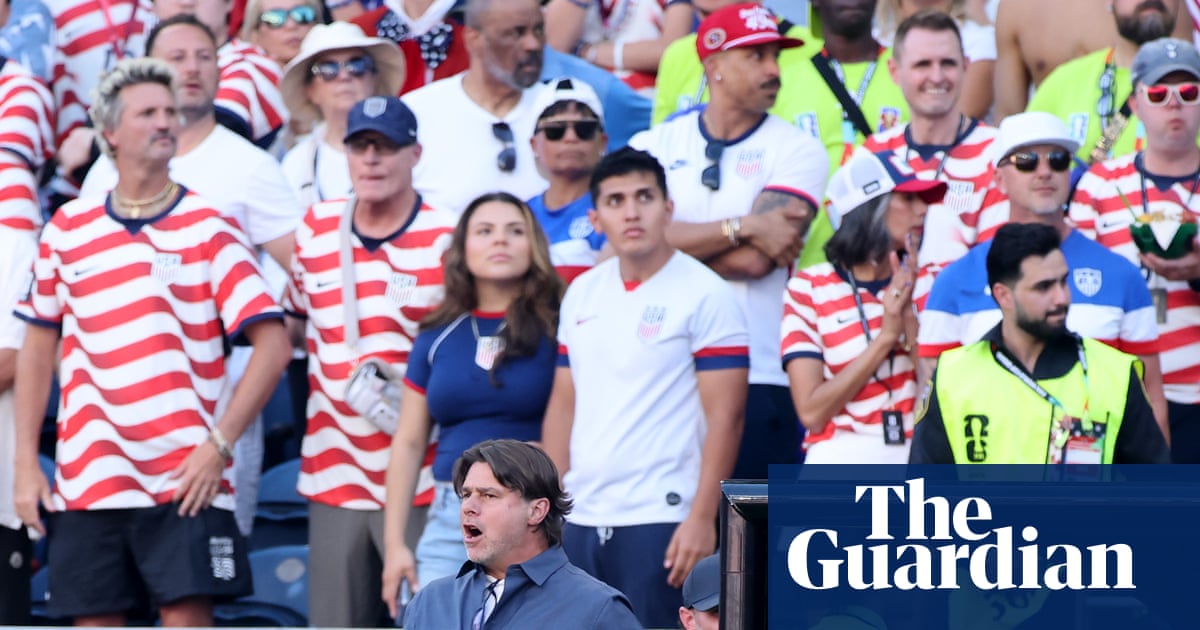
United States men's national team head coach Mauricio Pochettino has admitted he regrets not inserting himself into the controversy that engulfed Folarin Balogun at this summer's World Cup, claiming the episode altered the very atmosphere around the squad before a humbling defeat to Belgium.
Speaking in Spanish to broadcaster Andrés Cantor for Fútbol de Primera, Pochettino conceded he was kept at arm's length from a process that drew global scrutiny. “Maybe I regret not having been more involved,” Pochettino said. “In the situation that later generated all of the negativity afterwards. Maybe I regret not having been more inside of that decision making process. I wasn’t involved in that decision, to overturn the red card. As a football person, I understand everything … Beyond whether we were right or not [about the call on the field], I think nobody understood how it happened.”
How the red card became a political flashpoint
The storm began when Balogun was shown a red card for a challenge on Bosnia and Herzegovina defender Tarik Muharemović — an offence that, under the rules, carried a one-game suspension. The forward's ban for the subsequent fixture against Belgium was suspended after the US Soccer Federation and US president Donald Trump lobbied Fifa. Trump said he personally placed a call to Fifa president Gianni Infantino to ask for the ruling to be reviewed.
Infantino, however, has maintained that the decision to reinstate Balogun was made independently by Fifa’s disciplinary committee. The entire affair cast a pall over what had been an otherwise positive tournament for the US up to that point. Belgium’s players and coaches said in the wake of it that the episode provided extra motivation ahead of the match, while Balogun himself later spoke of having felt uncomfortable with the attention the situation placed upon him.
‘The energy changed’
The US were thoroughly outclassed by Belgium in a 4-1 loss, beaten badly in every phase of play. In his remarks to Cantor, Pochettino suggested the backlash surrounding the Balogun situation actively contributed to the defeat.
“As a football person,” said Pochettino, “where many times we have that emotional intelligence – [we know] that energy can change things. I think that energy changed the minute that happened. And by then, the game is played under different parameters, and that match was never a match where I believe the tactics, strategy, or selection of players would have changed the course of what happened during the game.”
Pochettino also suggested that the group which participated in US Soccer’s efforts to get Balogun on the field against Belgium may have been too large for his liking. “That’s something we’ve talked about internally,” said Pochettino. “I think that these types of things have to be managed under a much more limited structure, a structure where decisions have to be made by very few people, where very few people manage these types of things. [Those decisions] should be strictly sporting and common sense, beyond whether a rule or a committee can say one thing or another.”
What comes next
Pochettino’s USMNT will face Peru in Orlando on Saturday before taking on Chile, Mexico and Canada across the remainder of this extended international window — a run of fixtures the coach will hope passes without the off-field drama that defined the summer.