From ‘Smooth Operator’ to ‘The Professor’: The stories behind F1’s most famous nicknames
Formula 1’s greatest drivers have often carried a second identity alongside their racing names. Some nicknames were affectionate, others teasing, and a few were earned through moments of extraordinary speed, toughness or controversy. Together, they have become part of the sport’s folklore.
Modern personalities and unforgettable radio moments
Sergio Perez is commonly known as “Checo”, a shortened form of Sergio used in Mexico. During his Red Bull years, however, he also became known as the “Mexican Minister of Defence” after his determined fight with Lewis Hamilton at the 2021 Abu Dhabi Grand Prix. Perez’s resistance slowed Hamilton and helped Max Verstappen close the gap in the championship battle before Verstappen secured his first world title.
Alex Albon’s “Albono” nickname dates back to the early days of his motorsport career. His blood type was printed on his racing suit as “A. Albon O+”, a detail that was easily read as “Albono”. The name later became an affectionate part of his online persona when he streamed esports alongside Charles Leclerc, Lando Norris and George Russell during the first COVID-19 lockdown.
Carlos Sainz effectively gave himself the “Smooth Operator” label during a strong spell with McLaren in 2019. After finishing in the top five at the Hungarian Grand Prix, Sainz sang Sade’s 1984 song “Smooth Operator” to his race engineer over team radio. He repeated the performance at the Brazilian Grand Prix, creating one of the season’s most memorable radio moments — even though he initially did not realise how famous the song was.
Daniel Ricciardo’s “Honey Badger” nickname captured the contrast between his cheerful personality and his aggression on track. Ricciardo once explained: “Honey badgers are cuddly and cute, super good-looking. But when something takes what’s theirs, they fight back.”
Sebastian Vettel became “Inspector Seb” because of his habit of examining rival cars in parc fermé. His close analysis of the technical details of other machines reflected the intelligence and curiosity that accompanied his four Drivers’ Championships.
Cool heads, teasing labels and the Flying Finns
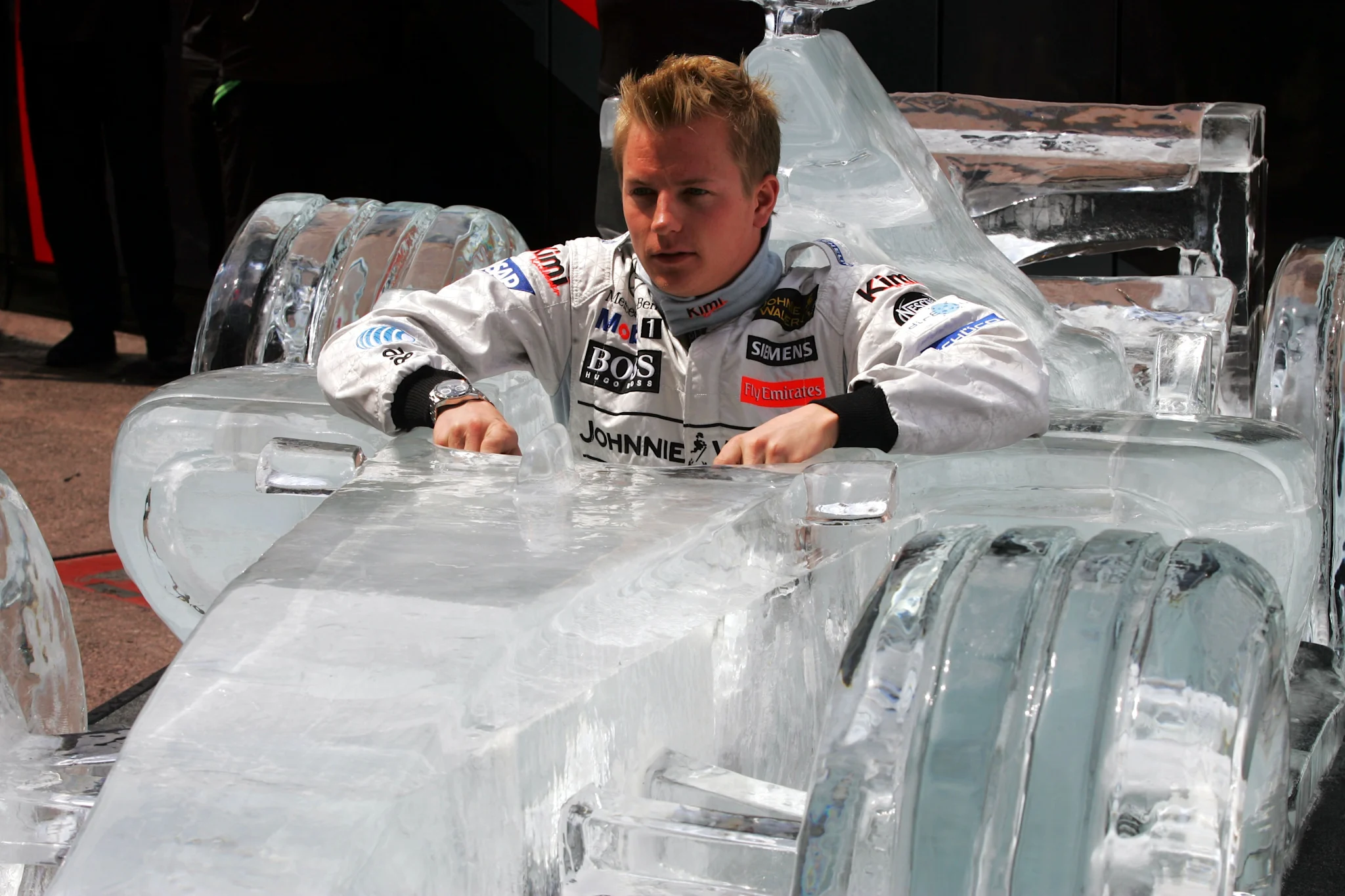
Kimi Raikkonen’s “The Iceman” nickname was given to him by Ron Dennis during his McLaren period. It suited the Finn’s calm, nonchalant manner both behind the wheel and in front of the media, and remained attached to his reputation throughout his career.
Nico Rosberg’s “Britney” nickname was less flattering. His blond hair and youthful appearance prompted team-mate Mark Webber to compare him to Britney Spears when Rosberg arrived in Formula 1 with Williams in 2006. After Rosberg crashed on the way back to the pits during the Brazilian season finale, Webber’s radio message — “Britney’s in the wall” — ensured the joke would be remembered.
Mika Hakkinen earned “The Flying Finn” through his immense speed and seemingly unflappable focus. Mentored by Keke Rosberg, Hakkinen became one of Michael Schumacher’s principal rivals and won back-to-back championships in 1998 and 1999, along with 20 Grands Prix.
Legends who made their nicknames part of F1 history
Nigel Mansell was embraced by Ferrari supporters as “Il Leone”, or “The Lion”, because of his aggression and passion. His reputation was strengthened by victories such as his charge from 12th to first at the Hungaroring, while his Ferrari debut included a win in Brazil.
Alain Prost was known as “The Professor” for his analytical, methodical approach to racing. His cerebral style helped him compete with Ayrton Senna during one of Formula 1’s fiercest rivalries and contributed to four Drivers’ Championships.
Niki Lauda’s “The Rat” nickname evolved from the earlier “The Mouse”, a reference to his teeth. Other labels, including “King Rat”, “Super Rat” and “The Computer”, reflected either his appearance or his systematic, detached approach in the cockpit, but “The Rat” endured.
James Hunt’s “Hunt the Shunt” nickname came from his early tendency to become involved in spectacular crashes. His willingness to push beyond the limit eventually became more controlled, helping him win the 1976 Drivers’ Championship.
Graham Hill became “Mr Monaco” after finally winning at the principality in 1963, following six years of trying. He added four more victories at the iconic street circuit in 1964, 1965, 1968 and 1969, creating a legacy later surpassed by Ayrton Senna.
Jack Brabham was called “Black Jack” because of his dark hair and mysterious air, despite being an exceptionally thoughtful and technically astute driver. He remains the only person to win a world championship in a car carrying his own name.
Juan Manuel Fangio was known as “El Maestro”, a title popularised by his admirer and team-mate Stirling Moss. Fangio’s five championships and remarkable record — including 48 front-row starts from 51 Grands Prix — made the description an appropriate tribute to his mastery.
Whether born from a team-radio joke, a physical characteristic, an unusual habit or a defining performance, these names helped turn elite racers into enduring characters. In Formula 1, a nickname can outlive a career and become part of the history attached to a driver forever.