Disney+ drops studio dog and moves to traditional coverage after Women's Champions League debut backlash
Disney+'s first night covering the Women's Champions League was unlike anything the competition had seen before — and plenty of seasoned fans wish it hadn't been. The streaming platform's debut studio show, The Hangout, was hosted by the former England internationals Alex Scott and Lianne Sanderson alongside the content creators Tyra Mills and Alex Bailess — and, quite inexplicably in the eyes of many viewers, a golden retriever called Barley Boy. By the second night of coverage the dog had been quietly dropped, with the production edging back towards a more traditional broadcast setup.
Reviewing the opener for the Guardian, the TV presenter Max Rushden argued that the backlash points to a structural imbalance rather than a single failed gimmick. "Consistent with all the criticism is the truth that the men's Champions League would never be covered in the same way," he wrote.
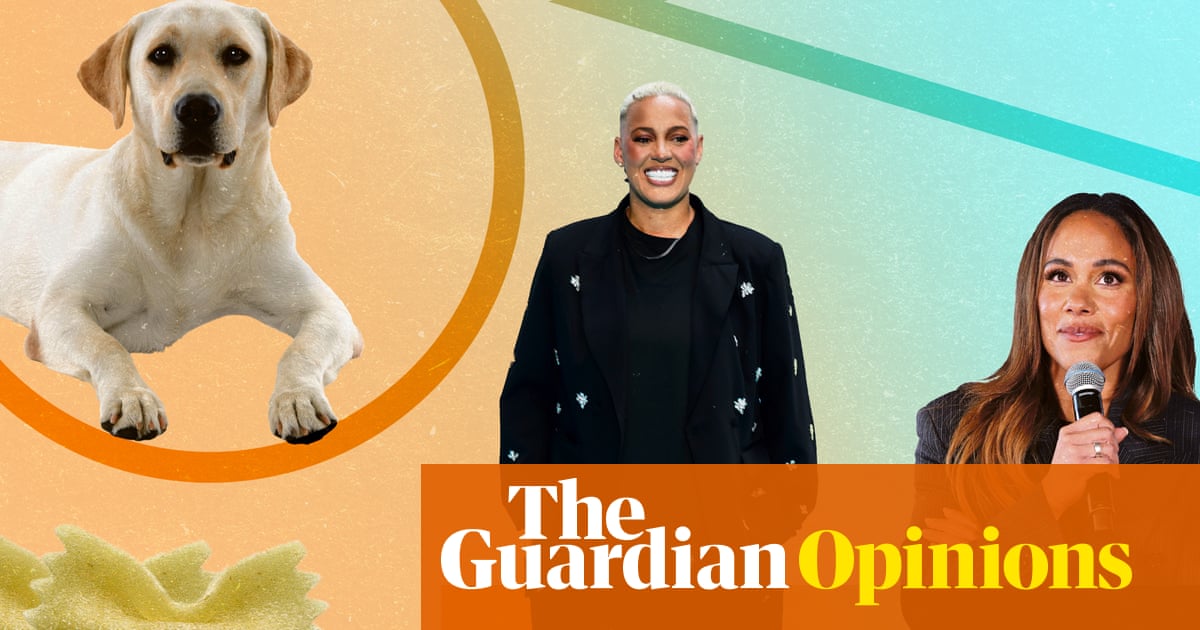
Pasta on the tactics screen and a dog with more followers than the host
The opening night featured a quiz about Italy, in which the panel was asked to guess the Italian name for football and to identify what pasta the reporter in Milan was cooking. "There's an incredible still image of the panel staring at a load of farfalle on a big screen normally reserved for team lineups or key match incidents," Rushden wrote. The canine co-host, meanwhile, had a following of his own: Barley Boy "at the time of writing has 82,000 more Instagram followers than I have — I must work on my reels".
The immediate reaction, Rushden noted, was "a mix of bewilderment and fury from seasoned lovers of the women's game". The Telegraph's Kathryn Batte wrote an "understandable critique" of the show, while the broadcaster Flo Lloyd-Hughes was withering on X:
"Disney's new UWCL coverage is the closest we've seen to CBBC football (derogatory). I wouldn't be surprised if we see someone gunged for making a wrong prediction or perhaps Raven will make a cameo. Keep stopping to remind myself this isn't a dream."
The broadcaster Marva Kreel, also posting on X, argued that the problem ran deeper than one programme's tone:
"I think a lot of the problem with the debates in women's football broadcasting over analysis and punditry v content creation and gimmicky fun, is that in men's football you can get both – and in different shows. In women's football you get one show, and so they try to do it all."
Rushden called that "a fair point", and it framed the central argument of his column: women's football broadcasting is asked to be everything at once, while the men's game gets analysis and entertainment in separate shows.
Rushden: technically harder than Super Sunday, but the wrong call
Reluctant to simply pile in — he opened his column with the disclaimer that he has "made a lot of bad TV programmes" and "some experience when it comes to reviewing the opening night of the Disney+ coverage" — Rushden acknowledged the ambition behind the experiment. "The show Disney tried to make ... is technically much harder than Super Sunday – but that doesn't mean it was the right call," he wrote. "I imagine the bosses told the producers they want to bring in a younger audience. I have been told this before. Exactly how to do that is impossible to work out. Should I stop making references to Jossy's Giants and Aswad?"
He also pointed to the economics that push broadcasters towards social-media-friendly formats, recalling his time at Sky, where "a Facebook livestream filmed on an iPhone in the green room would get as many views as the show itself with the costs of studio/lighting/sound/producers etc". And while he admits to disliking the phrase "content creator" — "perhaps I'm nervous that eventually they'll take all my jobs" — he defended Mills and Bailess personally: "From what I saw, Bailess and Mills came across as very personable and fun – which was clearly the brief – and you can't criticise anyone for taking a job. And they bring a following with them – quite how many followers lead to subscriptions is a different question."
Rushden even allowed that Disney's strategy might be cynically effective: "Disney may be being cynical – people are talking and writing about it. The hardcore will watch anyway. Had they produced more traditional coverage, no one would have said anything. And sometimes you have to try something different." He added, with typical self-awareness: "I wouldn't want to be too critical; Disney may give me a gig one day."
He saved particular sympathy for Scott, whom he described as someone who "perpetually finds herself in the middle of some sort of culture war", pointing to the "pretty troubling" discourse around the end of Football Focus. "I imagine Scott didn't suggest having a dog in the studio or having guess the pasta," he wrote. "But sometimes as a host you have to do what you're told and do it with conviction."
The dog did not return
The clearest sign of a rethink came quickly. "The dog did not return for the second night of coverage," Rushden wrote. "They made a show, people didn't like it and they had to go again the next night. Do you double down, screw the haters, or try to subtly move towards a more traditional setup?" His verdict on what followed: they went for the latter.
For Rushden, the lesson is that experimentation must not come at the expense of the game itself. "Live football coverage hasn't changed dramatically in 50 years. Welcome, team news, managers, bit of tactics or player focus, throw to commentators," he wrote. "The reality of live football coverage is that people are watching because they want to watch the game. If people want comedy, they'll watch Curb Your Enthusiasm. If Liverpool are playing Real Madrid, the fans will watch it – and either enjoy or endure the coverage." His closing advice to Disney+: "You can't magic up an audience, but you can make people feel like you respect the game, you can do it in an entertaining way without introducing animals, and people will come back and watch you again."
A rocky debut week beyond the studio
The studio experiment was not the only early stumble for Disney+'s coverage. The Guardian reported on 23 September that the platform — which took over the competition's European rights from Dazn in 2025 — had been criticised after a technical fault triggered an advert break that interrupted the second half of Arsenal's 1-0 Women's Champions League win over HB Køge, cutting viewers off from the action for around three minutes during the Tuesday night's live coverage.
Between the glitch and the golden retriever, Disney+'s first week holding the Women's Champions League rights has been a steep learning curve — one that, if the second night's quietly more traditional setup is anything to go by, the broadcaster appears to be taking on board.