Chris Evert confirms third ovarian cancer diagnosis and will miss Wimbledon 2026
Chris Evert confirms third ovarian cancer diagnosis
Eighteen-time Grand Slam singles champion Chris Evert has announced that ovarian cancer has returned for a third time, saying she will miss Wimbledon 2026 to focus on her health. In a statement shared on social media on June 25, 2026, the American tennis great said she had undergone surgery after CT and PET scans showed the cancer had returned, and that she would begin chemotherapy in the coming weeks.
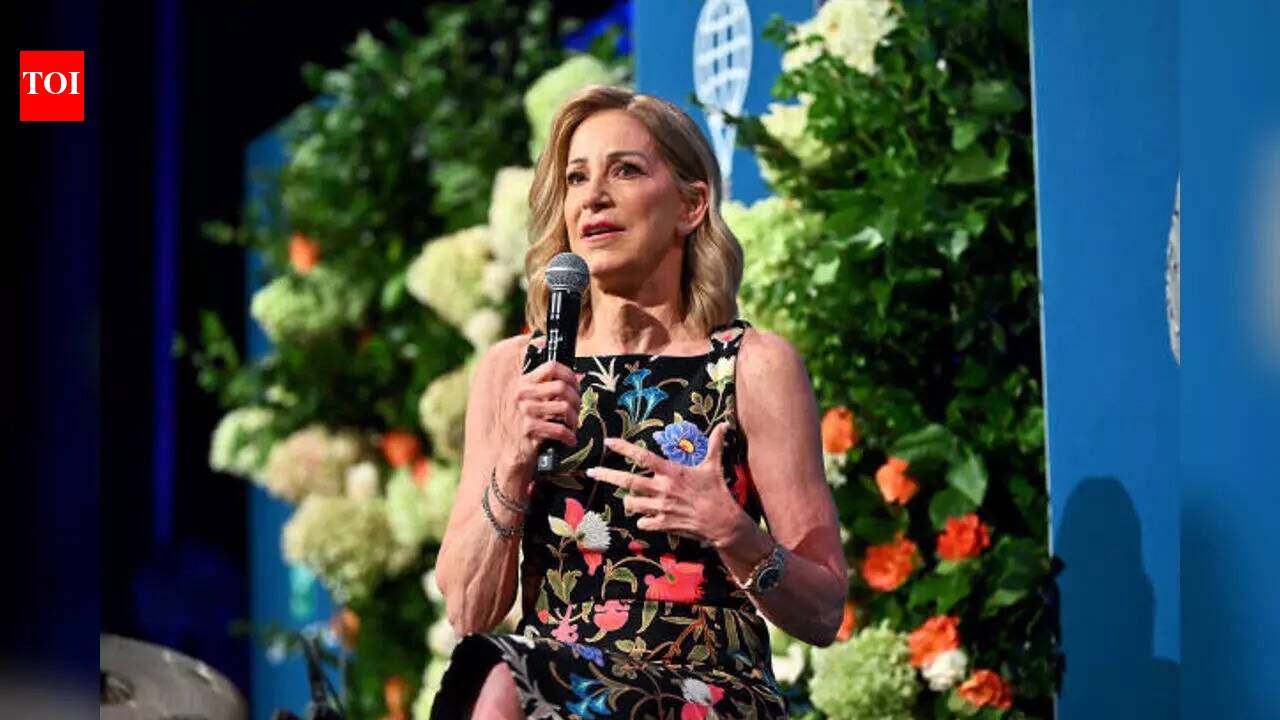
“Ovarian cancer is relentless, but I will stay optimistic and determined in continuing to fight this battle,” Evert said.
The latest recurrence adds a sombre new chapter to a health journey that first became public in January 2022. Evert initially announced a Stage 1C ovarian cancer diagnosis that year, completed chemotherapy and later said she was cancer-free. The disease returned in December 2023, requiring further treatment, and in June 2024 Evert shared positive news about her recovery — before the challenge resurfaced again in June 2026.
Forged by a father and a famous backhand
Evert grew up in Fort Lauderdale, Florida, in a household where tennis was part of daily life. Her father, Jimmy Evert, was a tennis coach who helped shape her game from a young age and also coached her siblings, making the sport a shared family pursuit. Chris developed a two-handed backhand that became one of the most recognisable parts of her game, allowing her to control rallies from the baseline with accuracy and consistency rather than raw power.
Her rise was signalled at the 1971 US Open, where, aged 16, she reached the semifinals on her debut before losing to Billie Jean King. That run marked the beginning of a career that would place her among the greatest players in women’s tennis. Evert went on to win 18 Grand Slam singles titles: seven at the French Open, six at the US Open, three at Wimbledon and two at the Australian Open. She also won 125 consecutive matches on clay between 1973 and 1979, a streak that underlined her dominance on the surface.
The Women’s Tennis Association credits Evert with 154 singles titles and a career win-loss record of 1,304-144. She became the first world No. 1 when the WTA introduced its computer rankings in November 1975 and spent 260 weeks at the top. Her composure under pressure earned her the nickname “The Ice Maiden.”
Family loss that changed everything
While Jimmy helped build her technique, her mother Colette and her siblings — Drew, John, Jeanne and Clare — were central to the family life that ran alongside her career. Jeanne Evert Dubin also played professional tennis; the sisters travelled on tour, played together and raised their children while remaining close.
In February 2020, Jeanne died at the age of 62 after a two-and-a-half-year battle with ovarian cancer. In a tribute after her sister’s death, Chris wrote that they had grown up, played on tour and raised their children together. The loss later became directly tied to Chris’s own health: after Jeanne’s passing, doctors revisited a stored blood sample for genetic testing. New information about a genetic variant showed Jeanne carried a BRCA-related risk, and Chris was advised to be tested. She also tested positive.
That discovery changed what followed. In December 2021, Chris underwent a preventive hysterectomy. Doctors found cancer in a fallopian tube and one ovary, along with cancer cells in fluid around her reproductive organs. The disease was classified as Stage 1C, and she later underwent chemotherapy. She revealed the diagnosis in January 2022, explaining she wanted to raise awareness about family history and the importance of testing when there may be an inherited risk.
A legacy bigger than the trophies
Evert retired from professional tennis in 1989 but remained involved as a commentator, mentor and supporter of young players. Her honours include 18 Grand Slam singles titles, eight Fed Cup team titles with the United States and induction into the International Tennis Hall of Fame in 1995. She is also a mother to three sons, Alexander, Nicholas and Colton.
She helped make the two-handed backhand a defining shot in women’s tennis, using control and consistency to compete against the strongest players of her generation. Yet she has drawn a clear line between the challenges of sport and those of serious illness. “A match has a score and an end point. A serious illness does not offer the same certainty,” her story observes. Her openness about her diagnosis has helped bring attention to family history, genetic testing and early diagnosis — a cause given deeper meaning by her sister’s death and her own early detection.
Her experience also shows why genetic testing can matter for families with a history of certain cancers, though testing and screening decisions depend on a person’s medical history and should be discussed with qualified healthcare professionals. Evert’s story reaches far beyond tennis because it connects a familiar sporting figure with an issue that affects families worldwide.