Audi and BP lift lid on F1's 'brutal' Advanced Sustainable Fuel race for 2026
F1's new era demands a clean slate on fuel
When Formula 1 ushered in its 2026 rules reset, it wasn't just new cars and new power units that hit the grid. The sport and its governing body, the FIA, mandated Advanced Sustainable Fuels — derived from carbon capture, municipal waste and non-food biomass — as a major step up from the 10% ethanol biofuel used in the previous turbo-hybrid era, itself part of F1's pledge to reach Net Zero by 2030.
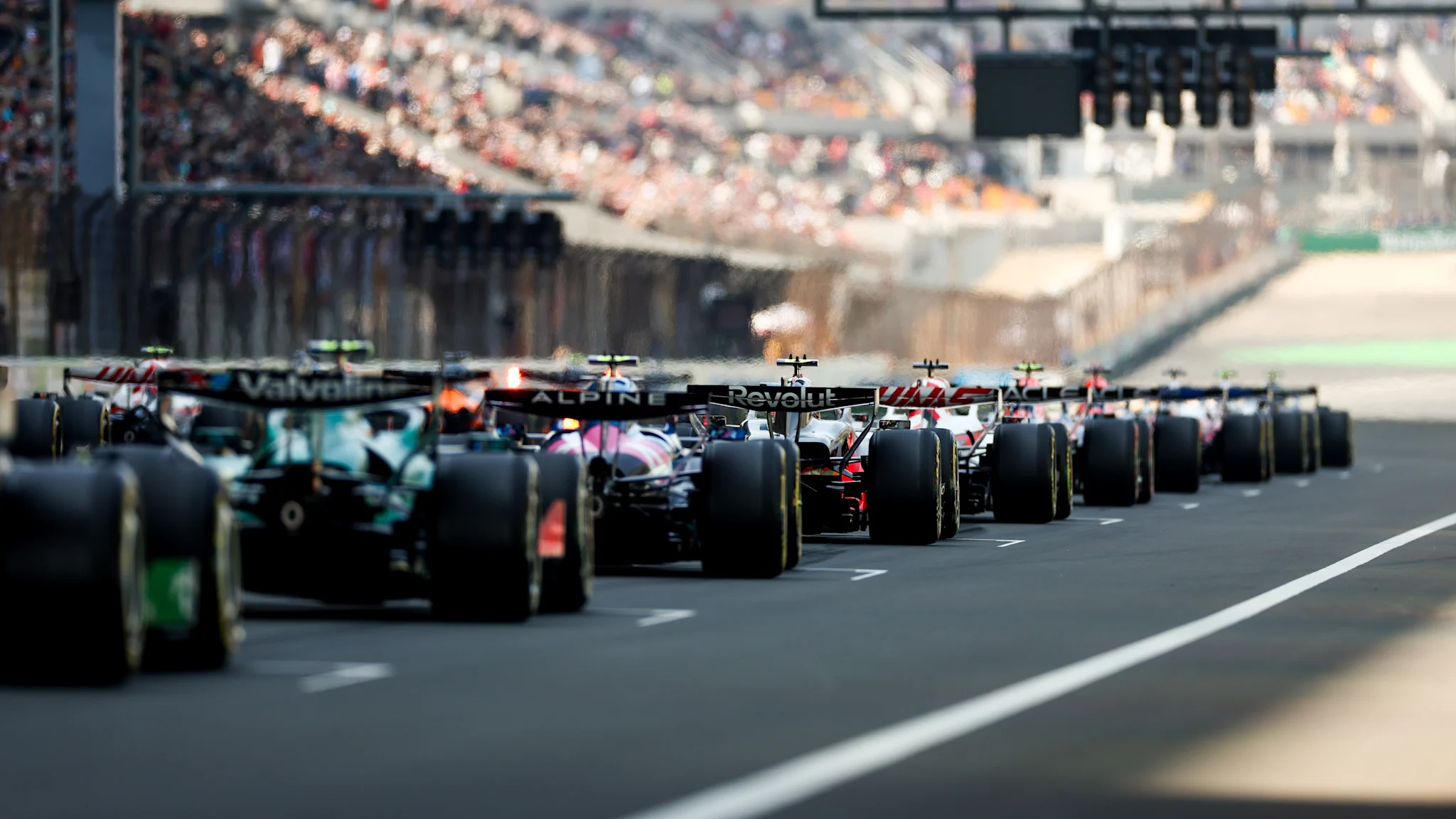
Sometimes described as 'drop-in' fuels, they are engineered to replace fossil-fuel equivalents without any internal engine modifications, meaning they could, in theory, power ordinary road cars too. In the build-up to the new era, F1 squads and their fuel partners cycled through a host of product iterations to find the perfect blend ahead of the Barcelona Shakedown in January.
The scale of Audi and BP's development push
For Audi, who stepped up as a works team following Sauber's transition, the challenge was compounded by the fact that the German manufacturer arrived with a brand-new power unit under a completely fresh regulation set. Working alongside technology partner BP, the scale of preparation was enormous.
BP assessed 70 fuel components and developed 400 pilot fuel samples ahead of the 2026 campaign, testing 200 fuel blends in Audi's all-new power unit and delivering a remarkable 240,000 litres of test fuel to the team's Neuburg facility.
"There are two things here," says Luc Jolly, BP's Motorsports Technology Fluid Lead, in conversation with F1.com. "One is that Audi are a new team, with a brand-new power unit, working to a new regulation set, and secondly, there's the Advanced Sustainable Fuels requirement. We know the types of fuel components, molecules, additives and things that have typically worked well in F1 engines in the past, but essentially, all of the fossil-based componentry that we'd normally use, and was very well established, was not available to us."
Jolly explained that the team effectively had to "start from scratch" to understand what works in the Audi engine, before translating those findings into a form the FIA would approve as advanced and sustainable: "We've had to kind of start from scratch in terms of what works really well in the Audi engine, while that's been developing, and then once we know what works, how do we do that in an advanced, sustainable way, that the FIA will approve?"
Performance versus reliability: the eternal trade-off
The pursuit of the perfect blend is, Jolly admits, an "awesome technical challenge" — but one defined by a brutal competitive reality.
"For people like me, it's an awesome technical challenge. That is why we like F1. Yes, it's about the drivers, the fans, the passion, and all those kinds of things, but it's also a technical sport," adds Jolly. "The competition in F1 is absolutely brutal. Everyone's got talented people, right? But we're on that journey, and it's about who develops the quickest, and we think this year we're building really strong foundations."
With strict limits on how many engines a team can use per season, BP's target is to find the sweet spot — "just reliable enough" to unlock maximum performance without over-engineering. Jolly concedes that is rarely nailed in year one: "We're trying to find the sweet spot of being just reliable enough, so you unlock the maximum performance, and that's not something you necessarily absolutely nail in year one."
Drivers feel the difference
Audi driver Gabriel Bortoleto, who made his F1 debut with Sauber in 2025 before the squad became Audi's works effort, said the scale of innovation had transformed his understanding of the sport.
"I was used to driving with one chassis, with one fuel supplier, with one engine supplier all my life, and now it's a different topic. With BP and Audi, it has been completely different, and it's been very interesting so far to learn about many of these topics," Bortoleto said. "My part and my involvement can only be once I jump in the car on the track, and I give feedback. I don't go to the lab and tell the guys, 'Look, I need more!' I just give the feedback of what I feel about the engine, and then that passes through the areas it needs to go."
Jolly confirmed that information from the drivers, via track engineers, is a vital part of the picture: "It's an important part of it. We're continually looking for the next upgrade, the next optimisations. Now that we're racing, there is information coming back from the engineers at the track, which will have come from the drivers."
More to come — and a road-car legacy
Jolly insists there is "plenty more" performance to extract, particularly with 2027 regulation tweaks that will increase fuel flow to rebalance combustion power against electrical power — a change he says "fundamentally" alters how fuel performs in the engine.
"The other key thing to mention is with the regulations being adjusted [for 2027], and the increased fuel flow to rebalance the combustion power versus the electrical power, that is going to bring opportunities, and that will change fundamentally how the fuel performs in the engine," Jolly explained. "It's a lot more complicated than just putting more fuel in. It really alters the dynamics inside the engine."
Beyond the track, Advanced Sustainable Fuels carry genuine potential for road cars. Demonstrations from Sebastian Vettel's 'Race Without Trace' project have already shown sustainable fuels powering historic machinery, including a Nigel Mansell Williams FW14B, an Ayrton Senna McLaren MP4/8 and Vettel's own Red Bull RB9.
"We are part of the same team that's developing BP Ultimate road fuels. We're very well connected, we're sharing learnings," Jolly explained. "The development cycle for F1 has to be very quick, and commercial stuff tends to take a bit longer. So, it's a little bit down the road, but we're on the learning journey with them."