Pochettino Commits to USMNT Through 2030 World Cup After Four-Year Contract Extension
Pochettino Signs Four-Year Extension Through 2030
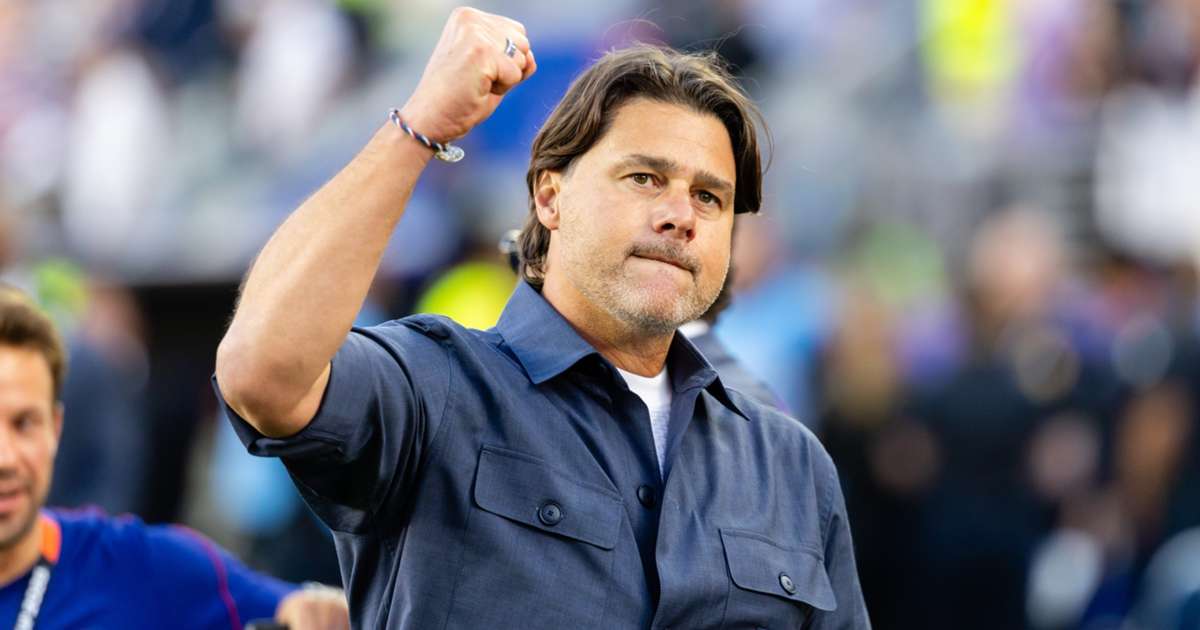
Mauricio Pochettino has officially extended his contract as United States men's national team head coach by another four years, U.S. Soccer announced Monday. The deal will keep the Argentine in charge through the 2030 World Cup, covering the 2027 Nations League, 2027 Gold Cup, 2029 Nations League, 2029 Gold Cup, and the 2030 World Cup should the USA qualify.

Since being appointed as head coach in September 2024, Pochettino has won 17 of his 31 games in charge (D2 L12). His tenure culminated in leading the USA to the Round of 16 at the 2026 World Cup on home soil, where the Americans topped their group for the third time in their history, won their first knockout match at the tournament since 2002, and recorded their most wins at a single edition with three victories.
'Lasting Impact' Beyond the Pitch
Despite rumors linking Pochettino with a return to European club football, the 54-year-old has committed to making a "lasting impact" with the USA program. In addition to leading the senior national team, Pochettino and his staff will advise and support U.S. Soccer on broader development initiatives including youth soccer, coaching education, professional league collaboration, and other technical facets across the soccer community.
"Working together with U.S. Soccer over the past two years, it has become clear to us that there is tremendous potential to make the Men's National Team program even stronger," Pochettino said. "The passion we experienced from the fans throughout the World Cup only strengthened our belief in what is possible here."
He added: "We are excited by the opportunity to bring all our experience and knowledge to even more areas of U.S. Soccer while helping strengthen the pathways for players, coaches and teams across the Federation. We want to try to have a lasting impact on the sport in the country that has welcomed us so warmly and for that impact to extend beyond results on the field."
World Cup Heartbreak and Fresh Start
The extension comes after a bittersweet World Cup campaign. The U.S. was eliminated with a 4-1 round-of-16 loss to Belgium in Seattle, falling one win short of matching the program's modern-era best of reaching the quarterfinals. More than 50 million people tuned in to witness the gaffe-laden elimination, which felt like the biggest letdown in American soccer history given the stakes and home setting.
After the defeat, Pochettino said he would take time to ponder his future. Nine days later, U.S. Soccer CEO JT Batson confirmed the federation wanted Pochettino back, though the coach remained noncommittal, telling Cadena Cope: "We're looking into it; we're analyzing it. I received an offer to stay on, so we'll see."
Now, Pochettino is embracing a fresh start. "Now it's a fresh start," he said. "It's a good moment to refresh that mindset, to refresh that culture and philosophy, and to start to create a new era of USA soccer, USA men's national team, thinking that every player will have the possibility to join us if they perform."
Historical Challenges for Second-Cycle Coaches
Pochettino becomes the fifth USMNT coach of the 21st century to lead the team through a second World Cup cycle. The history is not encouraging: Bruce Arena followed up a 2002 quarterfinal appearance with a winless group-stage exit in 2006. Bob Bradley was fired just a year into his second tenure following a 2011 Gold Cup final loss to Mexico. Jurgen Klinsmann was fired midway through his second cycle during 2018 World Cup qualifying. Gregg Berhalter was axed after the U.S. was eliminated in the group stage of the 2024 Copa América on home soil.
Pochettino is unique in that he did not have a full qualifying cycle with the U.S. after his initial hiring, going into this second act with less time as U.S. coach than any of those predecessors.
Integration of New Generation Critical
The next cycle will require significant roster transition. Christian Pulisic, Weston McKennie and Tyler Adams will be 31 at the 2030 World Cup. Antonee Robinson will be 32. Tim Weah will be 30. There are still major question marks at goalkeeper and center back, and a new generation of players must be integrated immediately.
Pochettino indicated he will use the September-October international window, which will feature four friendlies, to begin transitioning the national team with new faces. Real Salt Lake's Zavier Gozo (if healthy), and Red Bull New York's Adri Mehmeti and Julian Hall, none yet 20 years old, should all be integrated into the group. Other Olympic-eligible players like 18-year-olds Peyton Miller (New England Revolution) and Neil Pierre (Philadelphia Union) are also in consideration. Former USMNT goalkeeper Tim Howard has called for 16-year-old Union midfielder Cavan Sullivan to get the call.

USMNT legend Landon Donovan emphasized the urgency on his Unfiltered podcast: "By the time you get to 2030, you need these guys to have played 20, 30, 40, 50 games. It can't be like your sixth game. I think Zavier Gozo, Julian Hall I'd love to see. Get them in now. Qualifying is coming up and those games are not easy. Get them in, see what they have so that by the time they get there they are ready to go."
Commitment Questions and European Lure
Throughout his tenure, Pochettino has frequently hinted publicly that he was interested in eventually returning to European club football. In March 2025, he told Sky Sports he would "like one day to come back" to Tottenham. In June 2025, he called the Premier League "the best league in the world" and admitted "Of course I am missing it." In February 2026, he said he most wanted to win the Champions League and Premier League titles. The week before World Cup camp began, he met with representatives from Italian club AC Milan.
When asked Monday if he'd tell European teams "no," Pochettino said: "Today it's like this. Because already I say no. Too many possibilities, I say no without a contract in the federation. Like what happened in the last 18 months. Always we were thinking beyond after the World Cup. But the problem is, four years' time is a really long period. You never know what can happen in soccer."
He continued: "That is why, for us, every time we sign a contract, it's to go to the last day of the contract. If we sign a four-year contract, we need to think to arrive there. And we signed the contract because we really believe that we are going to be four years there. Because if not, it's bad. If we don't believe in that process, if we don't believe in that journey, why would we sign four years? Only to be sure that we are going to receive a salary on the end of the month? That is not nice. It's not the way that we think. We really signed that contract because we really believe that we can arrive to the end."
Funding and Financial Backing
The terms of Pochettino's agreement were not disclosed, but the assumption is that retaining him required a similar or more lucrative salary than the record outlay U.S. Soccer paid him over the past 22 months. Pochettino made several million dollars per year, including a $2.5 million signing bonus, per U.S. Soccer tax filings.
The funding was "supported in significant part by a philanthropic leadership gift" from hedge fund billionaire Ken Griffin, with additional support from Scott Goodwin, co-founder of Diameter Capital, and several commercial partners. For this extension, U.S. Soccer also named Adam Freede, CEO of MadaLuxe Group and an investor whose portfolio includes MLS club LAFC, as a contributor.
"The USMNT delivered one of its strongest World Cup performances in more than two decades—a testament to the talent of our players and Mauricio's leadership," Griffin said via a spokesperson. "I'm thrilled he is returning in an expanded leadership role and am proud to support U.S. Soccer's efforts to advance the sport and inspire the next generation of players and fans."