F1's Overtake Mode era: How 2026 rules changed racing — and why drivers are fed up
The 2026 Formula 1 season marks one of the biggest technical regulation overhauls in the sport's history, with both engine and aerodynamic rules changing dramatically. The results have been mixed: engaging racing for fans, but deep frustration from many drivers who feel the new formula has fundamentally altered the nature of competition.

Goodbye DRS, hello Overtake Mode
The familiar Drag Reduction System (DRS), introduced in 2011, is gone. In its place is a new active aero system that uses movable rear wing flaps — and now front wings that change shape too. Crucially, any driver can use the system on a straight, not just drivers within a second of the car ahead. The primary aim is energy efficiency: reducing drag on straights so cars don't drain their batteries maintaining speed.
But the desire to boost overtaking remains, leading to the introduction of Overtake Mode in the new, more powerful hybrid engines. The system works similarly to DRS, with activation points around the track. Drivers must be within one second of the car ahead at a detection point to deploy an engine energy boost. The FIA anticipates the leading car's energy deployment will taper off after 290 km/h, while the chasing car with Overtake Mode active can use full 350 kW power up to 337 km/h.
Mercedes driver Kimi Antonelli described F1 racing in 2026 as "speed chess." He added: "When you're planning an overtake or when you're defending, you always have to try and be two steps ahead of the other and trying to predict him or force him to do something." He also warned that closing speeds between cars using Overtake Mode and cars slowing to harvest energy could be "very, very big."
Drivers voice concerns
Even during preseason testing in Bahrain, it became evident that overtaking may be more difficult. "Our drivers have been racing with other drivers during these tests, and they found it extremely difficult to overtake," said McLaren team principal Andrea Stella.
Ferrari's Charles Leclerc was blunter: "I find it extremely difficult to pass other cars. The price is a lot more costly than it was in the past. That's why I think it's very difficult to make an overtake and pull away, like it was the case last year."
The increased electrical power means both cars accelerate faster out of corners than the 2025 machines, which can actually make it harder for a chasing car to close the gap. Williams team principal James Vowles explained that the MGU-K — which converts braking energy into electrical power — is now three times more powerful than in 2025, creating a significantly larger pool of energy for drivers to manage strategically.
George Russell noted that the mode's effectiveness varies across circuit layouts. Tracks like Barcelona with one major straight allow cars to build large energy reserves, but if every car is already pushing maximum power down that straight, an Overtake Mode boost offers less advantage. Tracks with numerous straights could see different strategies emerge.
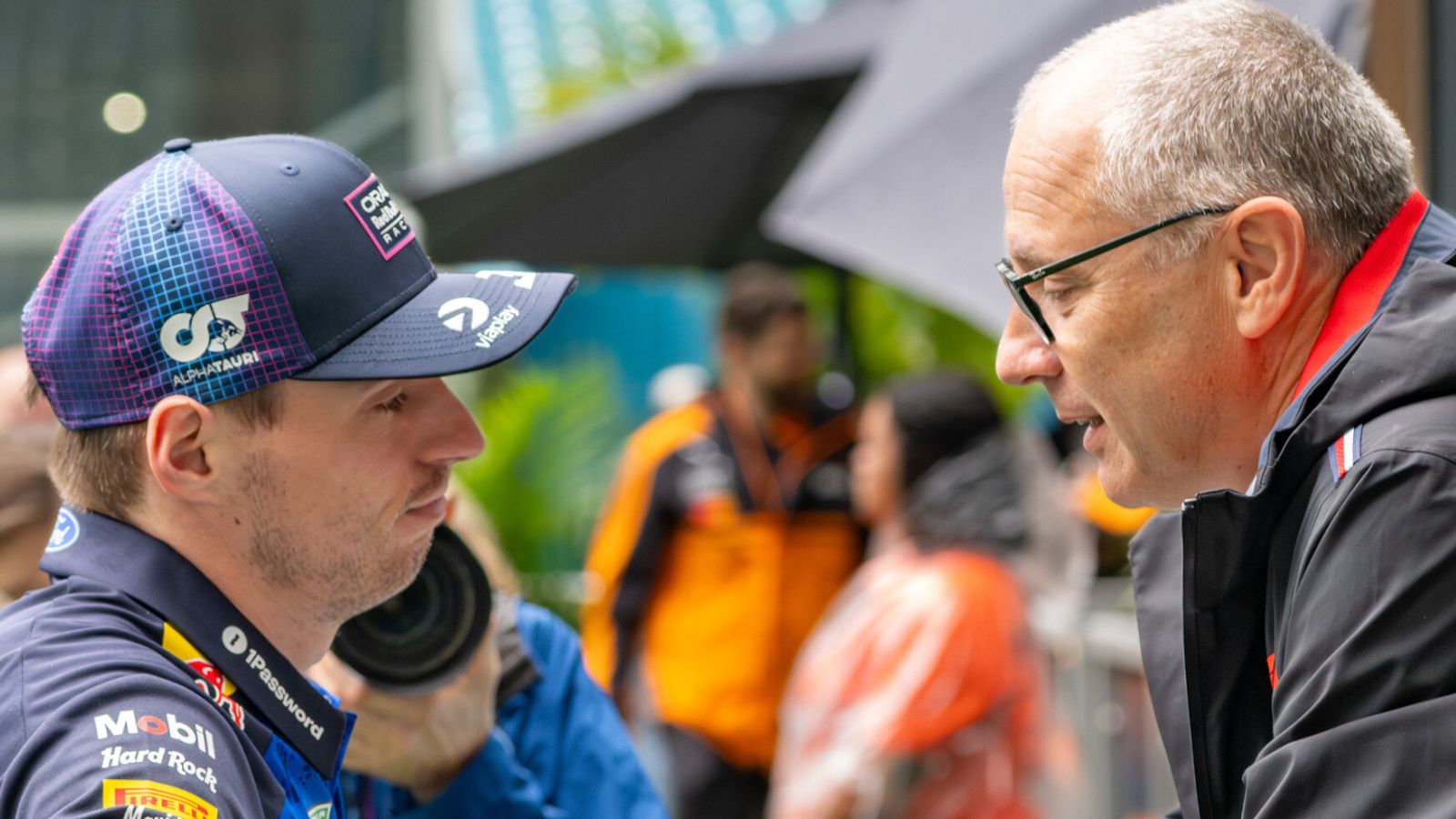
Verstappen's growing frustration
No driver has been more vocal about the new regulations than Max Verstappen, who has described the yo-yo style of racing — passes then re-passes — as "anti-racing." He has suggested the cars are slow and painful to drive, running on "not a lot of horsepower for F1 standards."
"I've spoken my mind about these regulations already a long time, and in the beginning, most people were saying, 'ah, he's complaining; he should shut up,'" Verstappen said in Hungary. "But I have to say that the last few races, more and more people are seeing the same thing that I could see coming already a long time. It's not about me not liking not winning anymore. It's just because I care about the product."
In March, Verstappen stated he was considering his future in the sport if the regulations did not change. The FIA announced in May it had agreed with teams to change the power split from the current near 50-50 between combustion and electrical to 58-42 for 2027 and 60-40 for 2028. Verstappen has not since suggested he will walk away, though questions remain over whether he will drive for Red Bull or another team.
Domenicali: F1 is bigger than any driver
F1 president Stefano Domenicali has responded to the criticism by insisting drivers are free to voice their opinions, while pointing to the sport's continued growth.
"We are not here to put tape on the mouth of anyone," Domenicali said. "The beauty of our sport is that everyone can have an opinion. Max is an incredible driver. F1 is big enough for him to be part of us, but of course he will decide his future. The sport will look ahead but my opinion is that Max will stay with us, and I really hope so. The sport is big, much bigger than anyone else, all of us."
Every F1 event this season has been sold out, with record crowd attendances across the globe. Domenicali pointed to a conversation with filmmaker George Lucas at the Hungarian GP as evidence that the majority of fans are enjoying the product.
"He was giving me an incredible view on how the new fans are watching Formula 1," Domenicali said. "They are fascinated by the fact that there is a lot of action. For the vast majority of the people, trust me, they just want to see what is happening on the track, not interested in the angle of throttle or the percentage of brake pressure. For example, the incredible overtake of Max on Lewis at Turn 1 in Hungary, that was a piece of art that these people just want to see and just connect to the quality of the drivers."
Whether the regulations will be further tweaked remains to be seen. As Pierre Gasly noted ahead of the season: "I think we just need to be open-minded and see how it's going to be." The regulations can always be amended, or overtaking could become easier with time. But for now, the debate rages on — between those who see engaging racing and those who see something fundamentally wrong with the formula.