A Sanskrit Purana and Interstellar converge on the same time paradox
A brief wait, then a world transformed
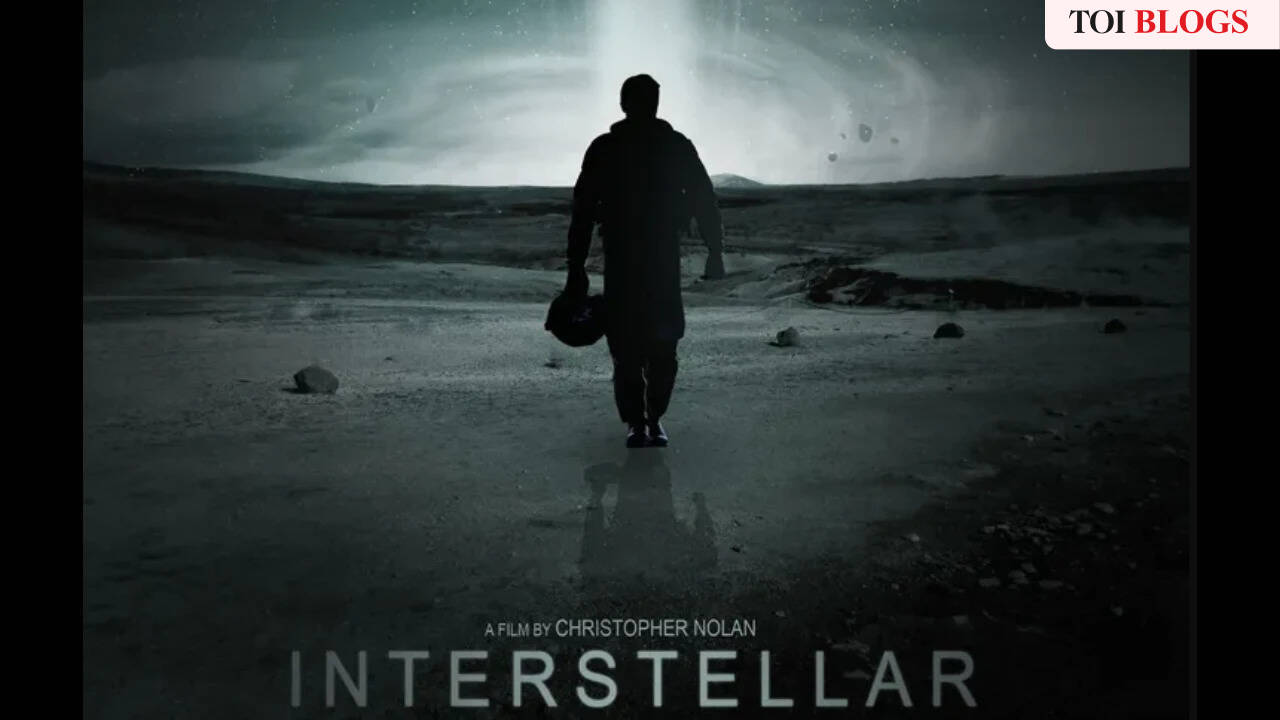
In Interstellar, Cooper’s crew lands on a planet where the effects of proximity to the black hole Gargantua make time pass far more slowly than it does for people far away. A short stay costs years on Earth; when Cooper returns to the ship, he watches messages from children who have grown up without him.
A recent Times of India column finds a powerful narrative echo in the Bhāgavata Purāṇa (9.3), with a related version in the Viṣṇu Purāṇa (4.1). King Kakudmī, also known as Raivata, brings his daughter Revatī to Brahmā’s realm to seek a suitable husband. While they wait for Brahmā to finish listening to celestial musicians, time passes differently in the human world.
When Brahmā tells Kakudmī that twenty-seven cycles of the four ages have passed, the king learns that the people and generations he had in mind are long gone. Brahmā directs him to give Revatī in marriage to Balarāma, who is living on Earth. The column cautions that familiar retellings sometimes assign a precise duration to the king’s wait, but the cited verse does not say he waited “twenty minutes.” The description of it as “one song” is the writer’s own shorthand for the musicians’ performance.
A parallel in meaning, not in physics
The author says the resemblance to Nolan’s film is not a matter of matching calculations. In the film, the time difference is framed through relativity; in the Purāṇic account, it belongs to a mythic contrast between realms. The shared shape is a traveler who experiences a brief interval and returns to find that the world—and the people he expected to meet—has moved on.
The column also focuses on yuga, a Sanskrit word commonly used for an age. It connects the word to the root yuj, meaning “to join” or “to harness,” and to the literal sense of a yoke. The author presents this as a way to reflect on time and human bonds, not as a definitive explanation of how the word acquired its meaning. English “yoke,” Greek zygón, Latin iugum and Sanskrit terms from the same root are described as linguistic relatives, not words borrowed directly from one another.
The piece explicitly makes no claim that Christopher Nolan drew on the Purāṇa, or that the ancient story anticipated Einstein’s theories. Instead, it uses the comparison to explore the human cost of time passing unevenly: Cooper is separated from his daughter Murph, while Kakudmī returns to a society in which the generations he knew have disappeared.
The column notes that scholars generally date the Bhāgavata Purāṇa in its present form to around the ninth or tenth century CE, while some argue for older layers; the Viṣṇu Purāṇa is usually dated earlier. Its central observation is that both stories turn a difference in time into a story about belonging: a traveler can return on schedule by his own clock and still arrive too late for everyone else.