Two brother kittens, Gary and Shaggy, become first cats documented with Marfan syndrome
Brother kittens Gary and Shaggy make medical history
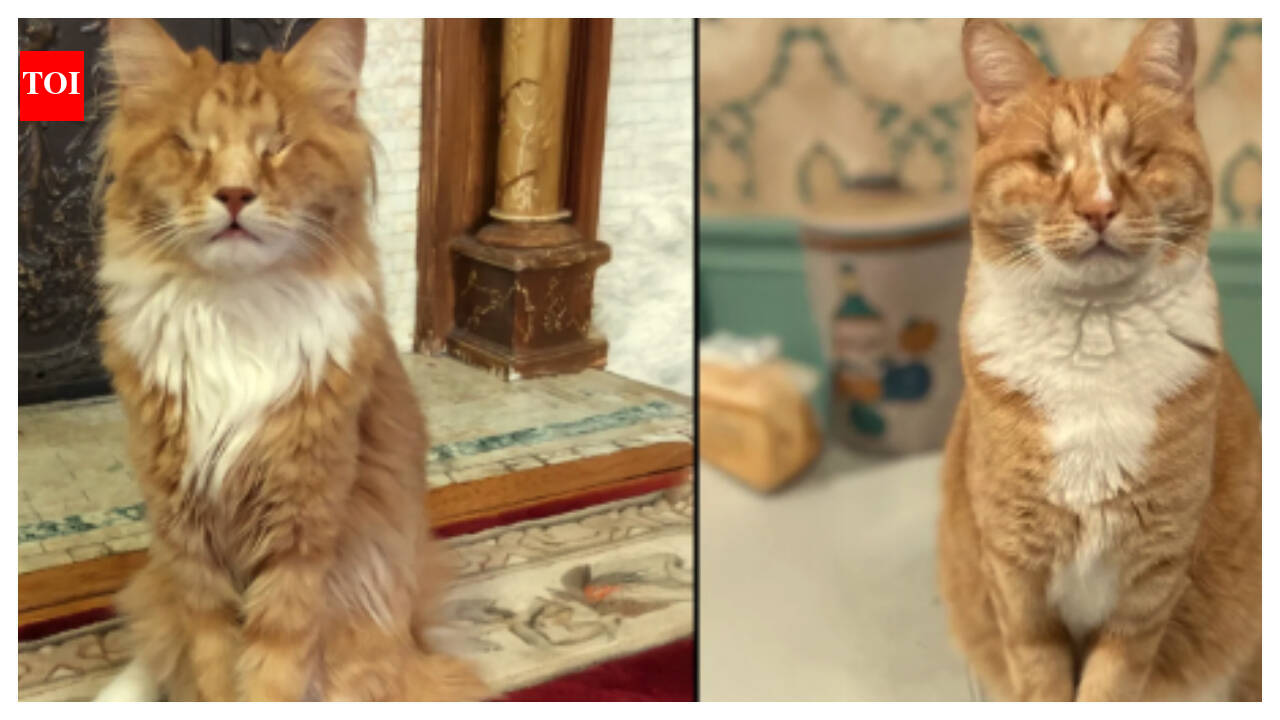
Two cat brothers, Gary and Shaggy, have earned a place in medical history. Their unusually tall posture and distinctive body features caught the attention of scientists at Cornell University, who recorded the first documented instance of Marfan syndrome in domestic cats, according to a report on ScienceDaily.
Unusually long legs first raised concerns
Gary and Shaggy first drew attention as tiny kittens because their legs were noticeably longer than normal. They looked somewhat top-heavy, walking on surprisingly tall, slender limbs. As the brothers grew into adulthood, other symptoms appeared. Routine veterinary checkups revealed problems inside their eyes, along with an enlarged aorta, the major artery that pumps blood from the heart to the rest of the body. Together, the combination of tall limbs, eye abnormalities and heart strain raised a major red flag for geneticists.
What is Marfan syndrome?
In humans, Marfan syndrome is a rare inherited disorder that affects about 1 in 4,000 people. It targets connective tissues, the body's "glue" that holds organs, blood vessels, bones and muscles in place. Because connective tissue spans the entire body, the syndrome can affect multiple organs at once. Until Gary and Shaggy, science had never documented a proven molecular case of the condition in a house cat.
Tracking down the genetic cause
To identify the cause, a multidisciplinary team at Cornell ran complete medical examinations and sequenced the brothers' DNA. The search led to a gene called FBN1, which carries the instructions for making fibrillin-1, a protein that helps keep tissues flexible and strong. Fibrillin-1 plays a role in the walls of blood vessels, the lenses of the eyes and ligaments.
Genetic testing revealed that both brothers had two mutated versions of the FBN1 gene, one inherited from their mother and one from their father. The team described this as a huge shock. In humans, inheriting a single mutated copy of FBN1 is usually enough to cause Marfan syndrome. Carrying two mutated copies is extraordinarily rare and typically leads to severe, life-threatening complications early in life.
Why the brothers survived
Further testing showed that the mutation did not completely shut down the gene. Instead, it disrupted how the gene's instructions were read, while still allowing a small amount of normal fibrillin-1 to be produced. That small amount of working protein was enough to keep the cats healthy enough to live normal adult lives.
Implications for pets and people
"The findings provide a foundation for improved veterinary diagnostics," said Dr. Jacquelyn Evans, the study's senior author and assistant professor at Cornell's College of Veterinary Medicine and Baker Institute for Animal Health. "It can help veterinarians recognize similar cases in the future and may help develop genetic tests."
By understanding how Gary and Shaggy's bodies adapted to the mutation, scientists hope to refine genetic screening for pets and deepen their understanding of how connective tissue disorders behave across different species.