From sleeping at a Maryland tennis centre to US Open semifinals: The remarkable rise of Frances Tiafoe
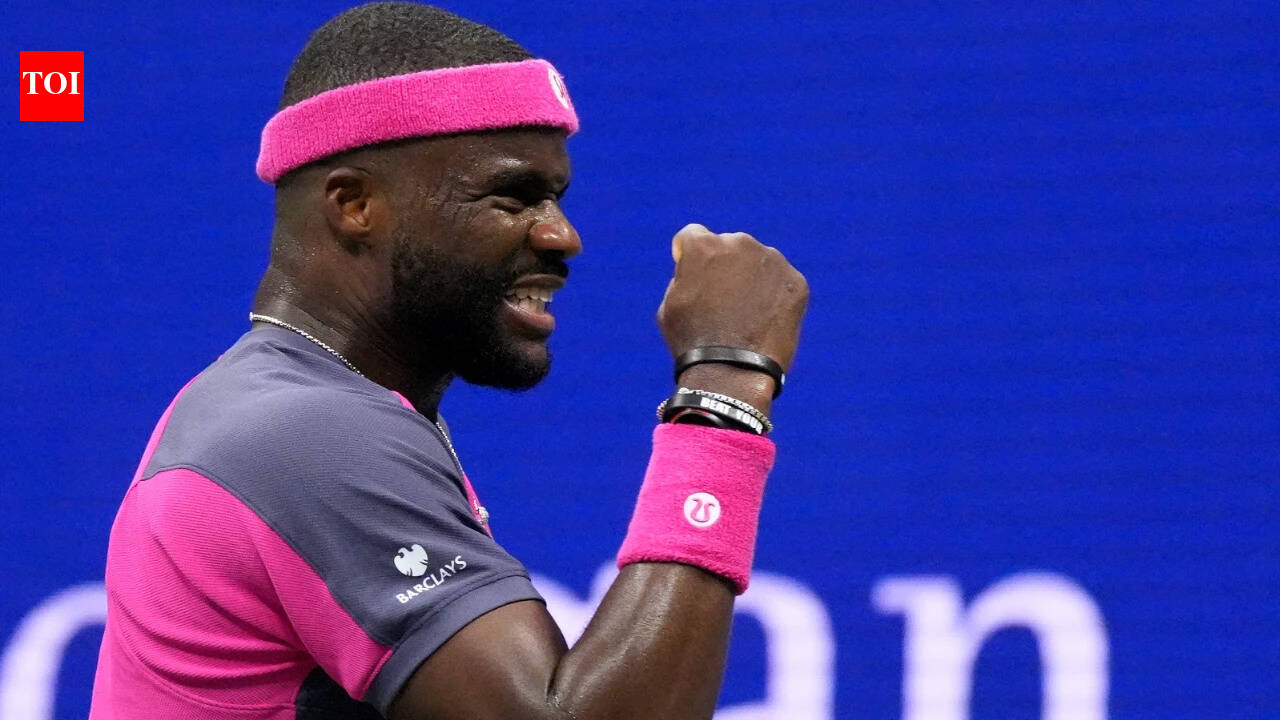
Few stories in modern tennis are as unlikely — or as compelling — as that of Frances Tiafoe, the American who grew up inside a tennis centre before becoming one of the sport's most recognisable stars, a top-10 player and a three-time US Open semifinalist.
Raised at the Junior Tennis Champions Center
Tiafoe's connection with the Junior Tennis Champions Center (JTCC) in College Park, Maryland, began at an exceptionally young age. His father, Frances Tiafoe Sr., was among the workers involved in building the facility before eventually becoming its head of maintenance. Frances and his twin brother, Franklin, spent substantial time there while their parents worked, making the tennis centre a central part of their everyday lives.
The family's circumstances were far removed from the polished environment normally associated with professional tennis. Tiafoe Sr., an immigrant from Sierra Leone, worked long hours at the centre. Earlier accounts of Tiafoe's childhood describe the family staying in a small room at the facility, with the brothers sleeping there while their father worked.
That arrangement gave Frances something few aspiring players receive: constant exposure to tennis. According to the ATP Tour, he began hitting balls against a wall at three years old alongside Franklin and trained at JTCC as a child. The centre effectively became both a workplace for his father and an early development ground for the future professional.
Tiafoe was also surrounded by coaches and players from the beginning. His access to the courts meant that tennis was not an occasional after-school activity but an environment that shaped his daily routine. The Washington Post described him as being essentially raised at the centre, reflecting just how deeply the facility influenced his early development.
A family's sacrifice became his motivation
Tiafoe's family story provides important context for his rise. His parents moved from Sierra Leone to the United States in 1996, and his father eventually found employment at JTCC after being involved in the facility's construction. His mother, Alphina, also played an important role in supporting Frances and Franklin while working and helping with their education.
For Tiafoe, the family's sacrifices became part of his motivation. His father's demanding schedule placed the young twins close to the tennis courts, while Frances gradually showed an unusual ability to absorb the game around him. That combination of opportunity and determination became particularly visible during his teenage years.
At 15, Tiafoe won the 2013 Orange Bowl boys' 18s title, becoming the youngest champion in the event's history at that time. The achievement elevated his profile among American junior players and demonstrated that the teenager could compete well beyond his age group. He followed up by winning the Easter Bowl boys' 18s title in 2014.
His development also required a demanding balance between education and tennis. Contemporary reporting showed Tiafoe spending long days at JTCC, combining schoolwork with several hours of training — a routine that illustrated how early his life became organised around the goal of becoming a professional player.
From Delray Beach breakthrough to beating Nadal in New York
Tiafoe's transition to the ATP Tour eventually produced the breakthrough his junior career had promised. In 2018, at only 20, he won his first ATP title at the Delray Beach Open — a victory made especially meaningful because he defeated his childhood idol Juan Martin del Potro during the tournament.
He reached his first Grand Slam quarterfinal at the 2019 Australian Open before producing an even bigger breakthrough at the 2022 US Open. At Flushing Meadows that year, Tiafoe defeated Rafael Nadal in the quarterfinals and became the first American man since Andy Roddick in 2006 to reach the US Open semifinals. The win over Nadal represented one of the defining moments of his career and brought global attention to the story behind his rise.
Tiafoe returned to the US Open semifinals in 2024, and his consistency at the tournament became a defining part of his Grand Slam resume. He also reached the Cincinnati Masters final in 2024, showing that his success was not limited to New York.
The 2026 resurgence: Halle, a third US Open semifinal and a career-high No. 8
The 2026 season added another significant chapter. After making changes to his coaching setup and approach following the 2025 season, Tiafoe enjoyed a strong resurgence. He won the Halle title — his biggest trophy at the time — reached another Cincinnati Masters final and advanced to the US Open semifinals for the third time. His run in New York also secured a return to the ATP top 10 and a new career-high ranking of No. 8.
A career defined by the journey, not just the results
The contrast between Tiafoe's childhood and his present position in tennis makes the journey particularly striking. The player who once spent much of his childhood around a Maryland tennis facility now competes regularly on the sport's biggest stages.
His story also extends beyond results. Tiafoe received the Arthur Ashe Humanitarian Award in 2020 and has supported initiatives connected with youth tennis and charitable causes. In 2024, he donated $50,000 through his charitable fund with the USTA Foundation during JTCC's 25th-anniversary celebrations — a connection to the centre that has remained meaningful long after he left the junior ranks.
The centre that once represented his family's workplace and his earliest tennis education eventually became part of the foundation of a professional career that has reached the ATP top 10 and three US Open semifinals. Tiafoe's path remains a powerful example of how access, family sacrifice, relentless training and opportunity can combine to change an athlete's trajectory.
From sleeping in basic quarters at the facility where his father worked to standing under the lights at Arthur Ashe Stadium, his career has transformed the circumstances of his childhood into one of American tennis' most compelling modern stories.