Arsenal's Max Dowman can no longer hide in the shadows after Ipswich masterclass
For months, the football world has tried a collective act of restraint. Max Dowman is a fluffy new thing, the argument went, and we all know what happens next: let us heap pressure on his shoulders, break him, place the hex on him. So the silent pact was made — don't talk about Max Dowman, let him exist, breathe, bloom in the shadows. After his performance against Ipswich in midweek, that pact looks impossible to keep.
A goal in six seconds that said everything
Writing in The Guardian, Barney Ronay argues that Dowman's two goals were "a perfect snapshot of why Dowman seems equipped to survive, more state-of-the-art than some other young players we've burdened with expectation." The second strike in particular offered five perfect little actions packed into six seconds of football: Dowman shows for a pass, sees it going elsewhere, changes his mind, and makes a three-yard sprint to create space. Then comes the revelation — "the physical capacity to control a bouncing ball in that sliver of space, to move his feet so much quicker than the nearest defender it looks like a glitch in the machine," before sifting the options and timing the shot without breaking stride.
The first goal, meanwhile, was a more classical piece of one-on-one deception, executed against the same unfortunate defender, the 29-year-old Cédric Kipré, a product of Paris Saint-Germain's youth system. Dowman "walks through him with a micro-feint and a switch of feet, then reels off another hilariously understated finish, doing it all while a second defender is still gathering himself to lunge, like a man operating in a different time signature to everyone around him."
The fly-vision generation
For Ronay, this is the key point of difference — the ability to make everything stop, the "fly-vision" that means Dowman sees what is about to happen while everyone else whirls about trying to read the charts. It is the quality he likens, with an apologetic nod, to Lionel Messi, who "always seems to have time to pass the ball into the net, like this is all a kickabout in a pair of sliders."
He places Dowman in a lineage of teenage sensations — Michael Owen, brilliant at 17 but largely brilliant at running fast in a straight line and smashing the ball into the net; Wayne Rooney, the pale, unformed teenager "composed entirely from energy drinks and white bread, out there making the game up on the fly"; and Cole Palmer, exciting today because he does surprising things that seem to strike a blow for freedom and beauty. Dowman, he suggests, belongs more to the modern archetype shared with the likes of Lamine Yamal and Désiré Doué: "targeted energy, high-intensity semi-freedom," the ability to operate in micro-moments and see patterns just ahead of time.
Plug and play
There is lingering anxiety about Dowman's youth, but Ronay argues the landscape has changed. "In the age of Rooney and Owen there was no care, no data, no softness," he writes. Modern structures, by contrast, work in the teenager's favour: he will be "GPS'd to the last decimal point," monitored by endless physical scientists, and the money and talent are too big to squander.
"What you're being asked to do in the orderly spaces of professional football is the same thing you were asked to do in the orderly spaces of academy football, just five levels up and with more people watching."
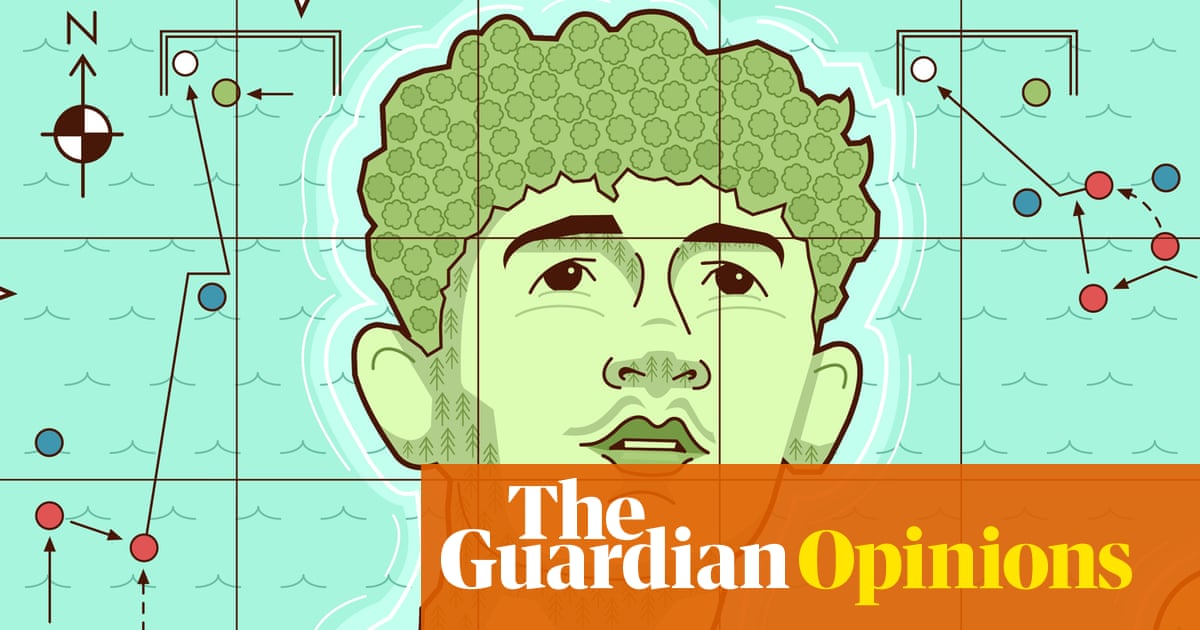
Ronay invokes Jorge Luis Borges — a noted football hater who called the sport popular because "stupidity is popular" — to frame a broader argument: that modern football is laying a life-size real-time map on top of itself, drowning the game in endless data and schematised movement. That is why everyone gets so excited, he argues, when a talent emerges that seems playful, human, and outside the grid.
At 6ft tall and getting stronger, Dowman will not be kicked to pieces. He can parcel his time out, disappear for a bit, perhaps make a show of things in the spring. Ronay concedes that charting his future is itself another kind of map-making, but ends with a confident verdict: "I strongly suspect he will be fine, and that unlike so many other things out there he's pretty well adapted to whatever the future is supposed to look like."