Jonathan Trott takes charge of England Lions and vows: 'Franchise cricket isn't as rewarding'
Jonathan Trott has been confirmed as the new head coach of England Lions, and the former England No 3 has used his first major address in the role to set out a vision that puts winning, national pride and player development above the lure of franchise cricket.
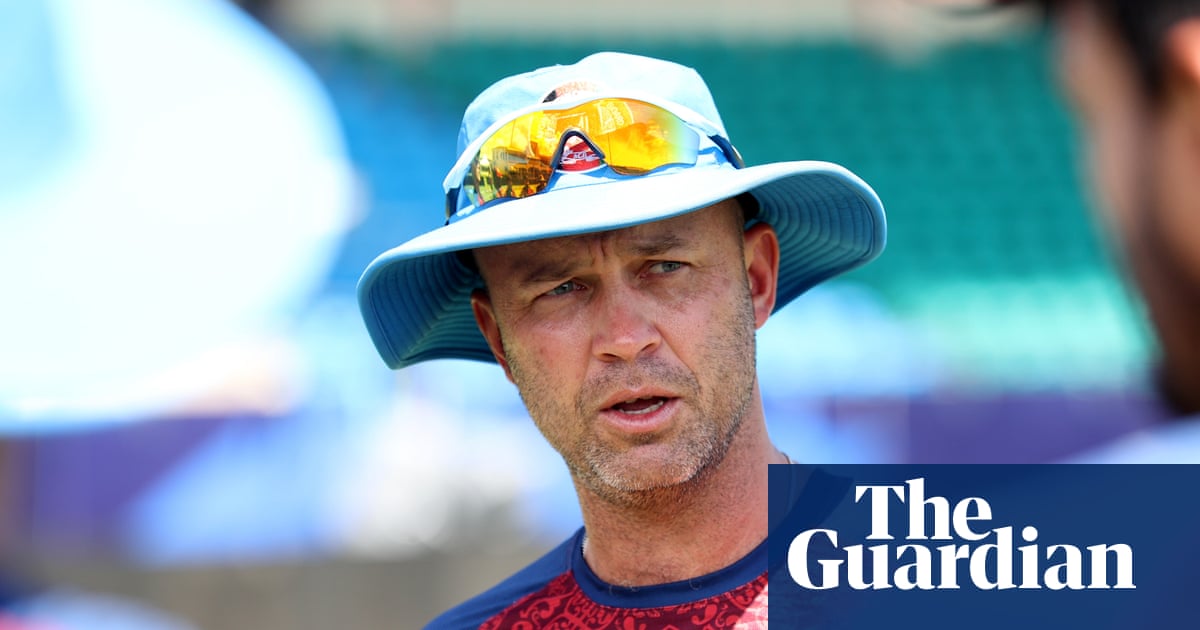
Trott, who replaces Andrew Flintoff at the helm of England's second string, will lead the Lions on winter tours of the Caribbean, South Africa and Sri Lanka. The 45-year-old was a contender for the senior England Test job before Stephen Fleming was appointed in July, and having also spent a successful four years in charge of the Afghanistan men's team, he is adamant his new post is not merely a "stepping stone" to the top job.
'Winning is a habit and a mentality'
Central to Trott's approach is a demand that the Lions be judged on results as much as development, instilling the standards expected whenever a player pulls on an England shirt.
"I want the Lions to focus on winning and performing whenever you wear the three lions of England, so it's second nature when you put on the main cap; that you are expected to perform your role," Trott says. "It's not just about enhancing your game, it's serious cricket. Because winning is a habit and a mentality."
He also wants the set-up to serve as a genuine resource for established internationals rather than just a nursery for prospects. "I also want guys in the senior England side who don't feel right in their game or have been left out to come back to the Lions and know they're going to work with some fantastic coaches," he adds. "You're not going to waste your time, you're going to be challenged. The best players like to be challenged. And if you make runs or take wickets in a good Lions game, it will only give you confidence."
Trott's warning over the pull of franchise cricket
One of the themes of Trott's pitch is the value of representing England over the glamour of the global T20 circuit. "Players, especially younger players, get attracted by the bright lights of the franchise stuff but I don't think it's anywhere near as rewarding as playing for your national side," he says. "And, shoot me if I'm wrong, but I've recently started to notice more players migrating back to international cricket for that sense of satisfaction."
His own path offers the evidence. Trott's first England appearance came in a low-key Twenty20 home series against West Indies in 2007, a chastening experience in which he knew only Ian Bell from his Warwickshire days and mustered scores of nine and two. Two years in the Lions finishing school changed everything.
"When I made my T20 debut in 2007 it was like I had come in from the cold," he recalls. "It was very weird suddenly playing for a team where, apart from Belly, I didn't know anyone. For some cricketers that's fine, they walk into a side and do their thing. But for me the sense of the team has always been a big aspect of playing.
"Playing for the Lions in the two years after that, I actually got to know a lot of the players who became my teammates in the Test side. We played in the Duleep Trophy in India the first winter, against touring sides in the summers, and had a full tour of New Zealand. So some very competitive cricket. So, making my Test debut in 2009 felt like more of a natural transition, really."
That 2009 debut, of course, produced a series-winning century at the Oval to launch one of English cricket's more memorable careers, one that yielded more than 20,000 runs and nine Test centuries.
A coaching philosophy shaped by Flower and Giles
Trott cites Andy Flower and Ashley Giles as major influences, along with his father Ian, who coaches East Molesey in the Surrey Championship and Auckland Grammar in New Zealand, and Bob Woolmer's tactical input during his formative years in South Africa. He also credits John Inverarity for showing him the "standards expected" during the Australian's time in charge at Warwickshire.
Flower helped steer him into coaching after his playing days, first with the Lions and then at Trent Rockets in the Hundred, and the pair share a running joke about the infamous pre-2010-11 Ashes training camp in Bavaria.
"Whenever I see Andy and he talks about that training camp, I say: 'That's great, but your two leading run-scorers weren't there,'" Trott laughs, referring to himself and Alastair Cook. "'Maybe if no one had gone on it that series would have gone even better'."
But if Trott learned from Flower's hard-edged methods, he is keen to add a more human touch. "I've tried to keep the human side," he says. "When I started playing cricket 25 years ago, there was definitely a bigger gap between coaches and players in the ranks in terms of authority. But that gap has closed... I enjoy having a laugh, the fun side of training. But I enjoy winning just that little bit more."
Finding the 'sweet spot' after his own battles with stress
Trott speaks from painful experience about the dangers of overtraining — his England career was curtailed by stress, a propensity to push too hard that proved ruinous in the run-up to the 2013-14 Ashes.
"I got things right and also I got things wrong," he admits. "And as a coach, you get a feel for it. There will be times when I tell my coaching staff to put the guys under pressure but also when you need to make them feel good about themselves. You have to judge the personality and traits of a team. After a little while, you know when you need to put your foot down or take your foot off a little bit."
A key element of the role, he says, is encouraging players to be their best selves and deepening the next generation's 50-over knowledge — a growing challenge now that the Hundred sits above the Metro Bank Cup, denying the cream of English white-ball talent the roughly 20 List A matches a summer that once built his own career.
Pushing back on McCullum, and a message to the next generation
In a sign he will not simply be a yes man in the England set-up, Trott offers a measured response to Brendon McCullum's stated ambition that England's limited-overs teams become the "fittest, strongest and most robust in the world".
"I'm not sure that should even be discussed," Trott says, matter-of-factly. "I mean, you should always look to be the fittest and the best you can be. And away from the game, I want guys to make the most of their time and their own interests; to find ways of getting mentally ready and refreshed for games, not be reliant on coaches or sports psychologists. I want them to be self-sufficient and that's one of the first things I'll be telling the Lions players."
Behaviour after hours has been a hot topic for England over the past year, with headlines generated by at least three drink-related incidents. Trott's advice to the incoming generation is pointed but brief: "I always tell the guys to be smart. That's all I'll say. Be smart, think about the team, and you can't go too far wrong."
A wider winter, and the long game
The Lions' winter schedule carries a deliberate 50-over focus across three tours, aimed at preparing the next-in-line players for one-day international cricket, alongside red-ball fixtures designed to test them on the world stage. Should Trott's work extend into next summer, when the calendar is lighter, there is scope for additional duties — with the vacant head coach role at Birmingham Phoenix a rumoured possibility given his ties to Edgbaston.
Yet for a coach as driven as he was as a player — and now with franchise and county cricket on his CV — the ambition remains unmistakable. TrotT makes no secret of his desire to go one step further next time, even as he insists the Lions job is about far more than his own ascent.