Anjali Devi scripts Indian Boccia history, misses Asian Para Games medal by two points
Anjali Devi scripts Indian Boccia history, misses Asian Para Games medal by two points
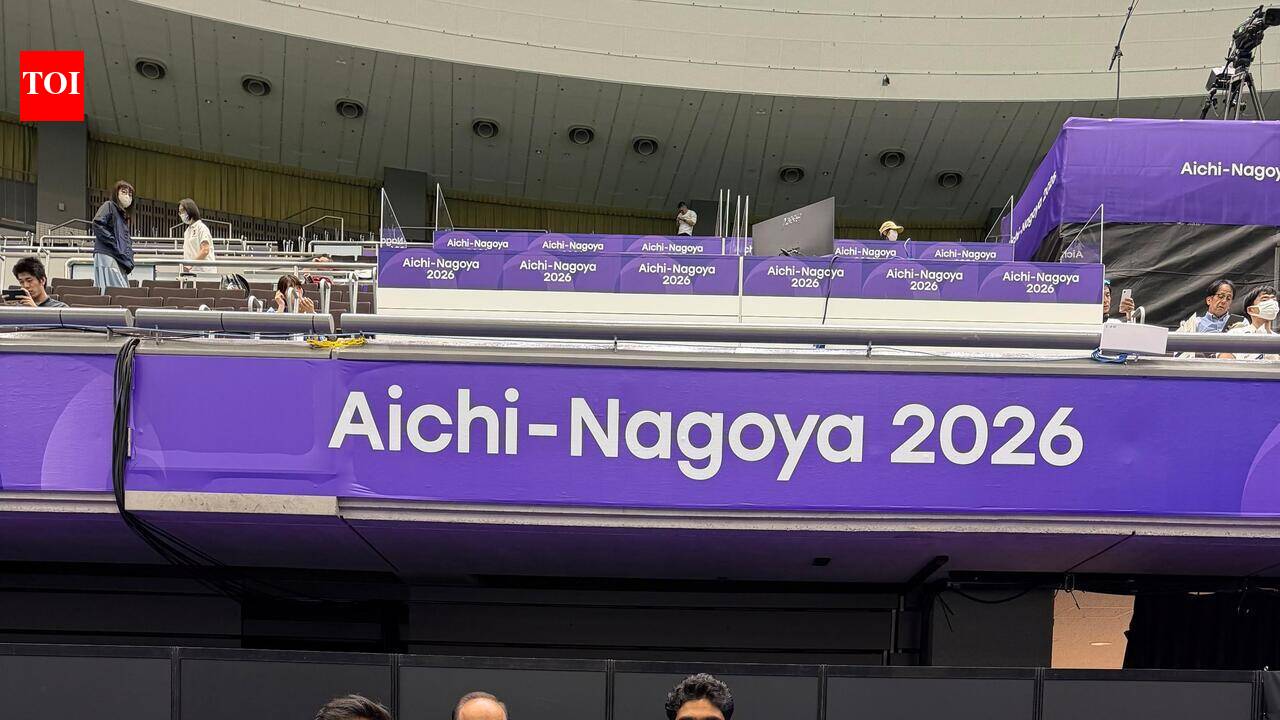
Two points separated Anjali Devi from a medal at the 2026 Asian Para Games — and yet, for the Himachal Pradesh athlete who spent four years largely confined to home after a road accident left her quadriplegic, the fourth-place finish marked the best-ever performance by an Indian in Boccia at the continental event.
“Next time, straight for gold,” she said, setting her sights on the Los Angeles 2028 Paralympics.
A deep run at the Asian Para Games
Anjali’s performance marked the deepest run by an Indian Boccia player at the Asian Para Games. She topped her pool, beating Japan 9-0, Singapore 3-2 and China 5-3, though she lost 0-8 to South Korea. She then reached the medal stages but lost both her gold and bronze medal matches by two points — a margin that brought the sport’s unforgiving precision into sharp focus.
From a devastating accident to the court
The result was a remarkable turnaround for someone who had to rebuild her life after a devastating accident in 2018. Anjali was returning home with her uncle around 1am during heavy monsoon rain when their car plunged nearly 250 feet down a ditch. The crash caused a spinal cord injury. She spent two to two-and-a-half months in the ICU at PGI before returning home for physiotherapy.
“I had lived 18 years of a normal life, and suddenly I was in a wheelchair. That was the biggest shock,” she recalled. For four years, she remained largely at home, trying to adapt to a life radically different from the one she had known.
A visit to Chandigarh Spinal Rehab Centre in November 2022, however, opened up a new possibility. Introduced to Boccia during rehabilitation, Anjali was initially sceptical. The sport seemed to involve little more than throwing balls. She soon discovered that its apparent simplicity concealed a demanding contest of precision and strategy.
“It is a complete mind game, just like chess. You have to calculate angles, speed, trajectory and measurements,” she said.
Within 10 days of taking up the sport, she won gold at the national level. Within six months, she was representing India at the 2023 Asian Games, where she finished eighth despite having no prior international experience.
A sport starved of resources in India
Her progress has exposed the challenges facing Boccia in India, where the sport remains relatively unknown and facilities are scarce. Anjali estimates that the country has only two-three dedicated Boccia courts, forcing many athletes to practise in multipurpose halls or on surfaces not designed for the sport.
She believes awareness camps in schools, special schools and communities at district and state levels could help introduce Boccia to more people with disabilities and identify talent early. Dedicated facilities would then give emerging players the opportunity to develop their skills.
The resource gap extends to international competition. Anjali has seen rival teams arrive with physiotherapists, dietitians, observers, camera operators and analysts who record and review matches. The Indian team, she said, has far fewer support personnel, with one coach handling four players.
“Those small things also matter. The other teams have their entire team behind them, with everyone’s efforts going into their performance. In India, the player often has to do all these things themselves,” she said. In a sport where a slight error in angle, speed or distance can decide a match, such support can prove crucial.
Personal sponsors helped her undertake two training trips to Thailand before the Asian Para Games. Her sister, Priyanka Thakur, has been her biggest source of support and also serves as her ramp operator in the BC3 category.